
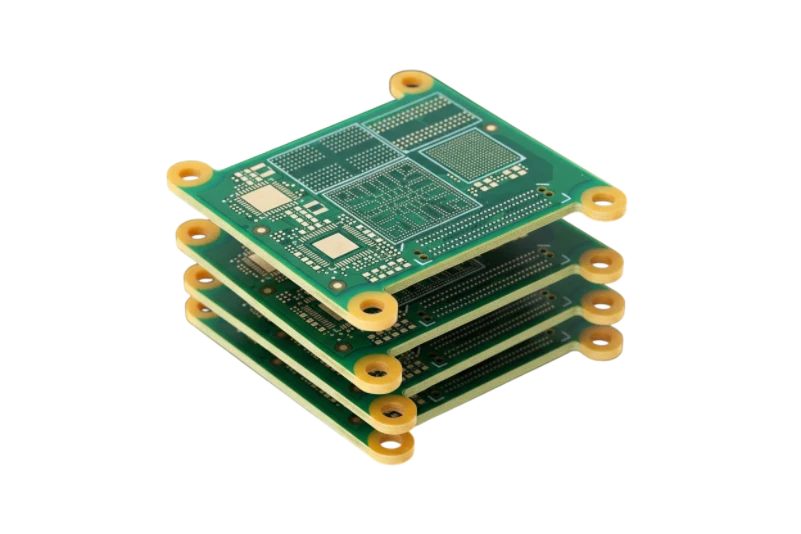
Studio-to-Transmitter Links (STL) Link PCB: what this playbook covers (and who it’s for)
Studio-to-Transmitter Links (STL) are the critical arteries of the broadcast industry, carrying audio and video content from the studio to the transmission site with zero tolerance for downtime. For RF engineers and procurement leads, sourcing an STL Link PCB is not just about buying a circuit board; it is about securing signal integrity, low latency, and weather-resistant reliability. A failure in this component means "dead air," which is the ultimate failure in broadcasting.
This playbook is designed for technical decision-makers who need to move an STL design from prototype to volume production. It bypasses general manufacturing advice to focus specifically on the high-frequency and environmental challenges inherent in microwave link equipment. You will find concrete specifications, a breakdown of hidden manufacturing risks, and a validation strategy to ensure your boards perform identically in the field as they did in the simulation.
We will also cover how to vet a manufacturer for this specific niche. APTPCB (APTPCB PCB Factory) has supported numerous RF projects, and this guide condenses that experience into actionable steps. Whether you are building point-to-point microwave units or upgrading existing broadcast infrastructure, this guide helps you define the "must-haves" and avoid the expensive "gotchas."
When Studio-to-Transmitter Links (STL) Link PCB is the right approach (and when it isn’t)
Understanding the scope of this playbook requires confirming that an STL Link PCB is the correct solution for your specific connectivity challenge.
This approach is critical when:
- High-Frequency Transmission is Required: Your system operates in microwave bands (typically 900 MHz to 23 GHz or higher). Standard FR4 boards cannot handle the signal loss at these frequencies; you need specialized STL Link PCB architectures using PTFE or ceramic-filled hydrocarbon materials.
- Physical Cabling is Impossible: The transmitter site is located on a mountain or remote tower where running fiber optics is cost-prohibitive or logistically impossible.
- Low Latency is Non-Negotiable: Unlike IP-based satellite links which may introduce delay, a direct RF STL link provides near-instantaneous transmission essential for live broadcasting.
- High Reliability in Harsh Environments: The equipment will be mounted on towers exposed to extreme temperature swings, requiring PCBs with matched Coefficients of Thermal Expansion (CTE) to prevent delamination.
This approach may be over-engineering if:
- Short Distance / Wired Connections: If the studio and transmitter are in the same building or connected by dark fiber, a standard digital interface board is sufficient.
- Low-Fidelity Voice Comms: For simple UHF voice repeaters where signal integrity is less critical, a standard Microwave Link PCB specification might be excessive.
- Consumer Audio: While high-end audio gear like an Active Speaker PCB shares some noise-reduction principles, it rarely requires the expensive high-frequency laminates used in STL links.
Specs & requirements (before quoting)
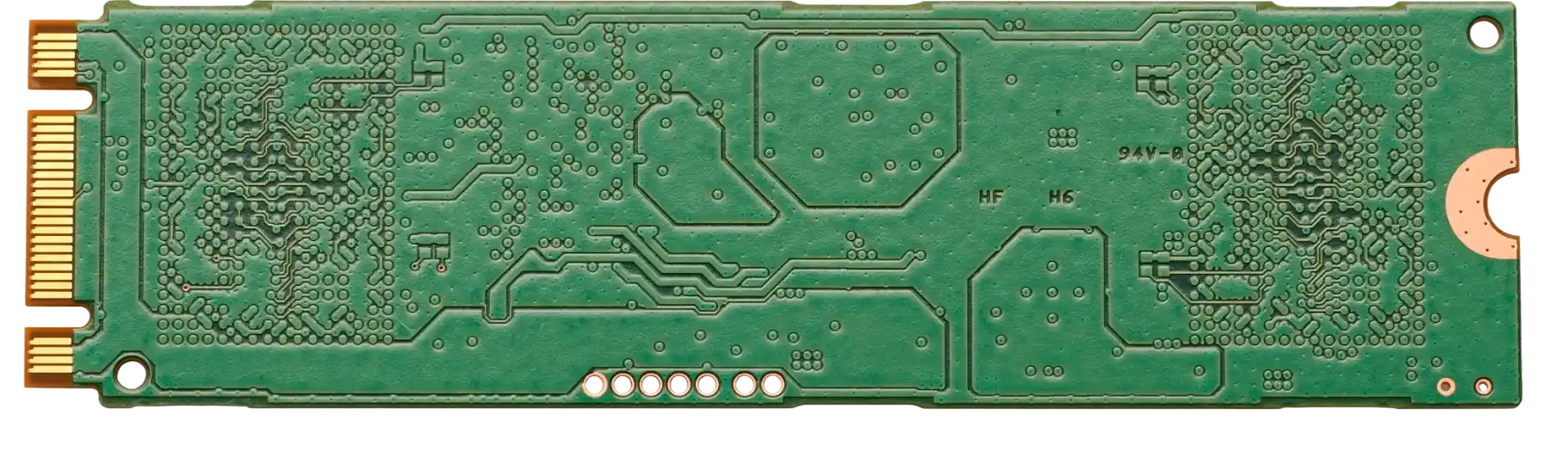
Once you confirm an STL architecture is required, the next step is defining the physical constraints to ensure the manufacturer quotes accurately.
- Base Material (Laminates):
- Specify the exact material or an approved equivalent. Common choices include Rogers RO4000 series, Taconic, or Isola Astra.
- Target: Dk (Dielectric Constant) tolerance of ±0.05 or tighter.
- Target: Df (Dissipation Factor) < 0.003 at 10 GHz.
- Hybrid Stackup Details:
- Most STL boards are hybrids to save cost (RF layers on top, FR4 for control logic below).
- Requirement: Clearly define which layers are high-frequency and which are standard FR4.
- Requirement: Specify the prepreg type to ensure adhesion between dissimilar materials.
- Copper Roughness:
- At microwave frequencies, skin effect makes copper roughness a major loss factor.
- Target: Specify "VLP" (Very Low Profile) or "HVLP" (Hyper Very Low Profile) copper foil.
- Range: Surface roughness (Rz) < 2.0 µm.
- Impedance Control:
- Target: 50Ω single-ended and 100Ω differential are standard, but verify specific RF trace widths.
- Tolerance: ±5% is the standard for RF; do not accept ±10% for the RF path.
- Surface Finish:
- Requirement: Immersion Silver or ENIG (Electroless Nickel Immersion Gold).
- Avoid: HASL (Hot Air Solder Leveling) due to uneven surfaces affecting impedance and high-frequency losses.
- Via Structure:
- Requirement: Define blind and buried vias if used for signal isolation.
- Requirement: Specify "via-in-pad" filling and capping if high-density component placement is required.
- Thermal Management:
- STL transmitters generate significant heat.
- Target: If using metal-core or coin-insertion, specify the thermal conductivity (e.g., 2.0 W/mK or higher).
- Solder Mask:
- Requirement: LPI (Liquid Photoimageable) solder mask.
- Note: In critical RF areas, consider removing solder mask from the trace to reduce dielectric loss, but ensure the copper is plated (e.g., Immersion Silver).
- Dimensional Stability:
- Range: Board dimension tolerance ±0.1mm.
- Why: Critical for fitting into precision-machined aluminum enclosures used for shielding.
- Cleanliness Standards:
- Requirement: Ionic contamination levels must be below IPC-6012 Class 3 requirements to prevent dendritic growth in outdoor environments.
Hidden risks (root causes & prevention)
Even with perfect specs, manufacturing variables can introduce failure points that only appear after the boards are deployed.
- Etch Factor Variation:
- Risk: The trapezoidal shape of the trace after etching differs from the rectangular shape in simulation.
- Why: Chemical etching is isotropic.
- Detection: Cross-section analysis (microsection).
- Prevention: Ask the supplier for their "etch compensation" factors for the specific copper weight and material used.
- Weave Effect (Fiber Skew):
- Risk: High-speed signals traveling over the glass weave bundles vs. the resin gaps experience different Dk, causing timing skew.
- Why: The glass cloth in the laminate is a grid, not a homogeneous solid.
- Detection: Signal integrity testing showing jitter.
- Prevention: Specify "spread glass" (e.g., 1067, 1078 style) or route traces at a 10-degree angle relative to the weave.
- Hybrid Lamination Delamination:
- Risk: The RF material and FR4 material expand at different rates (CTE mismatch) during reflow, causing layer separation.
- Why: Different resin systems cure and expand differently.
- Detection: Thermal stress testing (solder float test).
- Prevention: Use high-Tg FR4 that closely matches the Z-axis expansion of the RF laminate.
- Plating Voids in High Aspect Ratio Vias:
- Risk: Open circuits or intermittent connections in thick boards.
- Why: Plating solution fails to circulate properly in deep, narrow holes.
- Detection: Electrical testing often misses intermittent voids; microsection is required.
- Prevention: Limit aspect ratio to 8:1 or ensure the supplier uses pulse plating technology.
- Passive Intermodulation (PIM):
- Risk: Nonlinear mixing of signals creates interference in the receive band.
- Why: Caused by rough copper, contaminated surfaces, or poor plating adhesion.
- Detection: PIM testing chambers.
- Prevention: Use reverse-treated foil and ensure strict chemical cleaning processes.
- Moisture Absorption:
- Risk: Changes in Dk and Df, detuning the filter circuits.
- Why: Some laminate materials absorb water from the air over time.
- Detection: Environmental chamber testing.
- Prevention: Choose materials with water absorption < 0.05% and ensure proper conformal coating post-assembly.
- Solder Mask Encroachment:
- Risk: Solder mask flowing onto pads or RF lines where it shouldn't be.
- Why: Poor registration or mask viscosity control.
- Detection: Visual inspection (AOI).
- Prevention: Define "solder mask dam" minimums and use LDI (Laser Direct Imaging) for higher precision.
- Drill Wander:
- Risk: Vias not centered on pads, reducing annular ring and reliability.
- Why: Mechanical drill bit deflection or machine calibration drift.
- Detection: X-ray inspection.
- Prevention: Use X-ray drilling optimization for multilayer registration.
Validation plan (what to test, when, and what “pass” means)
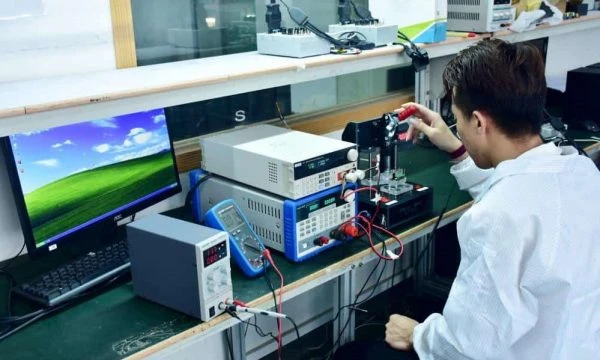
To mitigate these risks, you need a structured testing protocol before mass production.
- TDR (Time Domain Reflectometry) Impedance Test:
- Objective: Verify trace impedance matches design.
- Method: Test coupons on panel borders or actual traces.
- Acceptance: Within ±5% of target (e.g., 50Ω ± 2.5Ω).
- VNA (Vector Network Analyzer) Insertion Loss:
- Objective: Measure signal loss per inch at operating frequency.
- Method: Measure specific test lines designed into the panel.
- Acceptance: Loss < X dB/inch (as per material datasheet simulation).
- Thermal Shock / Cycling:
- Objective: Stress test the via plating and hybrid material bond.
- Method: -40°C to +125°C for 100 cycles.
- Acceptance: Change in resistance < 10%; no delamination visible.
- Microsection Analysis (Cross-Section):
- Objective: Verify stackup, plating thickness, and hole wall quality.
- Method: Destructive testing of a coupon.
- Acceptance: Copper thickness meets IPC Class 3; no knee cracks in barrel.
- Solderability Test:
- Objective: Ensure pads accept solder properly.
- Method: Dip and look / Wetting balance test.
- Acceptance: >95% coverage; continuous coating.
- Ionic Contamination Test (ROSE):
- Objective: Ensure board cleanliness.
- Method: Solvent extraction.
- Acceptance: < 1.56 µg/cm² NaCl equivalent.
- Peel Strength Test:
- Objective: Verify copper adhesion to the laminate.
- Method: Mechanical pull test.
- Acceptance: Meets laminate datasheet spec (critical for reworkability).
- Dimensional Verification:
- Objective: Ensure mechanical fit.
- Method: CMM (Coordinate Measuring Machine).
- Acceptance: All dimensions within drawing tolerances.
Supplier checklist (RFQ + audit questions)
Validation proves the design works; this checklist ensures your partner can repeat it consistently.
Group 1: RFQ Inputs (What you send)
- Gerber files (RS-274X or X2) with clear layer naming.
- ODB++ files (preferred for complex RF data).
- Fabrication drawing with stackup diagram clearly marking RF layers.
- Material datasheet or "equivalent" list (e.g., "Rogers 4350B or approved equivalent").
- Impedance table referencing specific layers and trace widths.
- Drill chart separating plated and non-plated holes.
- Panelization requirements (if you have specific array needs for assembly).
- IPC Class requirement (Class 2 or Class 3).
Group 2: Capability Proof (What they must have)
- Do they have in-house plasma etching? (Essential for PTFE hole wall preparation).
- Can they handle the specific hybrid stackup (FR4 + PTFE) pressing cycle?
- Do they have LDI (Laser Direct Imaging) for fine-line RF traces?
- Is their copper plating line capable of pulse plating for high aspect ratios?
- Do they have in-house TDR and VNA testing capabilities?
- Can they provide X-ray verification of layer registration?
Group 3: Quality System & Traceability
- Are they ISO 9001 certified? (ISO 13485 or AS9100 is a bonus).
- Do they track material lot numbers to the finished PCB date code?
- Can they provide a First Article Inspection (FAI) report?
- Do they have a defined procedure for handling moisture-sensitive materials?
- Is there an automated optical inspection (AOI) step after etching?
- Do they perform 100% electrical testing (flying probe or bed of nails)?
Group 4: Change Control & Delivery
- Will they notify you before changing material brands (e.g., switching Rogers to Isola)?
- What is their standard lead time for hybrid RF boards?
- Do they offer "quick turn" options for prototyping?
- How do they package boards to prevent oxidation (vacuum sealed + desiccant)?
- Do they have a disaster recovery plan for production continuity?
Decision guidance (trade-offs you can actually choose)
Not every supplier checks every box; here is how to balance conflicting priorities when sourcing STL Link PCBs.
- Pure PTFE vs. Hybrid Stackup:
- Trade-off: Pure PTFE offers the best electrical performance but is mechanically soft and expensive. Hybrid (PTFE + FR4) is cheaper and more rigid but risks CTE mismatch.
- Guidance: If you prioritize cost and mechanical strength, choose Hybrid. If you prioritize absolute signal purity above 10 GHz, choose Pure PTFE.
- ENIG vs. Immersion Silver:
- Trade-off: ENIG has a longer shelf life but the nickel layer is magnetic and can cause passive intermodulation (PIM). Immersion Silver is excellent for RF but tarnishes easily.
- Guidance: If you prioritize PIM performance (low noise), choose Immersion Silver. If you prioritize shelf life and multiple reflow cycles, choose ENIG.
- Rolled Copper vs. Electrodeposited (ED) Copper:
- Trade-off: Rolled copper is smoother (lower loss) but has lower peel strength. ED copper holds better but is rougher (higher loss).
- Guidance: If you prioritize insertion loss (long traces), choose Rolled Copper. If you prioritize pad adhesion and reliability, choose VLP ED Copper.
- Solder Mask vs. Bare Copper (on RF lines):
- Trade-off: Solder mask protects the copper but adds dielectric loss. Bare copper (plated) has lower loss but is exposed.
- Guidance: If you prioritize signal integrity, choose Solder Mask Defined (SMD) keep-outs over the RF trace. If you prioritize protection, use a low-loss solder mask.
- Domestic vs. Offshore Fabrication:
- Trade-off: Domestic is faster for prototypes and IP protection. Offshore is scalable for volume.
- Guidance: Use domestic for the first 2 revisions. Move to a qualified offshore partner like APTPCB for volume production once the design is frozen.
FAQ
Below are common questions engineers ask when finalizing these trade-offs.
Q: Can I use standard FR4 for a 5 GHz STL link?
- Generally, no. While high-Tg FR4 can work at 5 GHz for very short traces, the dielectric loss is high and inconsistent. For a professional STL link, use a dedicated RF laminate to ensure range and reliability.
Q: How does the "Active Speaker PCB" relate to the STL Link PCB?
- The STL link delivers the signal to the transmitter, but the studio monitoring chain often uses active speakers. While the STL board requires microwave substrates, the Active Speaker PCB focuses on low-noise analog audio layouts, often using standard FR4 but with heavy copper for power delivery.
Q: Why is the price difference so high between standard PCBs and STL Link PCBs?
- The cost driver is the material (Rogers/Taconic can be 5-10x the cost of FR4) and the processing complexity (plasma etching, specialized drilling parameters, and slower lamination cycles).
Q: What is the best way to prevent oxidation on Immersion Silver boards?
- Keep boards vacuum-sealed until the moment of assembly. Use "tarnish-resistant" silver finishes if available. Ensure the assembly floor environment is controlled (humidity and sulfur content).
Q: Can APTPCB assist with the stackup design?
- Yes. It is highly recommended to send your desired layer count and impedance requirements to the engineering team before routing the board. They can propose a stackup using stocked materials to save cost and lead time.
Q: What is the impact of "weave effect" on my link budget?
- It can cause phase mismatch in differential pairs, leading to common-mode noise and reduced eye opening. This directly reduces the effective range and data rate of the STL link.
Q: Do I need back-drilling for STL Link PCBs?
- If you have high-speed signals passing through vias that do not terminate on the bottom layer, the remaining "stub" acts as an antenna. Back-drilling removes this stub and is often required for signals > 5 Gbps.
Q: How do I specify the dielectric constant (Dk) for manufacturing?
- Do not just specify the Dk value; specify the frequency at which it applies (e.g., "Dk 3.48 @ 10 GHz"). Dk changes with frequency.
Related pages & tools
- Microwave PCB Manufacturing – Deep dive into the specific fabrication processes for microwave frequencies.
- Rogers PCB Materials – Detailed properties of the most common laminates used in STL links.
- Impedance Calculator – Verify your trace width and spacing against your target stackup.
- PCB Stack-up Design – Guidelines for building hybrid structures that won't delaminate.
- High Frequency PCB Capabilities – General overview of capabilities relevant to RF designs.
Request a quote
Ready to move from planning to production? APTPCB offers a comprehensive DFM review to catch potential RF issues before they hit the manufacturing floor.
For the most accurate quote, please provide:
- Gerber files (including drill files).
- Stackup details (or request a proposal).
- Material requirements (e.g., Rogers 4350B).
- Quantity and lead time expectations.
Conclusion
The STL Link PCB is the silent workhorse of the broadcast industry, requiring a precise balance of material science and manufacturing discipline. By defining strict requirements for laminates and copper roughness, understanding the risks of hybrid stackups, and enforcing a rigorous validation checklist, you can ensure your link stays on air regardless of the conditions. Whether you are prototyping a new microwave transmitter or scaling up production for a network rollout, following this playbook will help you secure a reliable, high-performance foundation for your system.