
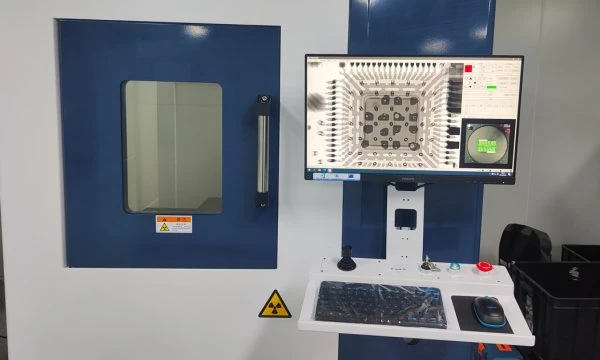
- This topic is safest at the board boundary: control electronics, readout routing, feedthrough-adjacent interconnects, connector launches, and release evidence.
- The board should be reviewed as part of a larger quantum-hardware chain, not as proof of qubit performance or cryogenic success by itself.
- The highest-risk items usually appear first in interface zoning, mixed RF and digital stackup choices, connector transitions, package-boundary assumptions, and what the pilot-build validation plan actually covers.
- A conservative release path should separate fabrication checks, assembly evidence, impedance or SI methods, and downstream system validation instead of collapsing them into one generic "tested" claim.
- If the package boundary, feedthrough role, or local transition strategy is still vague, the design is usually not ready for a meaningful pilot build.
Quick Answer
A quantum control and readout PCB should be reviewed as a board-level interconnect and release-planning problem. The first engineering questions are where the board sits relative to the control chain and feedthrough boundary, how mixed RF and digital paths are zoned, which connector and package transitions are actually owned by the board team, and what evidence must exist before the build can move from prototype into controlled validation.
Table of Contents
- What should engineers review first?
- Priority table for control and readout board review
- Where does the PCB boundary really sit?
- Why mixed RF and digital stackup planning matters early
- How should connector, feedthrough, and package transitions be reviewed?
- Why validation scope must stay layered
- What should be frozen before pilot build?
- Next steps with APTPCB
- FAQ
- Public references
- Author and review information
What should engineers review first?
Start with board ownership, interface zoning, mixed-signal stackup posture, local transitions, and validation scope.
The most important early decision is not a material name or a frequency slogan. It is whether the team has clearly defined what the PCB is supposed to own.
For this topic, the safe review order is:
- define whether the board is mainly a room-temperature control board, a readout-interface board, a feedthrough-adjacent interconnect, or a boundary board between those roles
- define which parts of the path are truly board-owned and which belong to connectors, cables, packages, or later system integration
- define how RF-sensitive and digital-control regions will be separated in the stackup and layout review
- define what the prototype and release package must prove before downstream validation begins
This keeps the article at the engineering boundary the current evidence base actually supports.
Priority table for control and readout board review
| Review dimension | Recommended judgment | Why it matters | How to verify | What happens if ignored |
|---|---|---|---|---|
| Board role definition | Freeze whether the board is control, readout, feedthrough-adjacent, or mixed-role | A vague board role makes every later decision unstable | Architecture review and interface map | Stackup, connector, and test choices drift without one owner |
| Mixed RF and digital zoning | Separate sensitive signal paths from digital support regions | High-speed and RF paths should not be reviewed as generic logic routing | Stackup review and region zoning review | Return-path and transition problems appear late |
| Local transition quality | Review launches, vias, and short sensitive structures early | Short structures often consume margin before longer routes do | Layout review, coupon strategy, and sample correlation plan | Pilot results are hard to interpret |
| Feedthrough and connector ownership | Keep PCB, connector, and cable duties explicit | The board rarely owns the whole signal chain by itself | Boundary notes and mechanical-electrical review | Downstream issues get blamed on the wrong layer |
| Package-boundary awareness | Distinguish ordinary PCB work from package-substrate or device-package context | Advanced-package language can easily overrun board-level reality | Package map and ownership review | The article or build package starts promising the wrong thing |
| Validation ladder | Separate build quality, SI evidence, and downstream system validation | One "tested" label is not precise enough | Prototype plan, FAI plan, and validation handoff review | Release claims become too broad to trust |
Where does the PCB boundary really sit?
Conclusion: Because the board is only one section of a larger control and readout chain, and the review fails when that boundary is blurred.
Publicly safe support for this topic is intentionally narrow. It supports board-level control-electronics context, timing-distribution pressure, readout-interface language, and staged validation posture. It does not justify turning the article into proof of quantum-system performance, cryogenic success, or scaling readiness.
That makes the safer board-review questions:
- Is this board acting as the control-side launch point into a larger interconnect chain?
- Is it part of a feedthrough or boundary transition rather than the whole signal path?
- Does the design stop at the board interface, or does it implicitly absorb connector, cable, package, or device-level assumptions that belong elsewhere?
- Is the board team trying to solve a package-substrate problem with ordinary PCB language?
This distinction matters because package-substrate and semiconductor-package sources define a context separate from ordinary board-level PCB claims. If the design narrative starts to drift into device-package execution, the article has already moved beyond the safe lane.
Why mixed RF and digital stackup planning matters early
Conclusion: Because control and readout boards usually combine different electrical duties, and those duties should not be flattened into one generic stackup story.
The local evidence base already supports a conservative mixed RF and digital planning posture:
- keep signal-critical paths distinct from general digital or structural regions
- treat laminate choice, stackup order, lamination control, and transition review as linked decisions
- keep manufacturability and validation posture tied to the stackup instead of using premium-material language as proof by itself
That means the review should ask:
- Which paths are sensitive enough to justify low-loss or RF-oriented stackup treatment?
- Which regions are mainly structural, support, or digital-control regions?
- Are the board transitions being reviewed as part of the stackup decision rather than after it?
- Does the prototype plan include evidence that separates impedance correlation from general fabrication quality?
A common review stall in this lane appears when the architecture team has already named the board a "quantum control PCB," but the released package still does not clearly separate RF-sensitive paths, digital-control zones, and feedthrough-adjacent structures. The title sounds specialized, yet the stackup and transition plan still reads like a generic mixed-signal board. When that happens, the pilot build does not confirm a focused review strategy. It only reveals that the design boundary was never frozen tightly enough to begin with.
How should connector, feedthrough, and package transitions be reviewed?
Conclusion: Because the board is usually judged first at its local transitions, not at the abstract system diagram.
For this topic, the most useful review boundary is local:
- connector launch quality
- via transition posture
- feedthrough-adjacent interface control
- package-side ownership boundaries
Cadence's public RF PCB guidance is enough to support conservative vocabulary such as microstrip, stripline, and coplanar waveguide as trace-family classes. It is not enough to prove one structure is universally best for this topic. The same boundary applies from the measurement side: structure naming, impedance methods, and S-parameter vocabulary should not be converted into automatic performance proof.
That is why the safer engineering posture is:
| Transition area | Safe review posture | Why it stays narrow |
|---|---|---|
| Connector launch | Treat it as a local geometry and return-path problem | The connector family does not prove full-channel behavior |
| Feedthrough-adjacent region | Define the board's exact ownership boundary | Cable, housing, and cryostat hardware may be different owners |
| Package-side interface | Keep PCB and package-substrate contexts separate | Device-package execution is not the same as board routing |
| Trace family choice | Use class-level naming only unless the project has stronger evidence | Structure identity is not proof of outcome |
Why validation scope must stay layered
Conclusion: Because fabrication quality, first-build confirmation, impedance methods, and downstream system validation answer different questions.
The current evidence base is strong enough to support a layered validation ladder:
- Pre-fabrication review for DFM, DFT, zoning, stackup, and boundary ownership.
- Prototype or NPI routing so the first build is treated as a controlled learning stage rather than as silent production proof.
- First-article and build evidence to confirm the released package matches the intended board and assembly route.
- Impedance or SI-oriented methods where the project requires them, with measurement scope kept distinct from generic continuity or visual checks.
- Validation handoff so downstream system owners receive a controlled package instead of a vague "tested board" statement.
This separation is important for two reasons.
First, common RF measurement vocabulary such as 50 ohm, 100 ohm, TDR, and VNA should not be turned into universal board promises without project-specific evidence.
Second, first-article inspection is supported only as an early-run verification and documentation gate. It is not a substitute for later signal-path or system-level validation.
What should be frozen before pilot build?
Conclusion: Because pilot build should confirm the board boundary and validation ladder, not invent them midstream.
Before pilot build, freeze:
- the board role and interface map
- the mixed RF and digital zoning strategy
- the local connector, feedthrough, and package-boundary assumptions
- the stackup and transition-review posture
- the validation ladder from first build through downstream handoff
If those items are still fluid, the pilot build may still produce hardware, but it will not produce a clean release decision.
Next steps with APTPCB
If your team is reviewing a control or readout board that sits near a cryostat boundary, feedthrough interface, or mixed RF and digital control path, send the stackup, Gerbers, interface notes, and validation expectations to [email protected], or upload the package through the quote page. APTPCB's CAM and engineering team can return DFM feedback within 24 hours.
If the package still needs clearer structure first, start with high-frequency PCB for RF-oriented stackup context, high-speed PCB for interconnect review posture, PCB stack-up for layer-planning discipline, or first article inspection when the first-build gate is still not clearly defined.
FAQ
Does this kind of PCB prove quantum performance by itself?
No. The safe boundary for this article is board-level control, readout, interface, and validation planning only.
Is this article about cryogenic material performance?
No. It intentionally avoids unsupported claims about millikelvin material behavior, cryogenic guarantees, or superconducting execution.
Can the board team own the whole feedthrough and package path?
Sometimes only in part. The safer review posture is to define which sections belong to the PCB, which belong to connectors or cables, and which belong to package or device integration.
Does first-article inspection prove the interconnect will pass final validation?
No. First-article inspection is a build and documentation gate, not full signal-path proof.
What should be frozen first?
Freeze the board role, zoning strategy, local transitions, and validation ladder before pilot build.
Public references
Cadence RF PCB design guidelines
Supports conservative class-level RF trace-family vocabulary for local transition review.KYOCERA build-up FC-BGA substrates
Supports the article's package-substrate boundary context and why package execution should not be flattened into ordinary PCB wording.IPC TM-650 2.5.5.7A characteristic impedance by TDR
Supports the article's use of TDR as a printed-board measurement-method identity, not a universal board promise.IPC TM-650 2.5.5.14 high-frequency loss and propagation
Supports the article's boundary that frequency-domain board-loss methods are distinct from generic continuity or visual checks.Keysight VNA system impedance help
Supports the article's boundary that50 ohmcan be measurement-system context rather than a universal design claim.
Author and review information
- Author: APTPCB high-speed interconnect and advanced-board content team
- Technical review: stackup, interface-boundary, and validation engineering team
- Last updated: 2026-05-03