
A robust test report template is not just a formality; it is the primary artifact for validating that a Printed Circuit Board (PCB) or assembly meets all electrical and mechanical specifications. For engineers and quality managers, this document serves as the bridge between design intent and manufacturing reality. Without a standardized template, critical data regarding impedance control, continuity, and functional performance becomes fragmented, making root cause analysis impossible during field failures.
APTPCB (APTPCB PCB Factory) utilizes comprehensive reporting structures to ensure every board leaving the production line is fully traceable. Whether you are auditing a supplier or setting up an internal quality system, defining the correct fields and acceptance criteria in your test report template is crucial for maintaining high yield and reliability.
test report template quick answer (30 seconds)

A professional PCB/PCBA test report template must contain specific data points to be valid for ISO and IPC compliance. Ensure your template includes:
- Traceability Header: Project Name, Part Number, Revision, Batch/Lot Number, and Date Code.
- Test Environment: Temperature, Humidity, and Operator ID.
- Electrical Continuity: 100% Netlist verification status (Open/Short test results).
- Impedance Data: Measured values vs. Target values for controlled impedance lines (with TDR coupons).
- Functional Metrics: Voltage/Current readings at specific test points against defined min/max limits.
- Defect Log: Explicit listing of any failed nets, components, or visual defects, even if reworked.
When test report template applies (and when it doesn’t)
Understanding when to demand a full formal report versus a simple certificate of compliance saves time and cost.
When to use a detailed test report template:
- Mass Production: Essential for statistical process control (SPC) and tracking yield trends over time.
- High-Reliability Sectors: Automotive, Aerospace, and Medical devices require granular test data traceability for every serial number.
- Controlled Impedance Designs: High-speed digital boards must have TDR (Time Domain Reflectometry) reports to prove signal integrity.
- First Article Inspection (FAI): The first batch must have a comprehensive report verifying every dimension and electrical parameter.
- Outsourced Assembly: When using a contract manufacturer, the report is your only proof that specific tests (ICT, FCT) were actually performed.
When a simplified checklist suffices:
- Rapid Prototyping: For 2-layer breadboards where speed is the only priority, a simple "Pass" sticker or visual inspection log is often acceptable.
- Non-Functional Mockups: Mechanical samples used only for fit checks do not require electrical test reporting.
- Standard Commodity Boards: Low-cost consumer electronics with wide tolerances may only require a batch-level Certificate of Compliance (CoC) rather than per-unit data.
test report template rules and specifications (key parameters and limits)
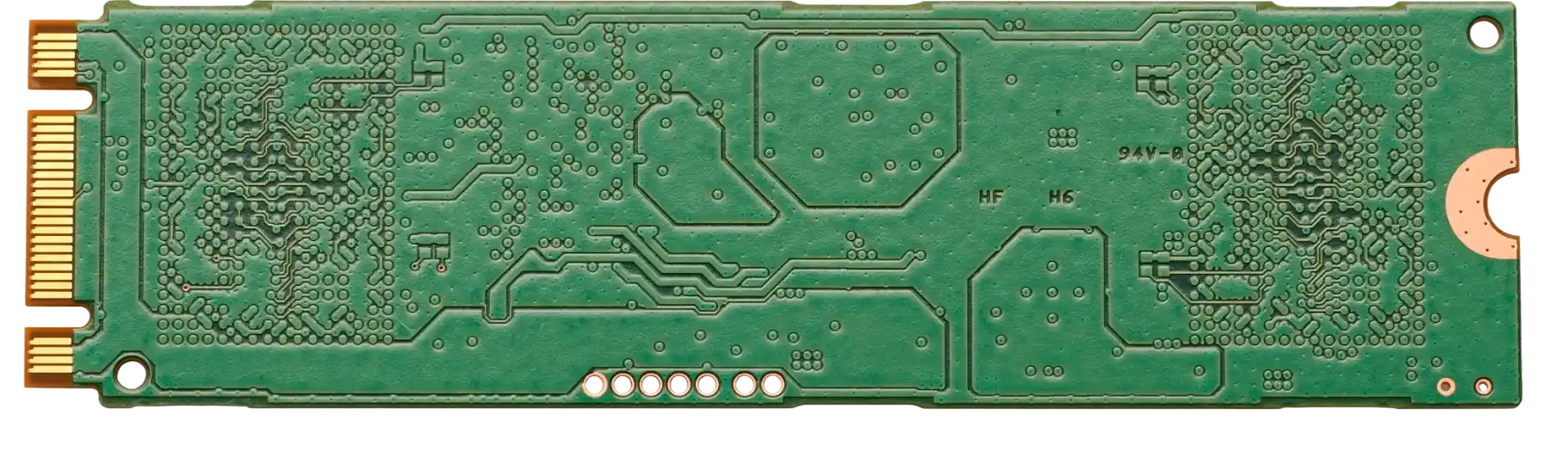
A test report template is only as good as the data it captures. The following table outlines the mandatory fields and rules for a comprehensive PCB quality report.
| Rule / Data Field | Recommended Value / Range | Why it matters | How to verify | If ignored |
|---|---|---|---|---|
| Report ID & Date | Unique alphanumeric string + ISO 8601 Date | Ensures unique identification for audits and recalls. | Check against document control system. | Duplicate reports mask production issues; traceability is lost. |
| Batch / Lot Number | Supplier-defined Lot Code | Links the report to raw materials (copper, laminate) used. | Match with raw material certificates. | Cannot isolate affected boards during a material defect recall. |
| IPC Class Level | Class 2 or Class 3 | Defines the strictness of the pass/fail criteria. | Review against IPC-6012/IPC-A-610 standards. | Boards may pass visually but fail industry reliability standards. |
| Base Material Verification | Tg, CTE, Decomposition Temp | Confirms the correct laminate (e.g., FR4 High Tg) was used. | Review microsection analysis data. | Delamination or barrel cracking during assembly reflow. |
| E-Test Coverage | 100% Netlist Match | Guarantees no opens or shorts exist on the bare board. | Verify "Pass" status on Flying Probe/Fixture tester log. | High risk of dead-on-arrival boards at assembly. |
| Impedance Tolerance | ±10% or ±5% (as specified) | Critical for high-speed signal integrity (USB, PCIe, DDR). | Check TDR measurement column against stackup design. | Signal reflection, data loss, and EMI failures in the final product. |
| Plating Thickness | ENIG: 2-5µin Au / HASL: >20µm | Ensures solderability and wire bonding reliability. | X-Ray Fluorescence (XRF) measurement data. | Black pad issues (ENIG) or poor solder joint formation. |
| Hole Wall Copper | Class 2: >20µm avg | Ensures electrical connection through vias. | Microsection report images. | Via failure (open circuit) under thermal cycling. |
| Solderability Result | >95% wetting coverage | Verifies that pads will accept solder during assembly. | Dip and look test (IPC-J-STD-003). | Poor wetting, cold solder joints, and high rework rates. |
| Ionic Contamination | <1.56 µg/cm² NaCl eq. | Prevents dendritic growth and corrosion. | ROSE test results column. | Long-term field failure due to electrochemical migration. |
| Bow and Twist | <0.75% (SMT) / <1.5% (THT) | Ensures board flatness for automated assembly. | Feeler gauge measurement on surface plate. | Component placement errors or jamming in pick-and-place machines. |
| Test Equipment ID | Asset Tag / Serial Number | Traces results back to specific calibration cycles. | Check calibration sticker on machine log. | Invalid results if equipment was out of calibration. |
test report template implementation steps (process checkpoints)
Creating and enforcing a standardized test report template involves collaboration between design and manufacturing.
Define Critical Parameters (KPIs): Identify which parameters are critical to quality (CTQ). For a power board, this might be copper thickness and high-pot test results. For a data board, it is impedance and skew. List these explicitly.
Establish Pass/Fail Limits: Do not leave judgment to the operator. The template must have hard-coded limits (e.g., "3.3V ± 0.1V"). If a value is 3.45V, the template should automatically flag it as "FAIL".
Integrate Test Point Design Rules: Ensure your PCB design supports the report requirements. You cannot report on a signal if you violated test point design rules and the probe cannot access the net. Place test points on a 2.54mm grid where possible and ensure they are not covered by solder mask.
Automate Data Capture: Manual entry leads to typos. Configure your ICT (In-Circuit Test) or Flying Probe machines to export data directly into the CSV or XML format required by your test report template.
Include Visual Evidence: For physical defects or microsections, the template should have a dedicated section for high-resolution images. A picture of the stackup cross-section proves the dielectric thickness is correct.
Validation and Sign-off: The report must include a digital signature or stamp from the Quality Assurance (QA) manager. This signifies that the data has been reviewed and the lot is released.
Archiving and Retrieval: Store reports in a searchable database indexed by Serial Number. This ensures test data traceability for years after production.
test report template troubleshooting (failure modes and fixes)
Even with a template, reporting errors can occur. Here is how to troubleshoot common issues with test reporting.
Symptom: Report shows "Pass" but boards fail at assembly.
- Cause: The template limits were looser than the component specifications, or the E-Test fixture had poor contact.
- Check: Review the "Guard Band" settings in the tester. Verify if the template allows "marginal passes."
- Fix: Tighten the tolerance in the template (e.g., change ±10% to ±5%).
Symptom: Missing Impedance Data.
- Cause: The manufacturer treated the board as a standard rigid PCB because the "Controlled Impedance" box was not checked in the order, or the template did not request TDR data.
- Check: Look at the fabrication drawing notes.
- Fix: Update the template to make the "Impedance" section mandatory for high-speed part numbers.
Symptom: Inconsistent Measurement Units.
- Cause: One batch reports in mils, another in microns.
- Check: The column headers in the template.
- Fix: Standardize all units in the template header (e.g., "Copper Thickness (µm)").
Symptom: No Traceability to Raw Material.
- Cause: The report lists the PCB manufacturer but not the laminate brand (e.g., Isola, Rogers).
- Check: The "Material Details" section of the report.
- Fix: Require the specific laminate datasheet or batch code to be entered in the template.
How to choose test report template (design decisions and trade-offs)
When structuring your test report template, you must make key decisions regarding granularity and format.
Per-Batch vs. Per-Unit Reporting:
- Per-Batch (CoC): A single document stating "Lot X passed." Suitable for low-cost, low-risk passives or simple breakout boards. Low administrative burden.
- Per-Unit (Serialized): A detailed row for every single serial number. Mandatory for complex PCBA, automotive, and medical applications. High data volume but essential for root cause analysis.
Digital vs. PDF/Paper:
- PDF/Paper: Good for human review and shipping documentation. Hard to analyze statistically.
- Structured Data (JSON/XML/CSV): Best for automated ingestion into Quality Management Systems (QMS). APTPCB recommends requesting both: a human-readable PDF summary and the raw data file for your engineering team.
Sampling Rate:
- 100% Testing: Required for Electrical Test (Open/Short) and Functional Test.
- AQL Sampling: Acceptable for destructive tests like Microsectioning, Solderability, and Peel Strength. The template should clearly state the sample size (e.g., "Tested 5 units per lot of 1000").
test report template FAQ (cost, lead time, Design for Manufacturability (DFM) files, stackup, impedance, Automated Optical Inspection (AOI) inspection)
1. What is the difference between a Test Report and a Certificate of Compliance (CoC)? A CoC is a simple statement certifying the goods meet specifications. A test report contains the actual measured data (values, readings, images) proving how they met the specifications.
2. Does APTPCB provide a standard test report template? Yes, APTPCB provides comprehensive testing quality reports including electrical test, microsection, and solderability data with every shipment, tailored to the IPC class requirements.
3. How do I specify test points for the report? You must follow test point design rules during layout. Ensure test pads are at least 0.8mm - 1.0mm in diameter for ICT, or accessible vias for flying probes. If the probe cannot hit the target, the report will show "Not Tested."
4. Can I use a generic Excel sheet as a test report template? Yes, as long as the fields are locked and version-controlled. However, automated output from test machines is preferred to prevent data entry errors.
5. What is a "Golden Board" in test reporting? A Golden Board is a known-good unit used to calibrate the test equipment. The test report should note when the Golden Board was last run to verify the tester's accuracy.
6. Why is impedance data often missing from standard reports? Impedance testing (TDR) is a specialized process. If you do not explicitly request it and provide a stackup design, the manufacturer may not perform the test. Always specify "TDR Report Required" in your RFQ.
7. How long should I keep test reports? For consumer electronics, 3-5 years is standard. For medical, automotive, or aerospace, retention is often required for 10-15 years or the lifetime of the product.
8. What if the test report shows a failure that was "waived"? The template must have a "Waiver/Deviation" section. If a minor cosmetic defect is accepted by the customer, it must be documented there with the approver's name to maintain test data traceability.
9. Does the template need to include X-Ray results? For BGA (Ball Grid Array) and QFN components, yes. Since visual inspection cannot see solder joints under the package, X-Ray inspection images should be attached to the report.
10. How do I validate the accuracy of a supplier's test report? Perform a random audit. Re-test a sample of the received boards using your own equipment and compare the results to the supplier's data. Significant deviation indicates a calibration or process issue.
11. What is the role of FAI in reporting? First Article Inspection (FAI) is the validation of the process. The FAI report is the most detailed version of the test report template, checking 100% of dimensions and values to freeze the process for mass production.
12. Should the template include environmental test data? If your product undergoes burn-in or thermal cycling, the template must record the temperature profile, duration, and functional test results before and after the stress test.
Resources for test report template (related pages and tools)
- PCB Quality Assurance Standards – Deep dive into IPC classes and quality metrics.
- Functional Circuit Testing (FCT) – How functional tests differ from parametric tests.
- First Article Inspection (FAI) – The critical first step in validating your test report format.
- DFM Guidelines – Design rules to ensure your board can be tested effectively.
test report template glossary (key terms)
| Term | Definition |
|---|---|
| CoC | Certificate of Compliance. A document certifying the product meets specs, often without detailed data. |
| ICT | In-Circuit Test. A bed-of-nails test checking individual components and nets for opens/shorts/values. |
| FCT | Functional Circuit Test. Testing the PCBA in its operating environment (power up, firmware check). |
| TDR | Time Domain Reflectometry. The method used to measure impedance on PCB traces. |
| Netlist | A list of all electrical connections in the design. The "Golden" reference for electrical testing. |
| IPC-6012 | The qualification and performance specification for rigid printed boards. |
| Microsection | A destructive test where the PCB is sliced and polished to inspect internal layers and plating. |
| XRF | X-Ray Fluorescence. Used to measure the thickness of surface finishes like Gold (ENIG). |
| AOI | Automated Optical Inspection. Camera-based inspection for surface defects and component placement. |
| Cpk | Process Capability Index. A statistical measure of how well the manufacturing process meets the spec limits. |
| Golden Sample | A verified "good" unit used to calibrate testers and validate the test setup. |
| Test Coverage | The percentage of nets or components that are actually verified by the test procedure. |
Request a quote for test report template (Design for Manufacturability (DFM) review + pricing)
Ready to move from design to production with full quality assurance? APTPCB provides detailed DFM reviews and customizable test reporting to meet your specific traceability requirements.
To get an accurate quote and test plan:
- Gerber Files: RS-274X format.
- BOM (Bill of Materials): For assembly quotes.
- Test Requirements: Specify if you need ICT, FCT, or Impedance Reports.
- Volume: Prototype or Mass Production quantity.
Conclusion (next steps)
A standardized test report template is the backbone of quality control in electronics manufacturing. It transforms raw measurement data into actionable intelligence, ensuring that every PCB meets the rigorous standards of test point design rules and reliability. By defining clear specifications for impedance, continuity, and functional performance, you protect your product from field failures and ensure complete test data traceability. Whether you are building simple prototypes or complex aerospace assemblies, insisting on a detailed test report is the professional standard for verifying manufacturing success.