
Definition, scope, and who this guide is for
Thermal cycling stress refers to the mechanical strain placed on a Printed Circuit Board (PCB) and its components as the temperature fluctuates between extremes. This stress arises primarily from the mismatch in the Coefficient of Thermal Expansion (CTE) between different materials—specifically the copper plating, the dielectric laminate (resin and glass), and the soldered components. When a PCB heats up, the dielectric material expands significantly more in the Z-axis than the copper barrel of a plated through-hole (PTH). Repeated expansion and contraction fatigue the copper, eventually leading to barrel cracks, corner cracks, or interconnect failure.
This guide is designed for hardware engineers, reliability managers, and procurement leads who are responsible for sourcing PCBs for harsh environments. If your product operates in automotive engine bays, aerospace avionics, outdoor industrial controls, or high-power computing clusters, managing thermal cycling stress is not optional—it is the primary determinant of product longevity. The focus here is not on theoretical physics, but on actionable procurement specifications, manufacturing controls, and validation protocols to prevent field failures.
At APTPCB (APTPCB PCB Factory), we often see designs that pass initial electrical testing but fail after a few months in the field due to ignored thermal mechanical constraints. This playbook provides the framework to define your requirements upfront, ensuring that the board you buy can survive the thermal reality of its operating environment.
When to use thermal cycling stress (and when a standard approach is better)
Understanding the operational environment is the first step in determining if you need to invest in high-reliability materials and testing protocols.
Prioritize thermal cycling stress mitigation when:
- Automotive & Transportation: The device is mounted near an engine, exhaust, or braking system where temperatures swing rapidly from -40°C to +125°C (or higher).
- Aerospace & Defense: Equipment experiences rapid altitude changes or sits in unpressurized bays, subjecting it to extreme cold and rapid heating upon operation.
- Outdoor Infrastructure: Telecom radios, solar inverters, or traffic controls exposed to diurnal cycles (day/night temp changes) and seasonal extremes for 10+ years.
- High-Power Electronics: Devices that generate significant internal heat, creating a large delta between the "off" state (ambient) and "on" state (operating temp), causing localized thermal shock.
- High-Layer Count Boards: Thick PCBs (2.0mm+) with high aspect ratios impose greater strain on copper barrels during expansion than thinner consumer boards.
Stick to a standard approach when:
- Consumer Electronics: The device is used in climate-controlled office or home environments (0°C to 40°C) with minimal fluctuation.
- Short Lifespan Products: Disposable or short-cycle products where the cost of high-Tg materials and IST testing outweighs the benefit of extending life beyond 2-3 years.
- Low-Power IoT: Battery-operated sensors that generate negligible self-heating and operate in mild ambient conditions.
thermal cycling stress specifications (materials, stackup, tolerances)
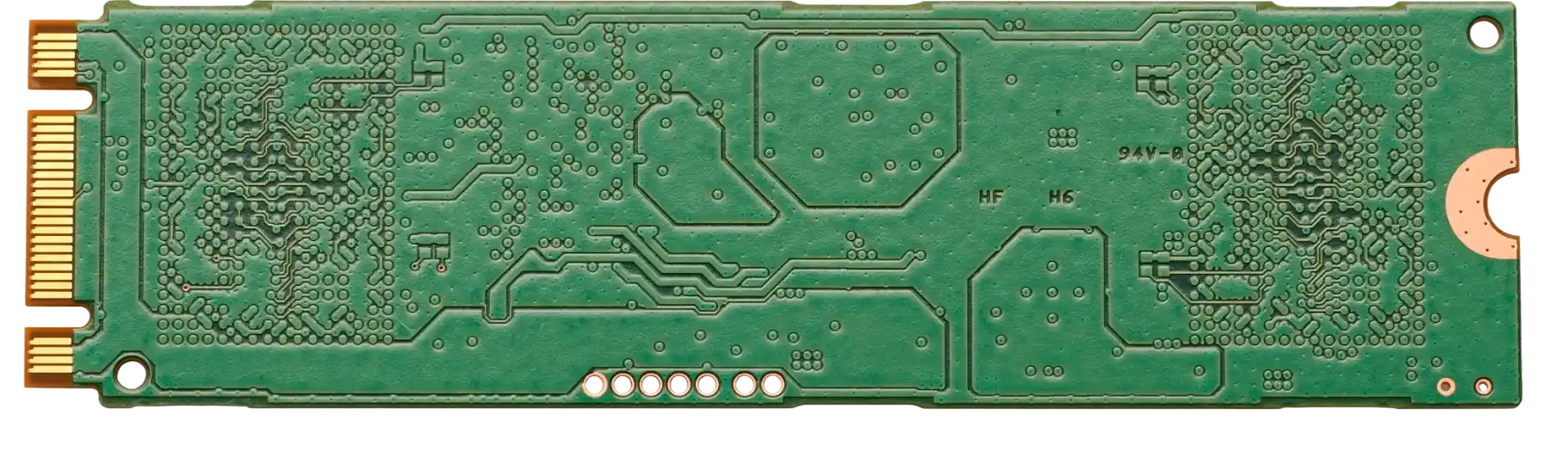
To combat thermal cycling stress, you must move beyond generic "FR4" callouts. The following specifications define the physical robustness required to withstand expansion forces.
- Glass Transition Temperature (Tg):
- Spec: Minimum 170°C (High-Tg).
- Why: Below Tg, the material expands linearly; above Tg, expansion rates increase drastically. Keeping the operating temp below Tg is critical.
- Decomposition Temperature (Td):
- Spec: Minimum 340°C (5% weight loss).
- Why: Ensures the resin system does not degrade during multiple reflow cycles, maintaining structural integrity.
- Z-Axis CTE (Coefficient of Thermal Expansion):
- Spec: < 3.0% (50°C to 260°C) or < 50 ppm/°C (alpha 1).
- Why: This is the most critical metric. Lower Z-axis expansion reduces the "pulling" force on the copper barrel during heating.
- Copper Plating Thickness:
- Spec: Average 25µm (1 mil), Minimum 20µm (IPC Class 3).
- Why: Thicker copper is more ductile and can withstand more strain cycles before cracking compared to the standard Class 2 (20µm avg).
- Aspect Ratio:
- Spec: Keep below 10:1 if possible (e.g., 0.2mm hole in 2.0mm board).
- Why: Higher aspect ratios make plating difficult and increase the Z-axis strain on the central portion of the via barrel.
- Via Filling:
- Spec: IPC-4761 Type VII (Filled and Capped) for via-in-pad.
- Why: Eliminates air pockets that can expand and cause "popcorning" or barrel stress during reflow and operation.
- Resin Content:
- Spec: Avoid resin-starved prepregs; ensure sufficient resin flow.
- Why: Proper resin encapsulation of the glass weave prevents micro-voids which become stress concentration points.
- Surface Finish:
- Spec: ENIG (Electroless Nickel Immersion Gold) or Immersion Silver.
- Why: Provides a flat surface for component placement and avoids the thermal shock of HASL (Hot Air Solder Leveling) during manufacturing.
- Solder Mask:
- Spec: High-temperature resistant, defined per IPC-SM-840 Class H.
- Why: Prevents mask brittleness and cracking which can propagate into traces.
- Laminate Selection:
- Spec: Specify "Low-CTE" or "High-Reliability" series (e.g., Isola 370HR, Panasonic Megtron, or Rogers RO4000 series).
- Why: Generic FR4 varies too much in CTE performance batch-to-batch.
thermal cycling stress manufacturing risks (root causes and prevention)
Even with perfect specs, manufacturing deviations can introduce weaknesses that fail under thermal cycling stress. Here are the specific risks to monitor.
- Barrel Cracks (Circumferential):
- Root Cause: Z-axis expansion of the laminate exceeds the ductility of the copper plating.
- Detection: Interconnect Stress Test (IST) or cross-sectioning after thermal shock.
- Prevention: Use low-CTE materials and ensure plating thickness meets Class 3 requirements.
- Corner Cracks (Knee Cracks):
- Root Cause: Stress concentration at the junction of the surface pad and the via barrel.
- Detection: Microsection analysis showing separation at the "knee."
- Prevention: Improve plating ductility and avoid aggressive etch-back processes.
- Post Separation (Inner Layer):
- Root Cause: Poor bonding between the electroless copper and the inner layer copper foil, exacerbated by thermal expansion.
- Detection: Electrical open circuits at high temperatures (intermittent failures).
- Prevention: rigorous desmear process and micro-etching prior to plating.
- Pad Cratering:
- Root Cause: Resin fracture under the copper pad due to mechanical stress or CTE mismatch during cool-down.
- Detection: Dye-and-pry testing or acoustic microscopy.
- Prevention: Use resins with higher fracture toughness and avoid placing vias at the very edge of BGA pads.
- Delamination:
- Root Cause: Moisture trapped inside the board turns to steam during reflow/heating, separating layers.
- Detection: Visible blistering or capacitance changes.
- Prevention: Strict baking protocols before reflow and press cycle optimization to ensure void-free lamination.
- Plating Voids:
- Root Cause: Air bubbles or debris preventing copper deposition in the hole.
- Detection: X-ray or backlight testing.
- Prevention: Vibration/agitation in plating baths and proper cleaning.
- Resin Recession:
- Root Cause: Material shrinkage or degradation during drilling/plating.
- Detection: Microsection showing gaps between hole wall and copper.
- Prevention: Optimized drill speeds and feeds to prevent thermal damage to the resin.
- Wicking:
- Root Cause: Plating chemistry migrating along the glass fibers.
- Detection: Microsection showing copper spikes into the dielectric.
- Prevention: Proper drill hit accuracy and glass-to-resin bonding.
thermal cycling stress validation and acceptance (tests and pass criteria)
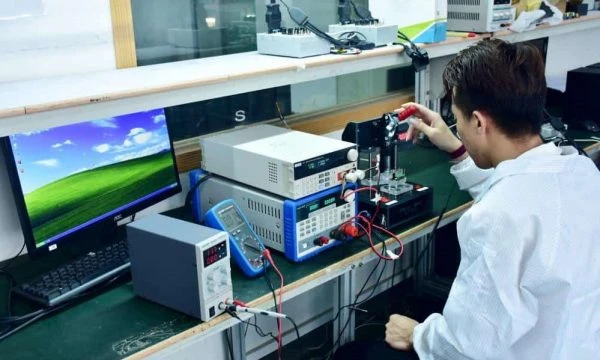
Validation is the only way to prove a design can survive the intended lifecycle. This section outlines the testing protocols required to accept a lot.
- Thermal Shock Testing (IPC-TM-650 2.6.7):
- Objective: Simulate rapid temperature changes.
- Method: Cycle between -55°C and +125°C (or +150°C).
- Acceptance: No increase in resistance > 10% after 1000 cycles.
- Interconnect Stress Test (IST):
- Objective: Accelerated testing of via reliability.
- Method: DC current heats specific coupons to target temp, then forced air cools them.
- Acceptance: Survive 500 cycles to 150°C without resistance rising 10%.
- Microsection Analysis (As Received):
- Objective: Verify plating thickness and stackup integrity.
- Method: Cross-section sample boards.
- Acceptance: Copper thickness > 20µm (or specified), no voids, no cracks.
- Microsection Analysis (Post-Stress):
- Objective: Check for latent defects after thermal cycling.
- Method: Cross-section samples that underwent thermal shock.
- Acceptance: No propagation of micro-cracks, no lift-off > specified limits.
- Solderability Testing (IPC-J-STD-003):
- Objective: Ensure surface finish survives thermal aging.
- Method: Dip and look / wetting balance test.
- Acceptance: > 95% coverage, uniform wetting.
- Glass Transition (Tg) Verification:
- Objective: Confirm material properties.
- Method: DSC (Differential Scanning Calorimetry) or TMA.
- Acceptance: Tg within ±5°C of datasheet spec.
- CTE Measurement (TMA):
- Objective: Verify Z-axis expansion.
- Method: Thermomechanical Analysis.
- Acceptance: Alpha 1 and Alpha 2 CTE values match material datasheet.
- Moisture Absorption Test:
- Objective: Assess delamination risk.
- Method: Weigh before and after humidity exposure.
- Acceptance: < 0.2% weight gain (material dependent).
- Coupon Design Practice:
- Objective: Ensure test vehicle represents the product.
- Method: Include specific coupon design practice features (e.g., daisy chains matching the smallest via on the board) on the production panel.
- Acceptance: Coupons must be traceable to the specific production panel.
thermal cycling stress supplier qualification checklist (RFQ, audit, traceability)
Use this checklist to vet suppliers. If a vendor cannot provide these details, they are likely not equipped for high-reliability manufacturing.
RFQ Inputs (What you must provide)
- Operating Temperature Range: Define Min/Max (e.g., -40°C to +125°C).
- Thermal Cycle Profile: Ramp rate (°C/min) and dwell times.
- Target Lifespan: Expected years of service or number of cycles.
- IPC Class: Explicitly state IPC-6012 Class 3 if required.
- Material Callout: Specific laminate (e.g., "Isola 370HR or equivalent with Tg>170, Td>340").
- Via Structure: Blind/Buried/Through definitions and aspect ratios.
- Plating Spec: Minimum wall thickness (e.g., 25µm average).
- Test Coupon Req: Request IST coupons or IPC coupons on panel rails.
Capability Proof (What supplier must show)
- IST/HATS Capability: Do they have in-house testing or a partner lab?
- Material Stock: Do they stock high-Tg/Low-CTE materials regularly?
- Plating Uniformity: Data showing throwing power for high aspect ratios.
- Press Cycle Optimization: Evidence of controlled lamination profiles for thick boards.
- Certifications: IATF 16949 (Automotive) or AS9100 (Aerospace) is a strong indicator of process control.
- Drill Accuracy: CpK data for registration on high-layer counts.
Quality System & Traceability
- Lot Traceability: Can they trace a failed board back to the specific material batch and plating bath?
- Cross-Section Frequency: Do they section every panel, every lot, or only on request?
- Solder Mask Adhesion: Routine tape tests performed?
- Ionic Contamination: Testing frequency to prevent electrochemical migration.
- Calibration: Are thermal ovens and test equipment calibrated to NIST/ISO standards?
- Defect Library: Do they have a catalog of past thermal failures and corrective actions?
Change Control & Delivery
- PCN Policy: Will they notify you before changing laminate brands or manufacturing sites?
- Packaging: Moisture Barrier Bags (MBB) with HIC (Humidity Indicator Cards) are mandatory.
- Shelf Life: Clear labeling of expiration for surface finishes.
- COC (Certificate of Conformance): Must list measured Tg and copper thickness, not just "Pass".
How to choose thermal cycling stress (trade-offs and decision rules)
Balancing reliability with cost and manufacturability requires making specific trade-offs.
- High Tg Material vs. Standard FR4:
- Decision Rule: If operating temp > 130°C or soldering requires multiple lead-free reflows, choose High Tg (170°C+). Otherwise, standard Tg (140°C) saves 10-20% on material cost.
- Class 3 Plating (25µm) vs. Class 2 (20µm):
- Decision Rule: If the board faces daily thermal cycles (e.g., automotive ignition), choose Class 3 for the extra ductility. For stable telecom gear, Class 2 is usually sufficient.
- Filled Vias vs. Open Vias:
- Decision Rule: If you have Via-in-Pad or high-density BGA designs, choose conductive/non-conductive fill + cap. This prevents solder theft and strengthens the via but adds 15-20% to cost.
- Low CTE Laminate vs. Standard High Tg:
- Decision Rule: If the board is > 2.0mm thick or has 0.8mm pitch BGAs, prioritize Low CTE materials to reduce Z-axis stress. For thin boards (< 1.0mm), standard High Tg is often adequate.
- IST Testing vs. Standard Continuity:
- Decision Rule: If failure endangers safety or incurs high replacement costs (remote sites), invest in lot-based IST testing. For consumer gadgets, standard E-test is acceptable.
- Large Vias vs. Small Vias:
- Decision Rule: If space permits, use larger vias (0.3mm+). They are easier to plate effectively. Use 0.15mm microvias only when density demands it, as they are more sensitive to plating irregularities.
thermal cycling stress FAQ (cost, lead time, Design for Manufacturability (DFM) files, materials, testing)
How much does specifying "thermal cycling resistance" increase PCB cost? Moving from standard FR4 to High-Tg/Low-CTE material typically increases bare board cost by 15-30%. Adding Class 3 plating and rigorous testing (IST coupons) can add another 10-20%. However, this cost is negligible compared to a field recall.
Does thermal cycling stress testing affect lead time? Yes. Standard electrical test is fast. Adding thermal shock cycles (e.g., 100 cycles) or IST testing can add 3-7 days to the lead time depending on the number of cycles and lab availability. Plan this into your NPI schedule.
What DFM files are needed to analyze thermal stress risks? Beyond standard Gerbers, provide an IPC-356 netlist (for connectivity verification) and a detailed stackup drawing. The stackup must specify the exact dielectric materials (brand/series) so the manufacturer can calculate CTE mismatches.
Can I use standard FR4 for thermal cycling if I increase copper thickness? Not reliably. Increasing copper thickness helps barrel strength, but if the FR4 expands too much (high CTE), it will eventually crack even thick copper. The root cause—the material expansion—must be addressed with the right laminate selection.
What are the acceptance criteria for thermal cycling stress tests? Common criteria (based on IPC-6012) include: No electrical open circuits, resistance change < 10%, no barrel cracks visible in microsection, and no corner cracks extending into the plating > 25µm.
How does "press cycle optimization" reduce thermal stress risks? Press cycle optimization involves tuning the heat-up rate, pressure, and cool-down rate during lamination. This ensures the resin cures fully without trapping stress or voids. A poorly cured board will have a lower actual Tg and be more prone to delamination under thermal stress.
Why is "coupon design practice" critical for valid results? If the test coupon doesn't match the board's toughest features (e.g., smallest via, densest pitch), the test is meaningless. Good coupon design practice involves placing coupons on the panel periphery that mimic the exact via structures found in the active PCB area.
Is ENIG better than HASL for thermal cycling environments? Generally, yes. ENIG provides a flatter surface and avoids the thermal shock of the HASL process itself. Furthermore, the intermetallic compound formed with ENIG is often more stable under thermal aging than the variable thickness of HASL.
Can APTPCB assist with material selection for thermal cycling? Yes. We can review your operating conditions and recommend specific material sets (Isola, Rogers, Panasonic) that balance cost with the required Z-axis stability.
Resources for thermal cycling stress (related pages and tools)
- High-Tg PCB Manufacturing: Deep dive into materials that maintain stability at high temperatures, essential for reducing Z-axis expansion.
- Automotive PCB Solutions: Explore how we handle extreme thermal requirements for engine and safety systems.
- PCB Quality Control System: Details on our inspection protocols, including microsectioning and thermal stress testing.
- Isola PCB Materials: Specifications for one of the most common high-reliability laminate families used to combat thermal stress.
- PCB Fabrication Process: Step-by-step overview of how we control plating and lamination to prevent latent defects.
- Testing and Quality Assurance: Learn about the validation methods we use to ensure your PCBA survives the field.
Request a quote for thermal cycling stress (Design for Manufacturability (DFM) review + pricing)
Ready to validate your design? Click here to request a quote and get a comprehensive DFM review focused on thermal reliability.
To get the most accurate thermal risk assessment, please include:
- Gerber Files (RS-274X): Complete layer set.
- Fab Drawing: Clearly state Tg, Td, and IPC Class 3 requirements.
- Stackup: Desired layer build-up and material preference (or ask us to recommend).
- Testing Requirements: Specify if you need IST coupons, thermal shock testing, or specific cross-section reports.
- Volume: Prototype vs. Mass Production quantities (affects material stock options).
Conclusion (next steps)
Managing thermal cycling stress is about predicting the mechanical behavior of your PCB materials under heat and ensuring your manufacturer can control the variables that matter. By selecting the right high-Tg materials, enforcing strict plating specifications, and validating with realistic stress tests, you eliminate the most common cause of field failure in harsh environments. APTPCB is equipped to guide you through these trade-offs, ensuring your boards perform as reliably in year ten as they do on day one.