
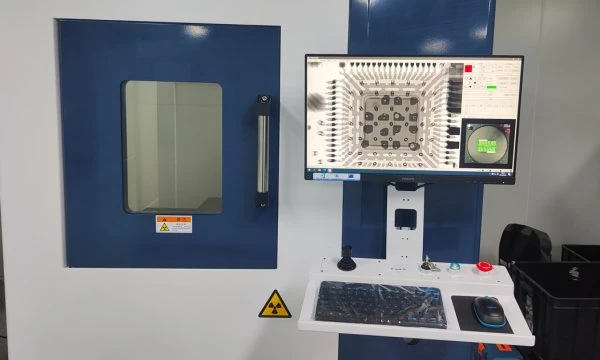
A thermal imaging PCB release review is not only a layout inspection. It is a decision process that confirms whether the board definition, detector boundary, thermal strategy, manufacturing package, and validation plan are mature enough for the next build stage.
A thermal imaging system may include optics, an infrared detector, readout electronics, processing hardware, enclosure structures, and external interfaces. The PCB release package should clearly define which parts are owned by the board team and which belong to the larger imaging system.
Quick Answer
Before releasing a thermal imaging PCB, engineers should review five areas:
- Detector and board ownership boundary
- Power and thermal partitioning
- Sensor-side and output-side interface definition
- Assembly, inspection, and DFM readiness
- Validation evidence required for pilot build approval
A PCB release confirms that the board can be manufactured and verified within its defined scope. It does not independently prove detector sensitivity, optical performance, or complete camera qualification.
Thermal Imaging PCB Review Decision Matrix
| Review area | Key question | Release evidence |
|---|---|---|
| Detector boundary | What does the PCB own inside the imaging chain? | Block diagram, interface ownership notes |
| Power architecture | Are detector, analog, digital, and support rails separated clearly? | Power tree, placement review, return-path analysis |
| Thermal zoning | Are heat sources separated from sensitive detector paths? | Thermal map, placement rationale |
| High-speed interfaces | Are sensor links and output links clearly defined? | Interface table, routing constraints |
| Manufacturing readiness | Can the supplier build and inspect the released design? | Gerbers, stackup, BOM, assembly drawings |
| Validation scope | Does the first build have measurable objectives? | Test plan and acceptance criteria |
What Should Engineers Review First on a Thermal Imaging PCB?
The first review should begin with the board role.
A thermal imaging PCB may function as:
- an infrared detector readout board
- a sensor interface board
- an image-processing board
- a mixed detector and processing assembly
These roles create different engineering priorities.
For example, a detector readout board may prioritize low-noise power delivery and sensitive signal routing, while a processing board may place greater emphasis on high-speed digital interfaces, thermal dissipation, and memory or processor placement.
The release package should answer:
- Is the detector mounted directly on the PCB?
- Does the PCB connect to a separate detector module?
- Is the board responsible for bias generation, signal conditioning, or only data transfer?
- Which functions belong to downstream electronics?
A clear ownership boundary prevents later confusion between PCB performance and complete thermal-camera performance.
Where Does the Detector Boundary End and the PCB Boundary Begin?
Thermal imaging performance depends on more than the circuit board.
The detector, optics, mechanical structure, calibration process, and system software all influence the final image result. The PCB release review should therefore focus on board-controlled factors.
A useful boundary definition includes:
| System element | PCB review responsibility |
|---|---|
| Infrared detector module | Mechanical/electrical interface definition |
| Readout electronics | Power integrity, routing, assembly |
| Processor section | Thermal load, high-speed connectivity |
| Optical assembly | Mechanical clearance and ownership boundary |
| Enclosure | Thermal environment assumptions |
Detector families such as cooled infrared detectors or uncooled infrared detectors can influence PCB architecture, but naming a detector type does not prove system performance.
The engineering question is not only “Which detector is used?” but “How does the PCB support the detector within the released design boundary?”
How Should Power and Thermal Partitioning Be Reviewed?
Thermal imaging electronics are sensitive to both electrical noise and unwanted heat coupling.
The PCB review should separate:
- detector-sensitive regions
- analog conditioning areas
- digital processing zones
- power conversion sections
- external interface areas
A practical zoning review includes:
| Zone | Review focus |
|---|---|
| Detector area | Noise isolation, stable supply, mechanical interface |
| Analog front end | Ground strategy and signal integrity |
| Processor area | Heat generation and airflow path |
| Power section | Converter efficiency and thermal rise |
| Connectors | Current capacity and mechanical stability |
Infrared PCB guidance commonly emphasizes keeping heat-producing circuits away from sensitive infrared sensor areas because thermal coupling can influence measurement stability. Thermal review should also define how measurements are interpreted. An IR camera can identify PCB hotspots during development, but measurement conditions such as emissivity, reflections, airflow, and operating load affect the result. ## Which Interfaces Need Attention Before Release?
Thermal imaging PCBs often include multiple interface layers.
The review should separate:
Sensor-side interfaces
Examples:
- MIPI CSI-2
- D-PHY
- LVDS
These describe how detector data moves into the electronics chain.
Output-side interfaces
Examples:
- HDMI
- SDI
- GigE Vision
- USB3 Vision
These describe downstream system connectivity.
The interface name alone is not a performance guarantee. The release package should define:
- routing requirements
- impedance requirements
- connector ownership
- cable assumptions
- validation method
A common release problem occurs when interface names appear in documentation but the actual electrical boundary is still unclear.
What Documents Should Be Frozen Before Pilot Build?
A thermal imaging PCB should not enter pilot build with unresolved ownership questions.
The minimum release package should include:
Fabrication package
- Gerber files
- drill files
- stackup definition
- material information
- controlled impedance requirements
Assembly package
- BOM
- assembly drawings
- component placement
- polarity information
- inspection requirements
Engineering package
- power tree
- interface map
- thermal zoning notes
- test requirements
- revision-controlled design assumptions
The supplier should review the released package as a manufacturing definition, not reconstruct missing design intent.
Thermal Imaging PCB Release Failure Modes
| Failure mode | Why it happens | Release impact |
|---|---|---|
| Detector boundary unclear | System ownership was never frozen | Delayed review and redesign discussions |
| Hot components near detector path | Thermal zoning considered too late | Additional cooling or layout changes |
| Interface naming without constraints | Protocol identity replaced electrical planning | Signal-integrity uncertainty |
| Prototype goals unclear | First build expected to prove everything | Conflicting acceptance decisions |
| Incomplete manufacturing notes | Fabrication assumptions remain hidden | Supplier questions and schedule risk |
How Should Validation Be Structured?
Validation should follow the actual engineering questions being answered.
Stage 1: Design release review
Confirms:
- documentation completeness
- manufacturability
- interface definition
- assembly readiness
Stage 2: First-build verification
Confirms:
- released design was manufactured correctly
- assembly assumptions were correct
- basic electrical checks pass
Stage 3: System validation
Confirms:
- complete imaging behavior
- application performance
- environmental objectives
A board that passes fabrication inspection is not automatically a qualified thermal imaging system.
Thermal Imaging PCB Supplier Checklist
Before requesting production review, provide:
| Supplier input | Purpose |
|---|---|
| Stackup information | Confirms layer and impedance intent |
| Detector interface details | Defines board ownership |
| BOM and assembly data | Enables manufacturing review |
| Thermal requirements | Identifies sensitive regions |
| Test plan | Defines first-build expectations |
| Mechanical references | Prevents connector and mounting conflicts |
Next Steps with APTPCB
If your thermal imaging PCB release is delayed by detector-interface uncertainty, thermal partitioning concerns, high-speed routing questions, or incomplete manufacturing documentation, share the fabrication package, assembly files, and validation requirements through [email protected] or the quote page.
APTPCB engineering review can help identify whether the release risk comes from board definition, manufacturing readiness, interface planning, or validation scope.
Related resources:
- rigid-flex PCB for compact detector interconnect challenges
- high-speed PCB for controlled interface routing requirements
- first article inspection for first-build verification planning
- DFM guidelines for manufacturability review
FAQ
Does a thermal imaging PCB release prove camera performance?
No. PCB release confirms board-level manufacturing and validation readiness. Detector sensitivity, optics, calibration, and complete system performance require additional validation.
Can MIPI CSI-2 or LVDS be mentioned in a thermal imaging PCB review?
Yes. These terms identify interface families. They should be supported by routing requirements and electrical validation plans.
Why is thermal zoning important for infrared detector boards?
Heat generated by processors, regulators, and power circuits can affect sensitive detector-related regions if board partitioning is not planned properly.
What is the most common release delay?
Unclear ownership boundaries are a frequent cause. The team must define which functions belong to the PCB and which belong to the larger imaging system.
What should the first build prove?
The first build should confirm that the released PCB package, assembly process, and scoped electrical checks match the intended design.
Public References
Author and Review Information
- Author: APTPCB imaging, mixed-signal, and DFM content team
- Technical review: detector-interface, assembly-planning, and validation engineering team