
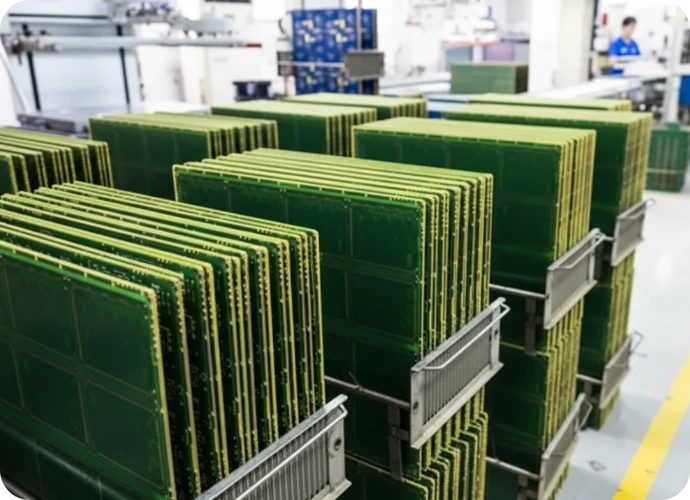
A Threat Detection PCB is the electronic foundation behind security systems that must identify abnormal events while maintaining extremely low false alarm rates. These boards are used in perimeter protection, radar sensing, thermal monitoring, anti-tamper devices, and critical infrastructure security equipment.
Unlike general-purpose control boards, threat detection boards must preserve signal accuracy, survive harsh environments, and maintain consistent performance over long deployment periods. A small impedance shift, moisture failure, or trace defect can reduce detection range or create unreliable alarms.
This guide helps hardware engineers, product managers, and procurement teams make practical decisions about:
- PCB architecture selection
- Material and stackup requirements
- RF and sensor signal integrity
- Tamper protection implementation
- Manufacturing controls
- Validation and supplier qualification
What type of Threat Detection PCB does your system need?
The correct PCB design depends on the detection technology, operating environment, and required security level.
| Application | Main PCB Challenge | Preferred PCB Approach |
|---|---|---|
| Fence Detection PCB | Vibration filtering, outdoor reliability, long cable interfaces | High-Tg FR4, strong grounding, environmental protection |
| Radar Detection PCB | RF loss, impedance stability, antenna integration | Rogers/PTFE or hybrid RF stackup |
| Tamper Detection PCB | Trace continuity and physical intrusion detection | Fine-line mesh routing with strict electrical testing |
| Thermal Detection PCB | Heat dissipation and sensor stability | MCPCB or heavy copper thermal design |
A standard FR4 PCB may be suitable for indoor monitoring electronics, but sensing hardware exposed to the environment usually requires controlled impedance, higher reliability materials, and stronger validation.
When should you use a specialized Threat Detection PCB?
A dedicated threat detection PCB approach is required when the board directly affects detection accuracy.
Typical cases include:
- GHz-frequency radar sensing where transmission loss affects range.
- Outdoor fence monitoring where moisture and temperature cycling can create leakage paths.
- Anti-tamper systems where broken traces must immediately trigger alarms.
- Thermal imaging modules where heat accumulation affects sensor calibration.
Radar PCB designs commonly require controlled transmission lines, low-loss materials, and stable dielectric properties because RF performance depends on maintaining predictable impedance throughout the signal path.
How do you select materials for a Threat Detection PCB?
Material selection should follow the sensing technology rather than cost alone.
Material selection matrix
| Requirement | Recommended Material | Typical Application |
|---|---|---|
| General security controller | High-Tg FR4 (Tg >170°C) | Indoor security electronics |
| High-frequency RF | Rogers RO4350B, RO3003, Taconic materials | Radar Detection PCB |
| Mixed RF and digital circuits | Hybrid FR4 + RF laminate | Radar modules with processors |
| High heat dissipation | Aluminum MCPCB or heavy copper FR4 | Thermal Detection PCB |
For radar applications, important parameters include:
- Dielectric constant (Dk)
- Dissipation factor (Df)
- Copper roughness
- Dielectric thickness tolerance
- Thermal stability
Low-loss laminates such as Rogers and PTFE-based materials are commonly selected when RF signal integrity is critical.
What PCB specifications should be defined before production?
A reliable Threat Detection PCB specification should include:
- Material grade and thickness.
- Layer stackup definition.
- Controlled impedance requirements.
- Copper weight.
- Surface finish.
- Environmental requirements.
- Inspection criteria.
- Traceability requirements.
Recommended engineering specifications:
- 50Ω single-ended impedance for RF paths.
- 100Ω differential impedance for high-speed differential interfaces.
- ±5% impedance tolerance for sensitive RF designs.
- High-Tg laminate for outdoor applications.
- ENIG or ENEPIG surface finish for corrosion resistance.
- IPC Class 3 requirements for mission-critical systems.
For tamper-sensitive designs, specify trace geometry carefully. Fine-line serpentine patterns may require HDI manufacturing capability and tighter process control.
What are the major Threat Detection PCB failure modes?
| Failure Mode | Root Cause | Detection Method | Prevention |
|---|---|---|---|
| Radar range reduction | Impedance variation or material inconsistency | TDR, RF testing | Controlled stackup and impedance coupons |
| False alarms | Leakage current, contamination, noise | Insulation testing | Cleanliness control and grounding design |
| Tamper mesh failure | Trace opens or shorts | AOI and electrical testing | DFM review of fine traces |
| Outdoor corrosion | Moisture exposure and poor finish | Salt spray testing | ENIG/ENEPIG protection |
| Delamination | Moisture or CTE mismatch | Thermal cycling | High-Tg materials and controlled lamination |
| Thermal drift | Poor heat spreading | Thermal analysis | MCPCB or thermal vias |
How should a Radar Detection PCB be designed?
Radar Detection PCB designs require RF-focused manufacturing controls.
Key design requirements include:
- Stable dielectric materials.
- Continuous ground reference planes.
- Controlled transmission-line geometry.
- Reduced via discontinuities.
- Proper antenna transition design.
For high-frequency radar systems, standard FR4 may introduce excessive loss or dielectric variation. RF laminate solutions are often selected for antenna feeds and microwave signal paths.
A hybrid stackup is often used:
- RF laminate layers handle antenna and microwave routing.
- FR4 layers support processors, power, and digital interfaces.
This approach balances RF performance and manufacturing cost.
How do you validate a Threat Detection PCB before mass production?
Validation should confirm both electrical performance and long-term reliability.
Production acceptance checklist
| Test | Purpose | Typical Requirement |
|---|---|---|
| TDR impedance test | Confirm RF consistency | Within specified impedance tolerance |
| Flying probe test | Verify connectivity | 100% electrical continuity |
| AOI inspection | Detect trace defects | No critical opens/shorts |
| Thermal cycling | Verify reliability | No cracking or delamination |
| Ionic contamination test | Prevent leakage failures | Below specified cleanliness limit |
| XRF plating inspection | Confirm surface finish | Thickness within specification |
| Microsection analysis | Verify stackup accuracy | Layer structure matches drawing |
For security products, prototype approval should include first article inspection before production release.
How do you qualify a Threat Detection PCB supplier?
A capable supplier should demonstrate both manufacturing capability and process control.
RFQ supplier checklist
Engineering capability
- Controlled impedance manufacturing experience.
- RF laminate processing capability.
- Hybrid FR4 and PTFE stackup experience.
- Fine-line PCB manufacturing capability.
- HDI and via filling capability.
Quality control
- AOI inspection.
- Electrical testing.
- TDR capability.
- X-ray inspection.
- Microsection analysis.
- Material certification tracking.
Security product requirements
- Full lot traceability.
- Controlled engineering change process.
- Secure design data handling.
- Long-term quality record retention.
How do you balance performance, security, and cost?
Threat detection PCB decisions usually involve several engineering trade-offs.
| Priority | Design Choice | Impact |
|---|---|---|
| Maximum detection range | RF laminate materials | Higher cost, better signal stability |
| Lowest false alarms | Better grounding and shielding | More layers and design effort |
| Strong tamper protection | Fine trace mesh | Lower manufacturing yield |
| Outdoor lifetime | High-Tg materials and protective finishes | Higher PCB cost |
| Compact integration | Antenna-on-board design | More RF layout complexity |
The correct design is not always the most expensive option. It is the architecture that matches the detection requirement and deployment environment.
Threat Detection PCB FAQ
Can a Radar Detection PCB use standard FR4?
For many high-frequency radar applications, standard FR4 is unsuitable because dielectric variation and signal loss can affect RF performance. RF laminate or hybrid construction is normally preferred.
What PCB testing is important for fence detection systems?
Fence Detection PCB systems should include electrical testing, environmental reliability testing, insulation checks, and vibration-related validation.
How is a Tamper Detection PCB verified?
Tamper Detection PCB designs should include continuity testing, AOI inspection, and manufacturing controls that confirm the intended trace pattern remains intact.
What materials are used for Thermal Detection PCB designs?
Thermal systems commonly use aluminum MCPCB structures or heavy copper PCB designs with thermal vias to reduce temperature rise.
Resources for Threat Detection PCB
- Security Equipment PCB – Explore our specific capabilities for surveillance, access control, and alarm system hardware.
- Rogers PCB Materials – Understand the material properties required for high-frequency radar and sensor applications.
- Rigid-Flex PCB – Learn how rigid-flex solutions can eliminate connectors and improve reliability in compact sensor modules.
- PCB Quality System – Review the certifications and quality control processes that ensure zero-defect delivery for critical systems.
- DFM Guidelines – Access technical design rules to optimize your board layout for manufacturing yield and cost.
Request a quote for Threat Detection PCB
Ready to move from design to production? Request a Quote from APTPCB, and our engineering team will perform a comprehensive DFM review before fabrication.
Please include:
- Gerber files.
- Fabrication drawing.
- Stackup requirements.
- Material specifications.
- Testing requirements.
- Annual production forecast.
Conclusion
Threat Detection PCB projects require decisions beyond ordinary PCB purchasing. Material selection, impedance control, environmental protection, validation testing, and supplier capability all determine whether a security system performs reliably in the field.
A well-defined specification and qualified manufacturing partner reduce false alarms, improve detection accuracy, and create a repeatable production process for security-critical electronics.
Which follow-up page should be prioritized next: **supplier RFQ checklist**, **radar PCB deep dive**, or **tamper detection PCB guide**?