
FAQ
What is wave soldering in PCB assembly?
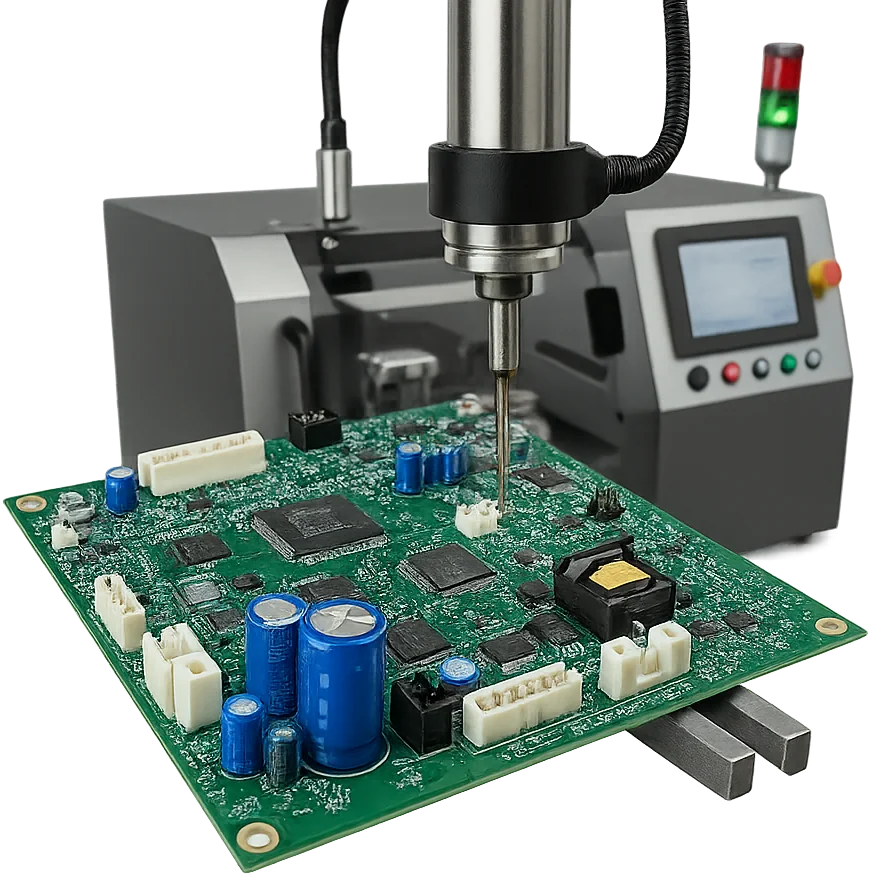
Wave soldering is a pcb assembly process where molten solder is pumped into a wave that contacts the underside of a through-hole board, creating reliable solder joints on component leads. It is suited for through-hole components and mixed-technology assemblies.
What is the difference between wave solder and reflow?
Reflow soldering melts solder paste applied to surface mount pads and is the standard for smt. Wave soldering is designed for through-hole joints and can also reflow surface mount parts that were pre-applied with solder paste on the bottom side.
How do I prevent solder bridges in wave soldering?
Solder bridge prevention involves proper component spacing, adequate solder mask between pads, correct solder wave height, and appropriate contact time. A pcb design with adequate clearances between through-hole leads is the first line of defense.
What is selective soldering?
Selective soldering uses a localized mini-wave or solder fountain to solder individual through-hole components on a mixed-technology pcb assembly without exposing surface mount parts to high heat. It is preferred for boards with temperature-sensitive smt components.
What is the minimum hole size for wave soldering?
Wave solder can fill holes from approximately 0.3mm to 3.2mm diameter, but reliable fill requires adequate hole-to-component-lead clearance. A hole diameter at least 0.3mm larger than the lead diameter is a common guideline.
Through-hole soldering creates a mechanical and electrical connection by inserting component leads through plated through-holes (PTH) and forming a solder joint between the lead, land, and barrel. It remains widely used for connectors, relays, transformers, switches, terminal blocks, power components, and assemblies where mechanical loading, thermal performance, or component availability favors THT.
A successful THT assembly depends on three decisions:
- Which soldering process matches the board design and production volume?
- Which PCB features must be controlled before manufacturing?
- Which inspection evidence proves the assembly meets requirements?
Key takeaways
- Select manual, wave, or selective soldering based on accessibility, thermal mass, board mix, and required production evidence.
- Define hole-to-lead fit, land geometry, thermal connections, solder-side access, lead protrusion, and inspection access during PCB design.
- Validate soldering using the actual PCB, alloy, flux, components, and measured thermal profile.
- Include standards, inspection requirements, traceability, and test expectations in the RFQ package.
- Evaluate solder joints using the correct inspection method rather than relying on hole fill alone.
Table of contents
- What is a through-hole PCB?
- Through-hole vs SMD: which should you use?
- When should through-hole components be used?
- Which through-hole soldering process should be selected?
- What DFM checks are required for through-hole assembly?
- How is a through-hole soldering process qualified?
- How should through-hole solder joints be inspected?
- What defects occur in through-hole soldering?
- What should be included in a through-hole assembly RFQ?
What is a through-hole PCB?
A through-hole PCB is a board designed for components whose leads pass through drilled holes, usually plated through-holes, and are soldered on the opposite side. Through-hole technology (THT) was the original way to build circuit boards. Today most boards are mixed: surface-mount (SMD/SMT) parts for density, with through-hole parts where a connector, transformer, or high-current part needs a lead through the board.
Through-hole vs SMD (SMT vs THT): which should you use?
| Factor | Through-hole (THT) | Surface mount (SMD / SMT) |
|---|---|---|
| How the part attaches | Leads pass through plated holes and are soldered on the far side | Terminations sit on surface pads and are reflowed |
| Typical parts | Connectors, relays, transformers, large capacitors, terminal blocks | ICs, passives, BGAs, QFNs, most modern packages |
| Board area and density | Holes consume space on every layer | Higher density; both sides usable |
| Mechanical retention | Useful for parts that see insertion force, vibration, or weight | Relies on pad adhesion and joint geometry; may need extra support |
| Soldering process | Manual, wave, selective, or pin-in-paste reflow | Paste printing plus reflow |
| Assembly cost driver | Insertion and secondary soldering step | Placement speed and stencil/setup |
The usual answer is not SMT or THT. Keep SMT as the default and reserve through-hole for parts whose mechanical, thermal, or sourcing needs justify the extra process step. Where only a few THT parts remain on a reflow board, pin-in-paste (intrusive reflow) can remove the secondary soldering step: paste is printed into and around the holes through a stencil PCB aperture sized for the extra volume, and the leads are soldered in the same reflow pass. It needs reflow-rated components and a confirmed paste volume, so qualify it on the real board.
When should through-hole components be used?
Through-hole technology is appropriate when the component, mechanical interface, electrical requirement, or sourcing strategy requires a leaded package.
Common applications include:
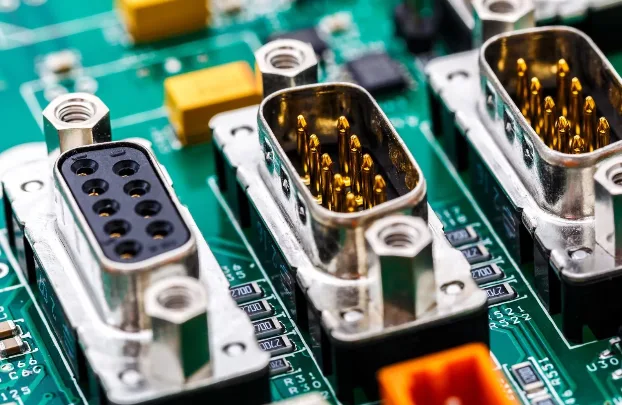
- Board-edge connectors requiring insertion force capability
- Relays and switches with mechanical actuation loads
- Power components with significant thermal demand
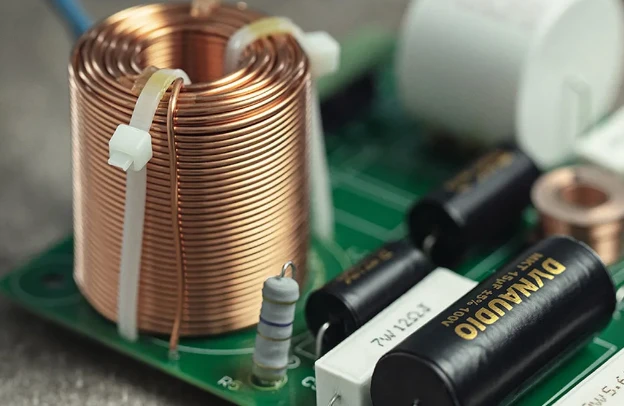
- Large capacitors, magnetics, and terminal blocks
- Legacy or specialized components unavailable in SMT packages
Through-hole does not automatically create a stronger assembly than SMT. Reliability depends on the complete load path, including component support, PCB construction, copper design, solder joint geometry, and operating environment.
Before selecting THT, review:
- Mechanical forces transferred through the component
- Component temperature limits
- Available solder process access
- Required inspection visibility
- Rework expectations
For mixed assemblies, review the complete SMT and THT process flow.
Which through-hole soldering process should be selected?
The correct process depends on board geometry, production quantity, access, and risk.
| Process | Best fit | Main constraints | Required evidence |
|---|---|---|---|
| Manual soldering | Prototypes, repairs, low-volume builds, inaccessible joints | Operator variation, slower cycle time, repeatability control | Work instructions, operator qualification, inspection records |
| Wave soldering | Stable designs with many accessible solder-side joints | Shadowing, pallet needs, bottom-side SMT limitations, thermal load | Wave profile, flux control, pallet details, first article results |
| Selective soldering | Mixed SMT/THT assemblies needing localized soldering | Nozzle access, programming effort, thermal optimization | Program revision, nozzle plan, profile data, inspection results |
Manual soldering requires controlled tools, suitable tips, trained operators, and defined rework limits.
Wave soldering requires the PCB layout to support solder flow. Component orientation, lead length, board travel direction, and pallet design affect bridging and solder skips.
Selective soldering provides flexibility for mixed assemblies where only selected through-hole joints require solder contact. See selective soldering for how nozzle access and programs are planned.
Selective soldering vs wave soldering
Choose wave soldering when most THT joints sit on one side, the solder side has no fine-pitch SMT or can be protected with a pallet, and volume justifies pallet tooling. Choose selective soldering when the solder side already carries SMT parts, only a limited number of THT joints need solder, or individual joints need their own dwell and temperature. Wave is faster per board; selective is slower per joint but avoids exposing the whole bottom side to solder.
What DFM checks are required for through-hole assembly?
A useful DFM review connects PCB design decisions with the selected assembly process.
| DFM item | Design requirement | Manufacturing impact |
|---|---|---|
| Finished hole and lead size | Define lead dimensions and finished-hole tolerance | Controls insertion, solder flow, and joint formation |
| Land geometry | Maintain required annular ring and fabrication tolerance | Protects barrel connection and solder coverage |
| Plane connections | Review copper area and thermal relief | Large copper areas increase heat demand |
| Lead protrusion | Specify seating, trimming, and clearance requirements | Affects bridging and inspection access |
| Solder-side access | Confirm wave/nozzle/tool access | Determines whether automation is practical |
| Adjacent SMT components | Define spacing and protection needs | Prevents solder exposure and thermal damage |
| Inspection access | Plan viewing angles and test locations | Ensures acceptance can be verified |
Hole size should be calculated from the actual component lead geometry, tolerance range, PCB fabrication capability, solder requirements, and assembly method.
Thermal relief design requires engineering judgment. A large power connection may require strong copper performance, while excessive heat sinking can reduce solderability. Validate the trade-off through process trials.
Use an early PCBA DFM review before production release.
How is a through-hole soldering process qualified?
A production soldering process should be developed using the actual assembly rather than copied machine settings.
Qualification should confirm:
- Approved solder alloy and flux
- PCB surface finish compatibility
- Component thermal limits
- Board thickness and copper distribution effects
- Difficult high-mass joint performance
- Inspection acceptance criteria
Thermal profiling should measure representative locations, especially:
- Large connectors
- Power pins connected to planes
- Thick PCB regions
- Components close to solder exposure
A machine temperature display does not prove that every joint reached the required condition.
Process control should also monitor:
- Flux application
- Solder condition
- Nozzle or wave performance
- Equipment settings
- Material changes
- Rework frequency
How should through-hole solder joints be inspected?
Inspection begins with the acceptance specification. Define the applicable IPC-A-610 and J-STD-001 revisions, product class, customer requirements, and approved deviations.
| Inspection method | Useful for | Limitation |
|---|---|---|
| Visual inspection | Wetting, bridges, excess solder, component placement, accessible fillets | Hidden features may not be visible |
| AOI | Repeatable visible solder and placement checks | Cannot inspect blocked areas |
| X-ray | Selected internal or hidden features | Interpretation depends on geometry |
| Electrical test | Opens, shorts, circuit operation | Does not prove workmanship alone |
| Microsection | Internal barrel and plating analysis | Destructive sampling |
| Mechanical testing | Project-specific strength validation | Requires defined fixture and criteria |
Hole fill is important, but it is only one acceptance characteristic. Review wetting, solder coverage, lead condition, residues, polarity, mechanical damage, and electrical performance as required.
What defects occur in through-hole soldering?
Defects should be analyzed by location, process condition, component type, and material history.
| Defect | Possible causes | Investigation focus |
|---|---|---|
| Insufficient fill | Tight fit, poor wetting, high thermal mass, weak flux activity | Review hole size, profile, flux, and solderability |
| Bridging | Lead spacing, orientation, excessive solder, drainage issues | Review wave direction and lead geometry |
| Nonwetting | Contamination, oxidation, incompatible materials | Check finishes, flux, and temperature history |
| Icicles | Withdrawal conditions, solder volume, process imbalance | Review motion, solder level, and geometry |
| Blowholes | Moisture, laminate issues, plating defects | Compare PCB lots and perform analysis if needed |
| Lifted lands | Excess heat, repeated rework, mechanical stress | Review rework history and pad condition |
| Residue concerns | Flux compatibility or cleaning issues | Verify chemistry and cleanliness requirements |
What should be included in a through-hole assembly RFQ?
A complete RFQ package allows a supplier to quote the actual manufacturing process.
Design and component information
- Gerber, ODB++, or IPC-2581 files
- Drill files and PCB drawings
- BOM with approved manufacturer part numbers
- Component lead dimensions and finishes
- Assembly drawings and revision history
- Finished-hole requirements and keep-outs
Process requirements
- Manual, wave, selective, or supplier-proposed process
- Solder alloy and flux requirements
- Cleaning requirements
- Coating requirements
- Thermal restrictions
- Rework expectations
Quality requirements
- IPC-A-610/J-STD-001 revision and class
- Inspection methods
- Functional test requirements
- Traceability requirements
- First article expectations
- Change notification requirements
A complete package lets a turnkey assembly supplier quote tooling, process development, inspection, and production requirements accurately.
Standards and responsibility boundary
Relevant references may include:
- IPC-A-610 — Acceptability of Electronic Assemblies
- J-STD-001 — Requirements for Soldered Electrical and Electronic Assemblies
- IPC-2221 — Generic Standard on Printed Board Design
- IPC-2222 — Sectional Design Standard for Rigid Organic Printed Boards
- IPC-TM-650 — Test Methods Manual
Confirm current revisions and customer requirements before release.
The assembly supplier is responsible for developing and controlling the soldering process against supplied requirements. The design owner remains responsible for component selection, mechanical loading, system requirements, and final product acceptance unless otherwise contracted.
APTPCB can review fabrication data, assembly requirements, inspection access, and requested PCBA testing before quotation.
Through-Hole Soldering FAQ
What is through-hole soldering?
Through-hole soldering joins a component lead to a plated hole using solder that bonds the lead, land, and barrel.
Is through-hole assembly stronger than SMT?
It can provide useful mechanical advantages for specific applications, but strength depends on the complete assembly design.
When should manual soldering be used?
Manual soldering is appropriate for prototypes, repair, low-volume production, and joints inaccessible to automated equipment.
When is wave soldering appropriate?
Wave soldering fits stable designs with accessible solder-side joints and compatible layouts.
When is selective soldering better than wave soldering?
Selective soldering is useful for mixed-technology assemblies where only specific through-hole joints require controlled solder contact.
What is the difference between SMD and through-hole?
SMD parts are soldered onto pads on the board surface; through-hole parts have leads that pass through plated holes. SMD gives higher density and faster automated assembly, while through-hole is kept for connectors, power, and mechanically loaded parts.
What should be sent for a through-hole assembly quote?
Provide PCB data, BOM, drawings, process requirements, inspection criteria, testing requirements, quantities, and traceability expectations.
Request a Through-Hole DFM and Assembly Review
A production-ready THT assembly starts with clear process selection, manufacturable PCB design, and defined inspection requirements. Submit design files, BOM data, quantities, and acceptance criteria for a through-hole DFM and assembly review.