
Definition, scope, and who this guide is for
A Traffic Light PCB is the central control and illumination board designed specifically for traffic signaling systems, pedestrian crossings, and transit signaling units. Unlike standard consumer electronics, these boards must operate continuously in harsh outdoor environments, enduring extreme temperature fluctuations, moisture, vibration, and UV exposure. The scope of this technology extends beyond simple red-amber-green signals to include complex timing logic, communication modules for smart cities, and high-intensity LED arrays used in Approach Light PCB systems for aviation or Light Rail PCB signaling.
This guide is written for electronics engineers, procurement managers, and product leads responsible for sourcing high-reliability signaling hardware. It moves beyond basic definitions to provide a decision-making framework. You will find actionable specifications, risk mitigation strategies, and validation protocols to ensure your hardware meets safety standards like IPC Class 3 or specific transportation regulations.
The context here is safety and longevity. A failure in a Traffic Light PCB does not just mean a warranty return; it can cause traffic accidents, gridlock, or safety hazards. Therefore, the procurement process requires a higher level of scrutiny regarding thermal management, material selection, and conformal coating. APTPCB (APTPCB PCB Factory) has supported numerous infrastructure projects, and this playbook consolidates those learnings into a buyer-friendly format.
When to use Traffic Light PCB (and when a standard approach is better)
Once you understand the critical nature of these boards, the next step is determining if your project actually requires a specialized Traffic Light PCB or if a standard board suffices.
Use a specialized Traffic Light PCB when:
- High-Power LED Arrays are required: If your signal uses high-brightness LEDs (1W or greater per emitter) for visibility in direct sunlight, standard FR4 cannot dissipate the heat effectively. You need Metal Core PCBs (MCPCB) or heavy copper designs.
- 24/7 Continuous Operation is mandatory: Traffic signals never sleep. The board must handle constant current without thermal fatigue or solder joint degradation over 5–10 years.
- Environmental exposure is severe: The unit will be installed outdoors, subject to rain, humidity, salt spray (coastal areas), and temperature swings from -40°C to +85°C.
- Vibration is a factor: For Light Rail PCB or bridge-mounted signals, constant low-frequency vibration requires robust interconnects and potentially flexible substrates.
- Safety Compliance is non-negotiable: Projects requiring compliance with EN 12368 (Traffic Control Equipment) or ITE specifications need boards manufactured with strict traceability and material certifications.
Use a standard PCB approach when:
- Indoor signage: For indoor parking guidance or decorative lights where temperature and moisture are controlled.
- Low-power indicators: If the device uses standard 5mm LEDs with low current draw, a standard FR4 board is cost-effective.
- Prototyping logic only: If you are testing the microcontroller code in a lab environment, a standard prototype board is sufficient before moving to the final industrial design.
Traffic Light PCB specifications (materials, stackup, tolerances)
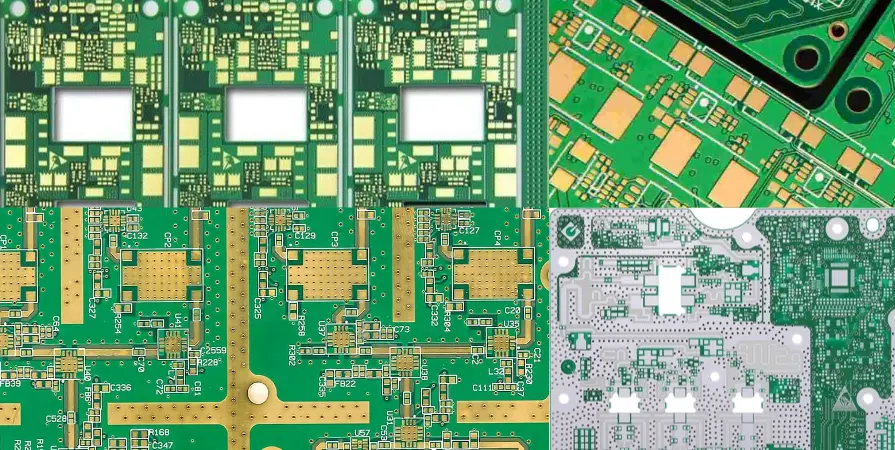
After confirming the need for a specialized board, you must define the exact Traffic Light PCB specifications to handle the environment and power loads.
- Base Material (Substrate):
- Metal Core (IMS): Aluminum (5052 or 6061 alloy) is standard for the LED array section to maximize heat dissipation. Thermal conductivity should be 2.0 W/m·K or higher.
- High-Tg FR4: For the control logic section or lower power signals. Tg should be ≥170°C to prevent delamination during summer heat peaks.
- Copper Weight:
- Power Layers: Minimum 2 oz (70µm) copper is recommended to handle current without voltage drop, ensuring uniform brightness across the LED array.
- Signal Layers: 1 oz (35µm) is typically sufficient for logic control.
- Solder Mask:
- Color: Matte Black is often preferred for the LED face to absorb external sunlight and increase the contrast of the lit LEDs (phantom effect reduction). White is used if reflectivity is desired.
- Type: High-temperature resistant LPI (Liquid Photoimageable) mask.
- Surface Finish:
- ENIG (Electroless Nickel Immersion Gold): Best for corrosion resistance and flat surface for fine-pitch components.
- HASL Lead-Free: Acceptable for larger pitch components and lower cost, but less flat than ENIG.
- Dielectric Breakdown Voltage:
- Must exceed 3kV AC for safety, especially in Navigation Light PCB applications where high voltages might be present.
- Thermal Management:
- Thermal Vias: If using FR4, specify plugged and capped thermal vias under LED thermal pads.
- Dielectric Thickness: For MCPCB, 75µm to 100µm dielectric layer balances thermal transfer and electrical isolation.
- Dimensional Tolerances:
- Outline: ±0.10mm to ensure fit within sealed IP65/IP67 enclosures.
- Hole Size: ±0.076mm (PTH).
- Conformal Coating:
- Specify requirements for acrylic, silicone, or urethane coating to protect against moisture and sulfur.
- Silkscreen:
- White or Yellow (contrasting with mask). Must be legible after coating.
- Flammability Rating:
- UL 94V-0 is mandatory for all infrastructure projects.
- Layer Count:
- Typically 1-2 layers for LED boards (MCPCB).
- 4-6 layers for the main controller board (FR4) to manage EMI and complex routing.
Traffic Light PCB manufacturing risks (root causes and prevention)
Even with perfect specifications, manufacturing defects can occur; understanding Traffic Light PCB manufacturing risks is the next line of defense.
- Risk: Thermal Delamination
- Root Cause: Mismatch in Coefficient of Thermal Expansion (CTE) between the dielectric and the aluminum base during rapid heating.
- Detection: Thermal shock testing (-40°C to +125°C).
- Prevention: Use high-quality dielectric materials with matched CTE properties and ensure proper lamination pressure profiles.
- Risk: LED Color Shift
- Root Cause: Excessive heat at the LED junction due to voids in the solder interface or poor dielectric thermal conductivity.
- Detection: X-ray inspection for voiding; photometric testing after burn-in.
- Prevention: Minimize voiding to <15% under thermal pads; use Metal Core PCB with high thermal conductivity.
- Risk: Moisture Ingress / Corrosion
- Root Cause: Inadequate cleaning before conformal coating or poor coating coverage on sharp edges.
- Detection: Salt spray testing; visual inspection under UV light (if coating has tracer).
- Prevention: Automated cleaning lines; automated selective coating rather than manual spray; design with rounded edges.
- Risk: Solder Joint Fatigue
- Root Cause: Vibration from heavy traffic or wind load causing stress on rigid solder joints.
- Detection: Vibration testing (swept sine/random).
- Prevention: Use flexible solder alloys if possible; add underfill for large components; ensure PCB mounting points reduce resonance.
- Risk: Electrical Shorting (High Voltage)
- Root Cause: Insufficient clearance/creepage distances between high voltage AC lines and low voltage DC logic.
- Detection: Hi-Pot (High Potential) testing.
- Prevention: Strictly follow IPC-2221 clearance rules for outdoor/high-altitude applications; add slots/milling for isolation.
- Risk: Phantom Signals (Sun Phantom)
- Root Cause: Sunlight reflecting off the PCB surface making the signal appear "on" when it is off.
- Detection: Phantom light class testing.
- Prevention: Use matte black solder mask; minimize exposed copper/tin traces on the top layer.
- Risk: Connector Failure
- Root Cause: Oxidation of contacts or mechanical loosening.
- Detection: Contact resistance measurement; pull force test.
- Prevention: Use gold-plated contacts; specify locking connectors (e.g., automotive grade).
- Risk: Component Obsolescence
- Root Cause: Selecting niche LED drivers or specific bin LEDs that go EOL quickly.
- Detection: BOM lifecycle analysis.
- Prevention: Choose mainstream components; design footprints that accept multiple alternatives.
Traffic Light PCB validation and acceptance (tests and pass criteria)
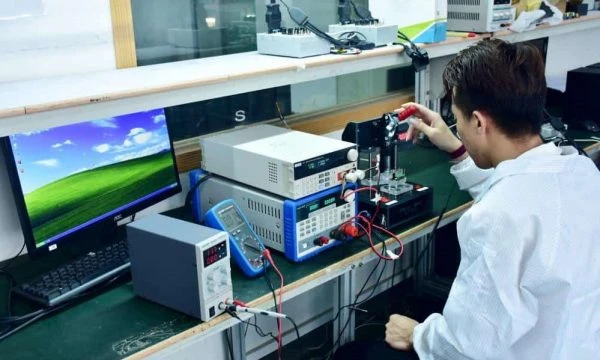
To mitigate these risks effectively, you need a robust Traffic Light PCB validation and acceptance plan before mass production.
- Objective: Verify Thermal Performance
- Method: Run the PCB at maximum current in a temperature chamber at +60°C ambient. Measure LED junction temperature (Tj) using thermocouples or forward voltage method.
- Acceptance Criteria: Tj must remain at least 20°C below the LED manufacturer's maximum rating. No thermal shutdown triggering.
- Objective: Verify Environmental Durability
- Method: Thermal Cycling (100 cycles, -40°C to +85°C, 30 min dwell).
- Acceptance Criteria: No cracks in solder joints; change in resistance <10%; no delamination.
- Objective: Verify Moisture Resistance
- Method: Salt Fog Test (ASTM B117) for 48-96 hours (depending on coating spec).
- Acceptance Criteria: No corrosion on traces or pads; insulation resistance >100 MΩ.
- Objective: Verify Vibration Resistance
- Method: Random vibration testing simulating transport and pole-mounted environments (e.g., IEC 60068-2-64).
- Acceptance Criteria: No physical damage; no intermittent electrical discontinuity >1µs.
- Objective: Verify Electrical Safety
- Method: Dielectric Withstand Voltage (Hi-Pot) test between AC mains and chassis/logic ground.
- Acceptance Criteria: No breakdown or arcing at 1500V AC (or specified voltage) for 60 seconds.
- Objective: Verify Optical Performance
- Method: Photometric measurement (luminous intensity and chromaticity) at nominal voltage.
- Acceptance Criteria: Output meets ITE or EN 12368 intensity classes; color coordinates within defined bin.
- Objective: Verify Coating Quality
- Method: Visual inspection under UV light (blacklight).
- Acceptance Criteria: Continuous coverage; no bubbles; thickness within spec (e.g., 25-75µm).
- Objective: Verify Power Integrity
- Method: Input voltage variation test (±20% of nominal).
- Acceptance Criteria: Stable operation; no flickering; power supply unit (PSU) remains cool.
Traffic Light PCB supplier qualification checklist (RFQ, audit, traceability)
With validation criteria set, use this Traffic Light PCB supplier qualification checklist to vet your partner.
Group 1: RFQ Inputs (What you must provide)
- Gerber Files: RS-274X format, including drill files and outline.
- Fabrication Drawing: Specifying material (Al/FR4), copper weight, mask color, and tolerances.
- Stackup Diagram: Defining dielectric thickness and breakdown voltage requirements.
- BOM (Bill of Materials): With approved vendor list (AVL) for LEDs and drivers.
- Pick & Place File: Centroid data for assembly.
- Test Specification: Defining ICT, FCT, and burn-in requirements.
- Coating Specification: Type of material and "keep-out" areas (connectors, test points).
- Volume & EAU: Estimated Annual Usage to determine pricing tier.
Group 2: Capability Proof (What supplier must demonstrate)
- MCPCB Experience: Evidence of manufacturing aluminum/copper base boards.
- Heavy Copper Capability: Ability to etch and plate Heavy Copper PCB (2oz-4oz) reliably.
- LED Assembly: High-speed pick and place machines capable of handling delicate LED lenses without damage.
- Reflow Profiling: Specific profiles for metal core boards (which require more heat energy).
- Conformal Coating Line: Automated spray or dip coating capabilities.
- X-Ray Inspection: Available for checking solder voids under thermal pads.
Group 3: Quality System & Traceability
- Certifications: ISO 9001 is minimum; IATF 16949 is preferred for traffic/automotive.
- UL Listing: PCB fabricator must have an active UL file (ZPMV2).
- Material Traceability: Ability to trace base laminate batches to finished lots.
- IPC Standards: Manufacturing to IPC-A-600 (PCB) and IPC-A-610 (Assembly) Class 2 or 3.
- Records Retention: Quality records kept for minimum 5 years.
Group 4: Change Control & Delivery
- PCN Process: Supplier agrees to issue Product Change Notifications for any material or process change.
- Buffer Stock: Willingness to hold finished goods inventory for JIT delivery.
- Packaging: ESD safe packaging; moisture barrier bags (MBB) for moisture-sensitive devices.
- RMA Policy: Clear procedure for root cause analysis (8D report) on returns.
How to choose Traffic Light PCB (trade-offs and decision rules)
Beyond the supplier, you face design trade-offs; here is how to choose Traffic Light PCB configurations based on your specific constraints.
- Thermal vs. Cost:
- If you prioritize maximum LED life and brightness (>1W LEDs), choose a Metal Core PCB (Aluminum).
- If you prioritize lowest BOM cost and LEDs are low power (<0.5W), choose FR4 with thermal vias.
- Reliability vs. Repairability:
- If you prioritize extreme weather protection, choose a hard potting compound (epoxy). Note: This makes repair impossible.
- If you prioritize maintainability, choose a silicone Conformal Coating which can be removed for rework.
- Contrast vs. Reflectivity:
- If you prioritize minimizing sun phantom effects (false signals), choose Matte Black solder mask.
- If you prioritize maximizing light output reflection within a housing, choose Gloss White solder mask.
- Integration vs. Modularity:
- If you prioritize compact design (e.g., Traffic Camera PCB), choose a multi-layer FR4 board integrating image sensors and logic.
- If you prioritize thermal isolation, choose a separate driver board (FR4) and LED board (MCPCB) connected by a harness.
- Connection Reliability:
- If you prioritize vibration resistance, choose soldered wire-to-board connections or locking headers.
- If you prioritize ease of installation/replacement, choose spring-loaded terminal blocks (but verify vibration rating).
- Surface Finish:
- If you prioritize shelf life and flatness for fine-pitch drivers, choose ENIG.
- If you prioritize cost and mechanical robustness of large pads, choose HASL Lead-Free.
Traffic Light PCB FAQ (cost, lead time, Design for Manufacturability (DFM) files, materials, testing)
Q: How does the cost of a Traffic Light PCB compare to a standard board? A: Traffic Light PCBs are typically 30-50% more expensive due to specialized materials.
- Factors: Aluminum base material costs more than FR4; 2oz copper adds plating cost; matte black mask is a premium ink.
- Volume: Price drops significantly with volume, but the material baseline remains higher.
Q: What is the typical lead time for Traffic Light PCB manufacturing? A: Standard lead time is 2-3 weeks for fabrication and 1-2 weeks for assembly.
- Delays: Sourcing specific high-power LEDs or specialized connectors can extend this.
- Expedite: APTPCB can offer quick-turn options if materials are in stock.
Q: What DFM files are critical for Traffic Light PCB production? A: Beyond standard Gerbers, the thermal layer design is critical.
- Thermal Pads: Ensure the solder mask opening matches the LED thermal pad exactly (1:1) or is slightly smaller to prevent solder theft.
- Panelization: Design rails to support heavy metal boards during reflow.
Q: Can we use standard FR4 materials for Traffic Light PCB applications? A: Only for low-power sections or logic boards.
- Risk: Using FR4 for high-power LEDs leads to overheating and rapid dimming.
- Mitigation: If FR4 is used, employ heavy copper and dense thermal via arrays.
Q: What testing is required for Traffic Light PCB acceptance criteria? A: Functional testing is not enough; stress testing is required.
- Burn-in: 100% burn-in for 24-48 hours is recommended to catch infant mortality.
- ICT: In-Circuit Test to verify component values and open/shorts before functional test.
Q: How do you handle "Search Light PCB" or high-intensity applications? A: These require Copper Base PCBs (instead of Aluminum) for superior thermal conductivity (390 W/m·K vs 2-3 W/m·K).
- Cost: Significantly higher.
- Performance: Necessary for ultra-high-power emitters (>10W).
Q: What are the specific DFM rules for matte black solder mask? A: Matte black absorbs heat and can be harder to cure.
- Clearance: Increase solder mask dams slightly (min 4 mil) to prevent crumbling.
- Reflow: Adjust profiles as the black color absorbs IR heat faster than green.
Q: How does "Approach Light PCB" design differ from standard traffic lights? A: Approach lights (aviation) have stricter failure modes.
- Redundancy: Often require interleaved circuits so if one string fails, the pattern remains visible.
- Brightness: Higher intensity steps requiring more robust PWM dimming circuits.
Resources for Traffic Light PCB (related pages and tools)
- Metal Core PCB Capabilities: Understand the thermal properties of aluminum and copper base boards essential for LED longevity.
- Heavy Copper PCB: Learn how thicker copper layers manage high currents in traffic signaling power distribution.
- PCB Conformal Coating: Explore coating options to protect your outdoor electronics from moisture and salt spray.
- Automotive Electronics PCB: Review quality standards that overlap with traffic infrastructure requirements.
- PCB Quality Control: Details on the testing protocols and certifications that ensure board reliability.
Request a quote for Traffic Light PCB (Design for Manufacturability (DFM) review + pricing)
Ready to move from design to production? Request a Quote today and our engineering team will perform a complimentary DFM review to identify thermal or assembly risks before pricing.
Please prepare the following for an accurate quote:
- Gerber Files: Including all copper, drill, and mask layers.
- Stackup/Material Spec: Specify Aluminum/FR4, thermal conductivity, and copper weight.
- BOM: With manufacturer part numbers for LEDs and connectors.
- Testing Requirements: Burn-in duration and functional test procedures.
- Volume: Prototype quantity vs. mass production targets.
Conclusion (next steps)
Sourcing a Traffic Light PCB is about balancing thermal performance, environmental durability, and long-term reliability. Whether you are building a standard intersection signal, a Light Rail PCB system, or a high-intensity Search Light PCB, the specifications you define today will determine the maintenance costs for the next decade. By following the validation steps and supplier checklist in this guide, you can confidently select a manufacturing partner like APTPCB to deliver boards that keep traffic moving safely.