
FAQ
What is UL 2849 for e-bike PCBs?
UL 2849 sets safety requirements for electrically powered bicycles including the electronic control system and pcb. Key requirements cover creepage/clearance distances, flame rating of pcb materials (UL 94 V-0 minimum), and protection against electrical hazards.
What flame rating for UL-compliant PCBs?
UL-compliant pcbs for consumer and industrial products require FR4 substrate with UL 94 V-0 flame retardancy. The solder mask must also meet flame rating standards. Non-flame-retardant materials like G10 are not permitted in most regulated applications.
What is creepage and clearance for UL PCB design?
Creepage is the shortest path between two conductors along a surface; clearance is the shortest air gap. UL and IEC standards define minimum creepage/clearance based on working voltage, pollution degree, and material group (CTI rating).
How do I design PCB for UL 94 flammability?
UL 94 V-0 pcb design requires using FR4 laminate with documented UL recognition, specifying V-0 rated solder mask, and maintaining adequate spacing between high-voltage traces. All materials must come from UL-certified suppliers with proper traceability.
What CTI rating for PCBs?
Comparative Tracking Index (CTI) measures a material's resistance to surface tracking under voltage stress. FR4 typically achieves CTI 175-250V (PLC 2-3). Higher CTI materials (CTI > 600V, PLC 0) may be required for high-voltage pcb applications.
Definition, scope, and who this guide is for
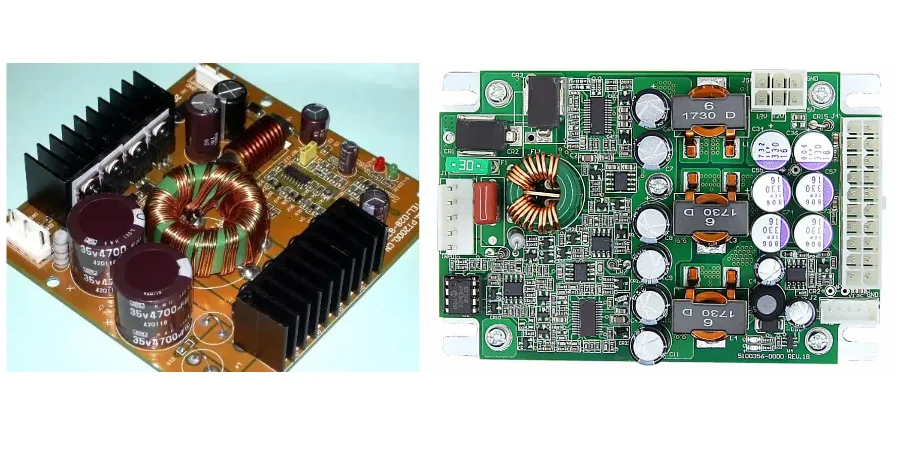
UL 2849 is the critical safety standard for electrical systems in e-bikes (electrically power assisted cycles, or EPACs). While the standard applies to the entire system—battery, motor, charger, and wiring—the printed circuit board (PCB) acts as the central nervous system for the Battery Management System (BMS) and motor controller. A ul 2849 compliance pcb is not a single "off-the-shelf" product but a set of rigorous design and manufacturing specifications that ensure the board can withstand thermal shock, vibration, and high-current loads without failing or causing a fire. Achieving compliance requires selecting materials with specific flammability ratings (UL 94 V-0), high Comparative Tracking Indices (CTI), and robust copper structures.
This guide is written for hardware engineers, product managers, and procurement leads tasked with sourcing PCBs for the e-mobility sector. If you are building e-bikes, e-scooters, or light electric vehicles (LEVs) intended for the US or European markets, adherence to UL 2849 is often mandatory for certification and insurance purposes. The focus here is on the component-level decisions—stackup, materials, and quality controls—that enable the final system to pass certification.
We will move beyond general advice and provide a structured playbook. You will find specific material parameters, a risk assessment framework for high-power switching, validation protocols to prevent field failures, and a supplier audit checklist. Whether you are working with APTPCB (APTPCB PCB Factory) or another vendor, this guide ensures you have the technical criteria needed to procure safe, compliant boards.
When to use ul 2849 compliance pcb (and when a standard approach is better)
Understanding when to enforce strict ul 2849 compliance pcb requirements versus using standard consumer electronics specifications is vital for balancing cost and safety.
Use strict UL 2849 compliant specs when:
- The application is an e-bike or LEV: Any device with a lithium-ion battery pack larger than typical handhelds and a propulsion motor requires this standard to mitigate thermal runaway risks.
- High current density is present: If your motor controller handles currents exceeding 20A-30A continuously, standard FR4 may degrade. You need heavy copper and high-Tg materials specified for UL 2849 systems.
- Vibration is a constant factor: E-bikes endure constant mechanical shock. Standard consumer PCBs often fail at solder joints or via barrels under these conditions.
- Exporting to regulated markets: The US Consumer Product Safety Commission (CPSC) and various EU bodies increasingly cite UL 2849 as the benchmark for e-bike safety.
- Battery Management Systems (BMS): The BMS is the primary safety gate. A failure here can lead to catastrophic battery fires. The PCB must be fail-safe.
A standard approach is better when:
- Low-power accessories: For a simple handlebar display or a low-power LED light that is electrically isolated from the high-voltage traction battery, standard IPC Class 2 specs may suffice.
- Non-propulsion applications: If the device does not control the motor or charge the battery, full UL 2849 rigor on the PCB substrate might be over-engineering, provided it meets basic flammability (UL 94 V-0) standards.
- Prototyping for form factor: Early mechanical mockups that will not be powered or ridden do not need expensive high-performance laminates.
ul 2849 compliance pcb specifications (materials, stackup, tolerances)

To support a system-level UL 2849 certification, the PCB itself must meet stringent physical and electrical properties. Below are the non-negotiable specifications to define in your fabrication drawing.
- Base Material Flammability (UL 94 V-0): The laminate must be certified UL 94 V-0. This ensures that if a component ignites, the PCB substrate will self-extinguish within 10 seconds and not propagate the fire.
- Glass Transition Temperature (Tg): Specify High-Tg FR4, typically Tg ≥ 170°C. Motor controllers generate significant heat; a high Tg prevents the board from softening (z-axis expansion) which causes via fractures.
- Comparative Tracking Index (CTI): Require PLC 0 or PLC 1 (CTI ≥ 600V). High voltage battery packs (36V, 48V, 52V) combined with road debris and humidity create risks for electrical tracking (arcing across the surface). High CTI materials resist this carbonization path.
- Copper Weight (Inner/Outer Layers): For power paths, specify 2oz, 3oz, or even 4oz copper. Heavy copper is essential for carrying high current without excessive temperature rise, a key aspect of ul 2849 compliance pcb.
- Decomposition Temperature (Td): Td should be ≥ 340°C. This indicates the temperature at which the material loses 5% of its weight. High Td is crucial for surviving multiple reflow cycles and high operating temperatures without delamination.
- Solder Mask Quality: Use a high-quality, liquid photo-imageable (LPI) solder mask that is fully cured. The mask acts as the primary insulation barrier against moisture and debris. Specify a minimum thickness over conductors (e.g., >10µm).
- Ionic Contamination: Specify strict cleanliness limits (e.g., < 0.75 µg/cm² NaCl equivalent). Residues from manufacturing can become conductive under humidity, leading to electrochemical migration (dendrite growth) and shorts.
- Via Reliability: For high-vibration environments, specify IPC Class 3 plating thickness for vias (average 25µm) to ensure barrel integrity during thermal cycling and mechanical shock.
- Surface Finish: Electroless Nickel Immersion Gold (ENIG) is preferred for its flat surface (good for fine-pitch BMS chips) and corrosion resistance. HASL is acceptable for simpler boards but ensure it is lead-free (RoHS) if required.
- Peel Strength: Ensure high copper peel strength (> 1.05 N/mm after thermal stress) to prevent traces from lifting during high-current heating events or mechanical stress.
- Dielectric Breakdown Voltage: The material must withstand the high potential of the battery pack plus transient spikes. Verify the dielectric strength (typically > 40 kV/mm) matches your isolation requirements.
- Traceability Markings: The PCB must carry the manufacturer’s UL logo, date code, and flammability rating etched or screened onto the board for easy auditing by certification bodies.
ul 2849 compliance pcb manufacturing risks (root causes and prevention)
Manufacturing defects in e-mobility PCBs can lead to field failures that are dangerous and costly. Here are the primary risks associated with ul 2849 compliance pcb production and how to prevent them.
- Conductive Anodic Filament (CAF) Growth:
- Root Cause: Separation between the glass fibers and resin in the FR4 allows copper salts to migrate along the fibers under bias and humidity, causing internal shorts.
- Detection: High-voltage insulation resistance testing (SIR).
- Prevention: Use "CAF-resistant" materials and ensure proper drill bit management to prevent micro-fractures in the glass weave.
- Thermal Delamination:
- Root Cause: Trapped moisture in the PCB expands during reflow or high-load operation, separating layers.
- Detection: Scanning Acoustic Microscopy (SAM) or cross-sectioning after thermal stress.
- Prevention: Bake PCBs before assembly to remove moisture; use high-Td materials.
- Copper Cracking in Vias (Barrel Fatigue):
- Root Cause: Mismatch in thermal expansion (CTE) between copper and FR4 during thermal cycling (heating/cooling of the e-bike).
- Detection: Thermal shock testing (-40°C to +125°C) followed by resistance measurement.
- Prevention: Use High-Tg material (lower Z-axis expansion) and IPC Class 3 plating thickness.
- Solder Mask Voiding/Peeling:
- Root Cause: Poor surface preparation or insufficient curing of the mask.
- Detection: Visual inspection and tape peel tests.
- Prevention: Ensure proper cleaning lines and UV curing energy; voids expose copper to oxidation and shorts.
- Heavy Copper Etch Factor Issues:
- Root Cause: Etching thick copper (3oz+) results in trapezoidal trace shapes, reducing the effective top width and increasing resistance.
- Detection: Cross-section analysis (microsection).
- Prevention: Apply etch compensation factors in CAM engineering; verify trace width at the top, not just the base.
- Ionic Contamination (Dendrites):
- Root Cause: Flux residues or plating salts left on the board.
- Detection: Rose test or Ion Chromatography.
- Prevention: Aggressive washing cycles with saponifiers; monitor rinse water conductivity.
- Warp and Twist:
- Root Cause: Unbalanced copper distribution in the stackup (e.g., heavy copper on one side, light on the other).
- Detection: Bow and twist measurement on a surface plate.
- Prevention: Design a symmetrical stackup; use copper pouring on empty layers to balance stress.
- Plating Voids in High Aspect Ratio Vias:
- Root Cause: Plating solution fails to flow through small, deep holes in thick boards.
- Detection: X-ray or cross-section.
- Prevention: Keep aspect ratio below 8:1 for standard processes; use pulse plating for deeper holes.
- Improper Material Substitution:
- Root Cause: Supplier swaps specified UL-rated material for a cheaper generic without approval.
- Detection: TGA/DSC analysis or checking UL markings.
- Prevention: Demand Certificate of Conformance (CoC) linking specific lot numbers to the UL file.
- Soldering Defects on Large Thermal Pads:
- Root Cause: Large copper planes sink heat too fast, causing cold solder joints on power FETs.
- Detection: AOI and X-ray.
- Prevention: Use thermal relief patterns where possible or optimize reflow profiles for high thermal mass boards.
ul 2849 compliance pcb validation and acceptance (tests and pass criteria)
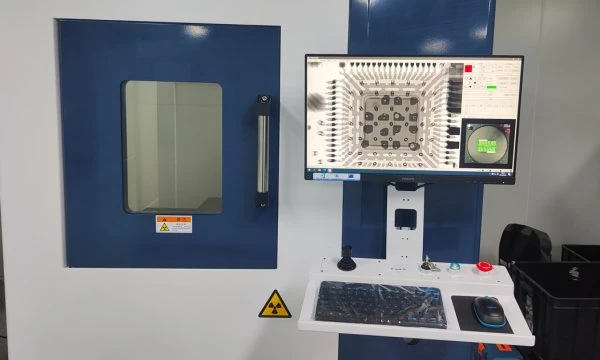
Validation is the bridge between a manufactured board and a certified system. These tests verify that the ul 2849 compliance pcb meets the design intent.
- Thermal Stress Test (Solder Float):
- Objective: Verify delamination resistance.
- Method: Float sample in solder at 288°C for 10 seconds (repeat 3-6 times).
- Criteria: No blistering, delamination, or measles visible.
- Interconnect Stress Test (IST):
- Objective: Accelerated life testing of vias.
- Method: Cycle vias through temperature extremes electrically.
- Criteria: Resistance change < 10% after 500 cycles.
- High Voltage Hi-Pot Test:
- Objective: Verify isolation between high-voltage and low-voltage sections.
- Method: Apply 1000V DC + 2x rated voltage for 1 minute.
- Criteria: Leakage current < 1mA; no breakdown or arcing.
- Ionic Cleanliness Test:
- Objective: Prevent electrochemical migration.
- Method: IPC-TM-650 2.3.25 (ROSE test).
- Criteria: < 1.56 µg/cm² NaCl equivalent (often stricter < 0.75 for automotive/UL 2849).
- Microsection Analysis:
- Objective: Verify plating thickness and internal alignment.
- Method: Cross-section coupon from the production panel.
- Criteria: Copper thickness meets spec (e.g., min 25µm in hole); no cracks; good registration.
- Solderability Test:
- Objective: Ensure pads wet properly during assembly.
- Method: Dip and look / Wetting balance.
- Criteria: > 95% coverage of the pad with fresh solder.
- Peel Strength Test:
- Objective: Verify copper adhesion.
- Method: Pull copper strip at 90 degrees.
- Criteria: > 1.1 N/mm (standard) or > 1.4 N/mm (high performance).
- Flammability Verification:
- Objective: Confirm V-0 performance.
- Method: UL 94 vertical burn test (usually done at laminate level, but spot checks on finished boards can be requested).
- Criteria: Self-extinguish < 10s; no dripping.
- Impedance Control (if applicable for comms):
- Objective: Signal integrity for CAN bus or other comms.
- Method: TDR (Time Domain Reflectometry).
- Criteria: ±10% of target impedance.
- Visual Inspection (IPC-A-600 Class 2/3):
- Objective: General workmanship.
- Method: Magnified visual inspection.
- Criteria: No exposed copper, no bridging, legible markings.
ul 2849 compliance pcb supplier qualification checklist (RFQ, audit, traceability)
Use this checklist to vet suppliers like APTPCB or others. A supplier unable to provide these details is a risk to your UL certification.
Group 1: RFQ Inputs (What you must send)
- Gerber files (RS-274X or X2) with clear board outline.
- Fabrication drawing specifying "Must meet UL 2849 material requirements".
- Material spec: "FR4 High Tg (>170°C), CTI ≥ 600V (PLC 0), UL 94 V-0".
- Copper weight requirements (inner/outer) explicitly defined.
- Solder mask color and type (LPI).
- Surface finish (ENIG recommended for reliability).
- Panelization requirements for your assembly line.
- Volume estimates (EAU) to determine tooling strategy.
Group 2: Capability Proof (What they must show)
- Active UL File Number (ZPMV2 category) for the specific stackup/material combo.
- Experience with heavy copper (3oz+) etching.
- Capability to handle CAF-resistant materials.
- In-house microsection lab for verification.
- Automated Optical Inspection (AOI) on all layers.
- Electrical test (E-test) 100% coverage (Flying probe or Bed of Nails).
Group 3: Quality System & Traceability
- ISO 9001 certification (mandatory); IATF 16949 (preferred for e-mobility).
- Material certificates (CoC) available for every shipment.
- Date code and UL marking etched on every PCB.
- Records retention policy (min 5 years for safety-critical parts).
- Procedure for handling non-conforming material (MRB).
- Calibration records for testing equipment (Hi-Pot, E-test).
Group 4: Change Control & Delivery
- PCN (Product Change Notification) policy: Supplier must notify before changing material brands.
- DFM report provided before manufacturing starts.
- Packaging: Vacuum sealed with desiccant and humidity indicator card (HIC).
- Lead time stability for high-spec materials.
- Logistics capability for your target region.
How to choose ul 2849 compliance pcb (trade-offs and decision rules)
Designing for ul 2849 compliance pcb involves balancing thermal performance, electrical safety, and cost.
- Heavy Copper vs. Busbars:
- If you need to carry >50A: Consider soldering external copper busbars or using "coin" embedding technology. Etching 6oz+ copper is expensive and limits fine pitch routing.
- If you need <30A: Use 2oz or 3oz copper traces. It is cost-effective and standard for most e-bike controllers.
- FR4 vs. Metal Core (IMS):
- If the design is a simple motor controller with high heat: Choose Metal Core PCB (MCPCB) for superior heat dissipation.
- If the design is a complex BMS with logic and power: Choose High-Tg FR4 with thermal vias. MCPCBs are typically single-layer and hard to route complex logic on.
- ENIG vs. HASL:
- If you have fine-pitch components (BGA, QFN) on the BMS: Choose ENIG. It provides a flat surface.
- If cost is the only driver and components are large: Lead-free HASL is cheaper but less planar.
- CTI 600V (PLC 0) vs. Standard CTI:
- If the voltage is >48V and spacing is tight: You must choose CTI 600V material to pass UL creepage/clearance rules.
- If you have ample space: You might get away with standard material by increasing the physical distance between traces (creepage), but this increases board size.
- Conformal Coating vs. Potting:
- If weight is a concern: Use conformal coating (spray).
- If maximum vibration/thermal protection is needed: Design the PCB to be potted (encapsulated). Note that potting adds mechanical stress; the PCB must be robust enough not to warp during the potting cure.
ul 2849 compliance pcb FAQ (cost, lead time, Design for Manufacturability (DFM) files, materials, testing)
1. How much does ul 2849 compliance pcb manufacturing increase cost compared to standard PCBs? Expect a 20-40% increase. The cost drivers are High-Tg/CTI materials, heavier copper, and stricter validation testing (Class 3 plating, IPC Class 3 inspection).
2. What is the typical lead time for ul 2849 compliance pcb prototypes? Standard lead time is 10-15 days. Expedited services (5-7 days) are possible, but sourcing specialized CTI 600V or heavy copper laminates may add time if not in stock.
3. Can I use standard FR4 for ul 2849 compliance pcb if I coat it? Not usually. While coating helps, the base material itself must often meet specific flammability (V-0) and Relative Thermal Index (RTI) ratings that standard FR4 might not guarantee for high-voltage e-bike applications.
4. What specific DFM files are needed for heavy copper designs? Provide Gerber files with clear spacing requirements. For heavy copper (3oz+), minimum trace width/spacing must be larger (e.g., 8mil/8mil or 10mil/10mil) to allow for etch compensation.
5. Does the PCB supplier need to be UL certified for the specific stackup? Yes. The supplier must have a UL file (ZPMV2) that covers the specific combination of laminate, copper weight, and minimum line width you are using. If they don't, your system-level UL 2849 certification may be rejected.
6. How does ul 2849 compliance pcb testing differ from standard E-test? Standard E-test checks for opens/shorts at low voltage. UL 2849 relevant testing often requires Hi-Pot testing (high voltage isolation) to ensure the dielectric withstands battery potentials without breakdown.
7. What materials are best for ul 2849 compliance pcb? Materials like Isola 370HR, Panasonic R-1566 (high CTI), or Shengyi S1000-2 (High Tg) are common choices. Always verify the datasheet for CTI ≥ 600V and V-0 rating.
8. How do acceptance criteria for ul 2849 compliance pcb handle cosmetic defects? Cosmetic defects like scratches are less tolerated if they expose fiber or reduce isolation distance. Functional safety is paramount; any defect that compromises insulation (e.g., solder mask voids) is a fail.
9. Is safety wearable ul 913 pcb related to this standard?
While ul 2849 compliance pcb is for e-bikes, safety wearable ul 913 pcb applies to intrinsically safe devices in hazardous locations. Both require rigorous audit trails and material safety, but UL 913 focuses more on spark prevention in explosive atmospheres.
10. Can I use the same moisture protection as ul 1081 spa electronics pcb?
Yes, the moisture protection strategies (conformal coating, potting) used in ul 1081 spa electronics pcb are excellent for e-bikes, as both face humid, outdoor environments.
Resources for ul 2849 compliance pcb (related pages and tools)
- Heavy Copper PCB Capabilities – Essential for handling the high current loads in e-bike motor controllers.
- High Tg PCB Manufacturing – Why high thermal reliability materials are non-negotiable for safety-critical BMS units.
- PCB Quality & Certifications – Details on our quality management systems that support rigorous compliance standards.
- Power & Energy Industry Solutions – See how we support the broader energy sector with robust PCB fabrication.
- Conformal Coating Services – Protect your compliant boards from moisture and road debris.
- Automotive Electronics PCB – Many UL 2849 requirements overlap with automotive standards; learn about our automotive-grade capabilities.
Request a quote for ul 2849 compliance pcb (Design for Manufacturability (DFM) review + pricing)
Ready to validate your design for manufacturing? Send your data to APTPCB for a comprehensive DFM review that checks against heavy copper rules and material availability.
What to include in your quote request:
- Gerber Files: Complete set including drill files.
- Fab Drawing: Clearly state "UL 2849 Compliance Required", Material Tg, CTI, and Copper Weight.
- Volume: Prototype quantity vs. Mass production estimates.
- Testing: Specify if Hi-Pot or specific ionic cleanliness reports are needed.
Conclusion (next steps)
Achieving ul 2849 compliance pcb is about more than just a stamp on a datasheet; it is about engineering a board that survives the thermal and mechanical realities of e-mobility. By selecting the right High-Tg/High-CTI materials, designing for heavy copper manufacturing, and enforcing strict validation protocols, you ensure your e-bike system is safe and market-ready. Use the checklist provided to vet your suppliers and define your specifications clearly from day one to avoid costly redesigns during the certification phase.