
Safety is the non-negotiable baseline of modern electronics design, particularly when circuits are folded into tight, heat-generating spaces. UL flammability for FPC (Flexible Printed Circuits) is the industry standard that dictates how a flexible circuit board must behave when exposed to an open flame. It is not merely a checkbox for compliance; it is a critical engineering parameter that influences material selection, stackup flexibility, and the long-term reliability of the end product.
For engineers and procurement managers at APTPCB (APTPCB PCB Factory), understanding the nuances of Underwriters Laboratories (UL) standards ensures that a design will not only function electrically but also pass stringent safety certifications required for global markets. This guide covers the entire lifecycle of flammability compliance, from the initial definition of ratings to the final validation of the manufactured board.
Key Takeaways
Before diving into the technical specifications, here are the critical points every designer must understand regarding flammability in flexible circuits.
- V-0 is the Gold Standard: For most consumer and industrial applications, UL 94 V-0 is the target rating, meaning burning stops within 10 seconds on a vertical specimen.
- Adhesives are the Weak Link: In flexible circuits, the polyimide base is naturally flame retardant, but the acrylic adhesives used in coverlays and stiffeners often lower the flammability rating.
- Thickness Matters: UL ratings are tied to specific material thicknesses; a material certified V-0 at 0.5mm may not be V-0 at 0.1mm.
- System vs. Material: Having a UL-certified raw material (Yellow Card) does not automatically guarantee the finished FPC will pass if the manufacturing process alters the stackup significantly.
- Halogen-Free Trade-offs: Achieving V-0 with halogen-free materials often requires special fillers that can impact the flexibility and the FPC dynamic bend reliability test.
- Moisture Impact: Poor moisture control for FPC can lead to delamination during combustion, altering how the flame propagates.
- Validation is Mandatory: Always request a Certificate of Compliance (CoC) referencing the specific UL file number for the finished board type.
What understanding the nuances of Underwriters Laboratories (UL) flammability for FPC really means (scope & boundaries)
Having established the key takeaways, we must now define the specific scope and boundaries of what this certification entails.
UL flammability for FPC primarily refers to the UL 94 standard, which tests the flammability of plastic materials used for parts in devices and appliances. For flexible circuits, this standard evaluates the tendency of the materials (Polyimide, Polyester, Adhesives, Soldermask) to either extinguish or spread a flame once ignited.
The Difference Between 94V-0, 94V-1, and 94V-2
The vast majority of FPC specifications call for "Vertical Burning" tests. The distinction lies in how quickly the fire goes out and whether flaming particles drip from the sample.
- UL 94 V-0: The most stringent common rating. The flame must extinguish within 10 seconds after the burner is removed. No flaming drips are allowed that ignite cotton placed below the sample.
- UL 94 V-1: The flame must extinguish within 30 seconds. No flaming drips are allowed.
- UL 94 V-2: The flame must extinguish within 30 seconds, but flaming drips are allowed. This is rarely acceptable for high-end electronics.
- UL 94 HB (Horizontal Burn): A less stringent test where the burn rate is measured horizontally. This is generally only acceptable for non-critical consumer goods or automotive applications where the circuit is fully enclosed in metal.
The "Yellow Card" Concept
A common point of confusion is the UL "Yellow Card." This is a data sheet issued by UL to the material manufacturer (e.g., DuPont, Shengyi, Panasonic) certifying the raw laminate. However, APTPCB also holds UL certifications for the manufacturing process. A compliant FPC requires both compliant raw materials and a compliant fabrication process that does not introduce flammable contaminants.
understanding the nuances of Underwriters Laboratories (UL) flammability for FPC metrics that matter (how to evaluate quality)
Once you understand the scope of the definitions, you need to measure performance using specific metrics during the material selection phase.
The following table outlines the technical metrics that determine if a flexible circuit meets the required UL flammability for FPC standards.
| Metric | Why it matters | Typical Range / Factor | How to Measure |
|---|---|---|---|
| Afterflame Time (t1, t2) | Determines how quickly the FPC self-extinguishes. Shorter is safer. | V-0: < 10s V-1: < 30s |
UL 94 Vertical Burn Test chamber. |
| Total Burn Time | Cumulative time for 5 specimens (10 ignitions). Ensures consistency across the batch. | V-0: < 50s total V-1: < 250s total |
Summation of individual burn tests. |
| Flaming Drip | Indicates if the melting plastic can ignite surrounding components. | V-0/V-1: No drips allowed. V-2: Drips allowed. |
Cotton indicator placed 300mm below the sample. |
| Material Thickness | Flammability performance degrades as materials get thinner. | 12µm to 125µm (common FPC range). | Micrometer verification against UL file. |
| Oxygen Index (LOI) | The minimum concentration of oxygen required to support combustion. | > 28% usually indicates self-extinguishing properties. | ASTM D2863 / ISO 4589 test methods. |
| Glass Transition (Tg) | Indirectly affects flammability; higher Tg materials often have better thermal stability. | Low Tg adhesives can melt/drip faster. | DSC or TMA thermal analysis. |
How to choose understanding the nuances of Underwriters Laboratories (UL) flammability for FPC: selection guidance by scenario (trade-offs)
With metrics defined, the next step is selecting the right grade for your specific application based on environmental and regulatory constraints.
Choosing the right UL flammability for FPC rating is rarely a "one size fits all" decision. It involves balancing safety against cost, flexibility, and signal performance.
Scenario 1: Consumer Handheld Devices (Smartphones/Tablets)
- Requirement: UL 94 V-0.
- Why: High battery density and proximity to human skin make fire safety paramount.
- Trade-off: Must use high-performance Adhesiveless FCCL (Flexible Copper Clad Laminate) to ensure thinness while maintaining V-0. Adhesive-based laminates add thickness to achieve the same rating.
Scenario 2: Automotive Powertrain Sensors
- Requirement: UL 94 V-0 + High Tg.
- Why: High ambient temperatures in the engine bay increase ignition risk.
- Trade-off: Materials must withstand harsh thermal cycling. Standard acrylic adhesives may fail; epoxy or polyimide-based adhesives are preferred, which are stiffer and more expensive.
- Related Resource: Automotive Electronics PCB Solutions
Scenario 3: Wearable Health Monitors
- Requirement: UL 94 V-1 or V-0 (depending on battery size).
- Why: Direct skin contact requires safety, but extreme flexibility is needed for comfort.
- Trade-off: Flame retardants (especially halogen-free ones) can make the coverlay brittle. This negatively impacts the FPC dynamic bend reliability test. Designers might accept V-1 to gain better flexibility if the device voltage is very low.
Scenario 4: Aerospace and Avionics
- Requirement: UL 94 V-0 (plus FAR 25.853 compliance).
- Why: In-flight fire is catastrophic; smoke density and toxicity are also regulated.
- Trade-off: Extremely limited material choices. Cost is secondary to certification.
Scenario 5: Disposable Medical Diagnostics
- Requirement: UL 94 HB or Non-rated.
- Why: Single-use, low voltage, short lifespan.
- Trade-off: Using non-flame-retardant PET (Polyester) instead of PI (Polyimide) significantly reduces cost but lowers thermal resistance.
Scenario 6: High-Frequency 5G Antennas
- Requirement: UL 94 V-0.
- Why: High power transmission generates heat.
- Trade-off: Traditional flame retardants increase the Dielectric Constant (Dk) and Dissipation Factor (Df), killing signal integrity. Specialized Low-Loss, Flame-Retardant Liquid Crystal Polymer (LCP) or Modified PI is required.
- Related Resource: High Frequency PCB Materials
understanding the nuances of Underwriters Laboratories (UL) flammability for FPC implementation checkpoints (design to manufacturing)
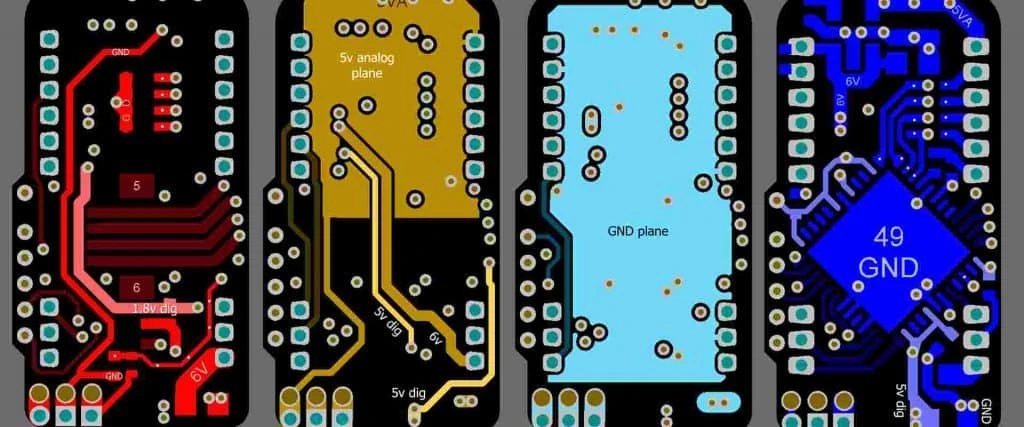
After selecting the right material grade, you must ensure the design supports these choices through the manufacturing process without compromising the rating.
Achieving compliance is not just about buying the right laminate; it is about how that laminate is processed. Below is a checklist for implementing UL flammability for FPC in production.
1. Material Sourcing Verification
- Recommendation: Verify the UL File Number (E-number) of the raw FCCL and Coverlay.
- Risk: Using "equivalent" cheap materials that lack the Yellow Card.
- Acceptance: Review the material datasheet against the UL Prospector database.
2. Stackup Design
- Recommendation: Ensure the total thickness of combustible layers (adhesives) does not exceed the ratio tested in the UL file.
- Risk: Excessive adhesive thickness can sustain a flame longer than the PI can extinguish it.
- Acceptance: Stackup simulation and approval by the CAM engineer.
3. Coverlay Selection
- Recommendation: Use flame-retardant coverlays (often marked as "FR").
- Risk: Standard non-FR adhesives are highly flammable.
- Acceptance: Check the BOM for specific FR-grade adhesive part numbers.
4. Moisture Control
- Recommendation: Implement strict baking cycles before lamination and soldering.
- Risk: Moisture control for FPC is critical; trapped water turns to steam during burning, causing delamination that exposes more surface area to the fire.
- Acceptance: Moisture content analysis or baking logs.
5. Solder Mask / Legend Ink
- Recommendation: Use UL-recognized flexible solder masks if coverlay is not used.
- Risk: Incompatible inks can be flammable or peel off, carrying the flame.
- Acceptance: Cross-hatch adhesion test and flammability check.
6. Stiffener Application
- Recommendation: Ensure the PSA (Pressure Sensitive Adhesive) used for stiffeners is also flame retardant if exposed.
- Risk: A V-0 FPC attached to a flammable FR4 stiffener with flammable tape compromises the assembly.
- Acceptance: Verify PSA UL rating.
7. Trace Layout and Heat Sinking
- Recommendation: Use hatched copper planes to act as heat sinks without reducing flexibility.
- Risk: Concentrated heat spots can trigger ignition earlier than expected.
- Acceptance: Thermal simulation.
8. Final Product Marking
- Recommendation: The PCB must be marked with the manufacturer's UL logo and flammability rating (e.g., "94V-0").
- Risk: Customs or assembly houses may reject unmarked boards.
- Acceptance: Visual inspection of the silkscreen or etched marking.
understanding the nuances of Underwriters Laboratories (UL) flammability for FPC common mistakes (and the correct approach)
Even with a solid implementation plan, engineers often fall into specific traps regarding flammability that can delay production or cause certification failure.
| Mistake | Why it fails | The Correct Approach |
|---|---|---|
| Assuming all Polyimide is V-0 | While PI film is naturally resistant, the adhesive systems used to bond copper often are not. | Specify "All-Polyimide" or "Adhesiveless" FCCL for guaranteed high performance, or verify the adhesive grade. |
| Ignoring the "System" Rating | A V-0 laminate + V-0 coverlay does not always equal a V-0 board if processed incorrectly. | Rely on the PCB manufacturer's (APTPCB) UL file for the finished board, not just the material datasheets. |
| Overlooking Thinness Limits | A material rated V-0 at 0.5mm might only be V-2 or HB at 0.1mm. | Check the "Minimum Thickness" column on the UL Yellow Card. |
| Neglecting Halogen-Free Impact | Switching to Halogen-Free (HF) for environmental reasons can reduce flame retardancy. | Use HF materials specifically formulated with phosphorus-based retardants to maintain V-0. |
| Confusing Tg with Flammability | High Tg (Glass Transition) means thermal stability, not necessarily flame resistance. | Evaluate both Tg (for soldering survival) and UL 94 (for fire safety) independently. |
| Forgetting Stiffeners | The FPC passes, but the added PI or FR4 stiffener uses a flammable adhesive tape. | Specify flame-retardant PSA (Pressure Sensitive Adhesive) for all stiffener attachments. |
understanding the nuances of Underwriters Laboratories (UL) flammability for FPC FAQ (cost, lead time, materials, testing, acceptance criteria)
To clarify any remaining confusion from common mistakes, here are answers to frequent questions we receive at APTPCB regarding flammability compliance.
Q: Does specifying UL 94 V-0 increase the cost of FPC? A: Yes, slightly. V-0 materials (especially adhesiveless types) are more expensive than standard adhesive-based or HB-rated materials. However, the cost difference is negligible compared to the liability risk of a non-compliant product.
Q: How does flammability testing affect lead time? A: Standard UL-compliant materials are usually in stock. However, if you require a custom stackup that needs a new UL submission or specific "burning test" validation reports, this can add 1-2 weeks to the lead time.
Q: Can I use Halogen-Free materials and still get UL 94 V-0? A: Yes. Modern halogen-free FPC materials use phosphorus or nitrogen-based flame retardants to achieve V-0. Be aware that these materials can be slightly stiffer, potentially affecting the FPC dynamic bend reliability test.
Q: What are the acceptance criteria for a V-0 test failure? A: If a sample burns for more than 10 seconds or drips flaming particles, it fails. In production, this usually means the batch is quarantined, and a root cause analysis (often related to adhesive thickness or curing) is performed.
Q: Do I need V-0 for a battery-powered wearable? A: Generally, yes. Lithium-ion batteries pose a fire risk. Most safety standards (like IEC 62368-1) require V-0 materials for circuits in direct contact with or proximity to the battery.
Q: How does moisture control for FPC relate to flammability? A: Polyimide is hygroscopic (absorbs water). If an FPC is wet, the water turns to steam during a fire, delaminating the layers. This delamination increases the surface area available to oxygen, potentially accelerating the burn rate.
Q: Where can I find more about flexible PCB capabilities? A: You can explore our detailed capabilities on the Flex PCB Manufacturing page.
Resources for understanding the nuances of Underwriters Laboratories (UL) flammability for FPC (related pages and tools)
To further assist in your design and procurement process, we have curated a list of internal resources that complement this guide.
- Material Data: PCB Materials Selection Guide
- Design Rules: DFM Guidelines for Flex
- Quality Assurance: Testing and Quality Control
- Industry Standards: IPC and UL Standards Glossary
understanding the nuances of Underwriters Laboratories (UL) flammability for FPC glossary (key terms)
Finally, to ensure clear communication between your design team and the manufacturer, review these key terms associated with flammability and safety.
| Term | Definition |
|---|---|
| UL 94 | The standard for Safety of Flammability of Plastic Materials for Parts in Devices and Appliances. |
| V-0 | Vertical burn rating: burning stops within 10 seconds; no flaming drips. |
| V-1 | Vertical burn rating: burning stops within 30 seconds; no flaming drips. |
| HB | Horizontal Burn: slow burning on a horizontal specimen; lowest rating. |
| Yellow Card | A UL document certifying the safety properties of a specific raw material. |
| FCCL | Flexible Copper Clad Laminate; the base material for FPC. |
| Coverlay | The insulating layer (PI + Adhesive) laminated over the etched copper. |
| Adhesiveless | FCCL where copper is bonded directly to PI without acrylic adhesive; better for flammability. |
| LOI | Limiting Oxygen Index; percentage of oxygen needed to sustain a flame. |
| Self-Extinguishing | The ability of a material to cease burning once the external flame source is removed. |
| Afterglow | The glowing combustion of a material after the flame has extinguished. |
| Delamination | Separation of layers; can worsen flammability by exposing adhesive. |
| Halogen-Free | Materials free of Chlorine and Bromine; requires alternative flame retardants. |
Conclusion (next steps)
Understanding UL flammability for FPC is about more than just avoiding fire; it is about designing a robust, compliant, and safe product that can survive the rigors of the real world. From selecting V-0 rated adhesiveless laminates to ensuring your coverlay adhesives don't compromise the stackup, every decision counts.
At APTPCB, we ensure that your flexible circuits meet these stringent safety standards without sacrificing performance. When you are ready to move from prototype to production, providing the right information is key.
For your next DFM review or quote, please provide:
- Target UL Rating: (e.g., UL 94 V-0).
- Stackup Details: Specifically, if you require adhesiveless or adhesive-based materials.
- Environment: Operating temperature and flexibility requirements (static vs. dynamic).
- Special Constraints: Halogen-free requirements or specific stiffener needs.
By aligning your design with these safety protocols early, you ensure a smoother manufacturing process and a safer final product.