
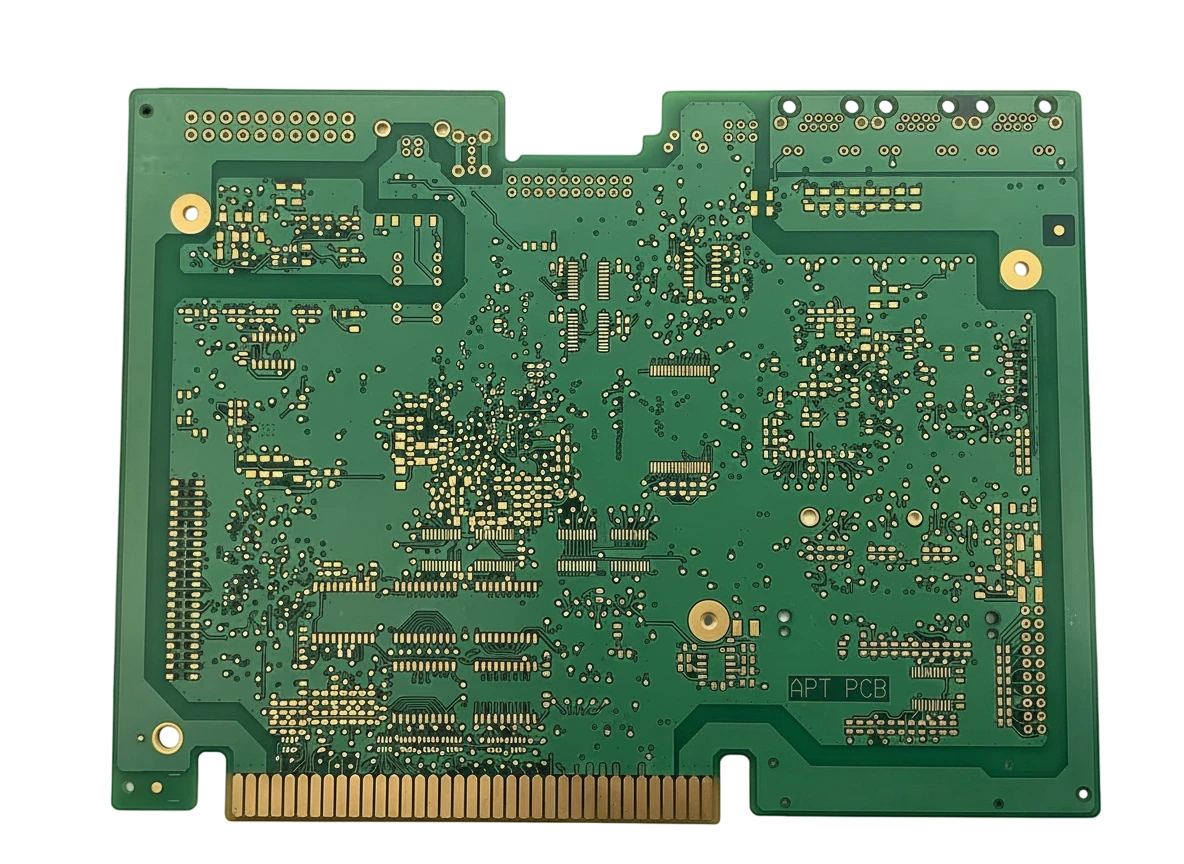
ultrasonic welding interface PCB: what this playbook covers (and who it’s for)
This playbook is designed for hardware engineers, procurement leads, and quality managers who are integrating ultrasonic welding processes into their PCB assembly lines. Unlike traditional soldering, an ultrasonic welding interface PCB requires specific surface finishes, mechanical rigidity, and extreme cleanliness to ensure a reliable bond between the board and external interconnects like aluminum wires, copper ribbons, or heavy-gauge terminals.
If you are designing battery management systems (BMS), high-frequency radar modules, or quantum computing hardware, the interface between your PCB and the conductor is the most common point of failure. This guide moves beyond basic IPC standards to address the practical realities of manufacturing these specialized boards. We focus on the "unwritten" rules of surface topography, plating hardness, and substrate stability that determine whether a weld holds for ten years or fails during vibration testing.
You will find actionable specifications for procurement, a breakdown of hidden risks that often escape standard DFM reviews, and a validation plan to hold your manufacturer accountable. Whether you are sourcing from APTPCB (APTPCB PCB Factory) or auditing a new vendor, this document serves as your roadmap to securing a robust ultrasonic welding interface PCB that scales from prototype to mass production without yield loss.
When ultrasonic welding interface PCB is the right approach (and when it isn’t)
Understanding the mechanical and thermal dynamics of your application is the first step in deciding if an ultrasonic welding interface is superior to traditional soldering or mechanical fasteners.
This approach is the correct choice when:
- Thermal Sensitivity is Critical: Your components cannot withstand the thermal profiles of reflow or wave soldering. Ultrasonic welding is a "cold" process relative to the substrate, generating localized heat only at the interface via friction.
- Dissimilar Metals are Involved: You need to join aluminum wire (common in EV battery packs) to copper PCB pads. Solder is often incompatible or unreliable with aluminum, whereas ultrasonic welding creates a true metallurgical bond.
- Vibration and Fatigue are High Risks: In automotive and aerospace environments, solder joints are prone to fatigue cracks under cyclic thermal and mechanical stress. Ultrasonic welds, particularly wire and ribbon bonds, offer superior compliance and fatigue resistance.
- High-Frequency Signal Integrity is Required: For applications like wirebonding for qubit interface or mmWave radar, solder fillets introduce parasitic capacitance and inductance. Ultrasonic wire bonding allows for precise loop control and impedance matching.
- Cleanliness is Paramount: Flux residues from soldering can cause leakage currents or outgassing in vacuum environments. Ultrasonic welding is a flux-free process.
This approach is likely the wrong choice when:
- Cost is the Primary Driver for Low-Tech Consumer Goods: The equipment for ultrasonic welding and the required high-quality PCB surface finishes (like ENEPIG or Soft Gold) are significantly more expensive than HASL and standard soldering.
- Repairability is a Priority: Ultrasonic welds are permanent. Reworking a welded interface often damages the underlying PCB pad, rendering the board unusable. If field repair is needed, connectors or screw terminals are better.
- Current Density is Extremely High (Busbar levels): While ultrasonic welding can handle high currents, extremely thick copper busbars may require laser welding or mechanical bolting if the ultrasonic energy required would damage the PCB substrate.
Specs & requirements (before quoting)
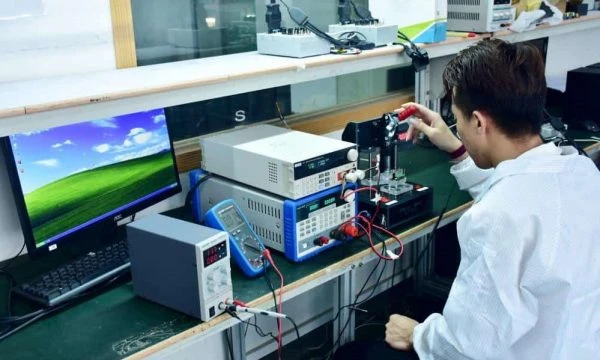
To ensure your ultrasonic welding interface PCB performs as expected, you must move beyond generic fabrication notes. The following specifications define the physical and chemical properties required for a successful weld.
- Surface Finish Type: Specify ENEPIG (Electroless Nickel Electroless Palladium Immersion Gold) or Soft Electrolytic Gold. Avoid HASL or Immersion Tin, as they are too soft or uneven. Standard ENIG can be risky due to "black pad" issues which cause brittle weld failures.
- Gold Thickness: For gold wire bonding, specify a minimum of 0.3–0.5 µm (12–20 µin) of soft gold. For aluminum wire wedge bonding, thinner gold or even pure palladium surfaces (in ENEPIG) are often preferred to prevent intermetallic voids.
- Nickel Hardness and Thickness: The underlying nickel layer acts as the anvil. Specify a nickel thickness of 3–6 µm. The hardness should be controlled to support the welding energy without cratering the laminate beneath.
- Surface Roughness (Ra): The welding pad must be smooth to ensure maximum contact area. Define a maximum roughness of Ra < 0.3 µm. Rough surfaces dissipate ultrasonic energy and lead to weak bonds.
- Pad Cleanliness: Explicitly state "Plasma Cleaning Required" before packaging. Organic contaminants (carbon) are the enemy of ultrasonic welds. The surface energy should be > 50 dynes/cm.
- Substrate Material (Tg): Use High-Tg FR4 (Tg > 170°C) or Ceramic substrates. Soft standard FR4 can absorb ultrasonic energy (damping effect), resulting in poor energy transfer to the weld interface.
- Copper Weight: Ensure the outer layer copper is sufficient to handle the current and the mechanical stress of the weld. 2 oz (70 µm) or higher is recommended for power applications to prevent pad lifting.
- Solder Mask Clearance: Define a Non-Solder Mask Defined (NSMD) pad or a generous Solder Mask Defined (SMD) opening. Ensure the mask is at least 50–75 µm away from the weld area to prevent the welding tool from hitting the mask.
- Via-in-Pad Restrictions: Strictly forbid vias within the welding pad area unless they are copper-filled and capped. Open vias or plugged vias can collapse under the welding force, causing immediate failure.
- Peel Strength: Specify a minimum copper peel strength (e.g., > 1.4 N/mm) to ensure the pad does not detach from the laminate during the pull test.
- Flatness/Coplanarity: The welding area must be flat. Bow and twist should be < 0.5%, but local flatness on the welding pad is critical—no protrusions or pits allowed.
- Packaging: Require vacuum-sealed, sulfur-free packaging with desiccant and humidity indicator cards. Oxidation or sulfuration of the plating will make welding impossible.
Hidden risks (root causes & prevention)
Even with perfect specs, scaling up production of an ultrasonic welding interface PCB introduces subtle risks. These issues often appear only after volume manufacturing begins.
Pad Cratering (The Silent Killer):
- Risk: The ultrasonic energy fractures the epoxy/glass fibers beneath the copper pad.
- Why: Excessive welding energy or a substrate that is too brittle/soft.
- Detection: Often invisible to visual inspection. Requires cross-sectioning or acoustic microscopy.
- Prevention: Optimize welding parameters (force/power/time) and use high-modulus dielectric materials.
Nickel Diffusion/Migration:
- Risk: Nickel migrates through the gold/palladium layer to the surface, oxidizing and preventing bonding.
- Why: Poor plating density or prolonged storage at high temperatures.
- Detection: Auger Electron Spectroscopy (AES) or XPS analysis of the surface.
- Prevention: Strict control of plating bath chemistry and storage conditions.
Resonance Frequency Mismatch:
- Risk: The PCB acts as a diaphragm, vibrating at the welding frequency (e.g., 20kHz or 60kHz).
- Why: The PCB mounting fixture allows movement, or the board dimensions resonate.
- Detection: Inconsistent weld quality in specific board areas (nodes vs. antinodes).
- Prevention: Design rigid clamping fixtures for the assembly process; simulate modal analysis of the PCB.
Surface Contamination from Solder Mask:
- Risk: Solder mask residues or "bleed out" cover the edge of the welding pad.
- Why: Poor mask definition or improper curing.
- Detection: Visual inspection under high magnification; UV light inspection.
- Prevention: Increase mask clearance; use LDI (Laser Direct Imaging) for precise mask alignment.
"Black Pad" in ENEPIG:
- Risk: Corroded nickel layer beneath the gold/palladium, leading to brittle fracture.
- Why: Hyper-active gold immersion bath attacking the nickel.
- Detection: Brittle failure during shear testing; SEM analysis shows "mud-crack" appearance on nickel.
- Prevention: Tighter control of phosphorous content in nickel and pH levels in immersion gold baths.
Inconsistent Plating Thickness:
- Risk: Variations in gold thickness across the panel affect the welding window.
- Why: Poor current distribution in electrolytic plating or depleted electroless baths.
- Detection: XRF measurement mapping across the panel.
- Prevention: Use dummy plating borders (thieving) and frequent bath analysis.
Tool Wear Transfer:
- Risk: Debris from the welding tool embeds into the PCB pad.
- Why: Worn-out sonotrode or bonding wedge.
- Detection: Visual inspection shows foreign material or unusual imprints.
- Prevention: Implement a strict tool maintenance and replacement schedule.
Moisture Absorption:
- Risk: Moisture in the PCB expands during any thermal curing steps, delaminating the pad.
- Why: Improper storage or exposure to humid factory floor.
- Detection: Blistering after thermal stress.
- Prevention: Bake boards before assembly; strict MSD (Moisture Sensitive Device) protocols.
Antenna Tuning and Trimming Damage:
- Risk: If the PCB undergoes laser trimming for antenna tuning and trimming near the weld site, debris or heat affected zones can degrade the weld pad.
- Why: Proximity of trimming operations to the weld interface.
- Detection: Scorch marks or conductive debris on pads.
- Prevention: Sequence operations correctly (trim then clean then weld) or use protective masking.
Wirebonding for Qubit Interface Sensitivity:
- Risk: Magnetic impurities in the plating stack disrupt quantum coherence.
- Why: Standard nickel is magnetic.
- Detection: SQUID magnetometry (rare) or simply specification failure.
- Prevention: Use non-magnetic plating options (e.g., Silver, or specific non-magnetic Nickel-Phosphorous alloys) if explicitly required.
Validation plan (what to test, when, and what “pass” means)
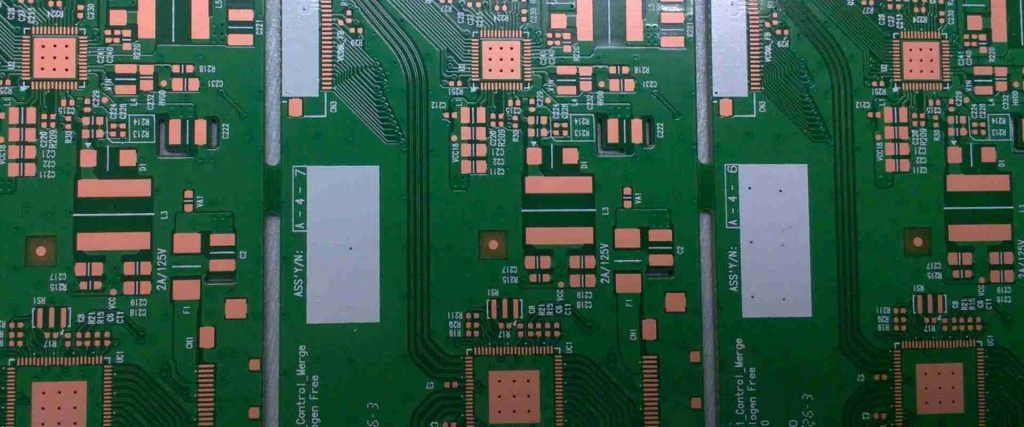
Do not approve a lot based on visual inspection alone. Implement this validation plan for every new revision or vendor change.
Wire Pull Test (Destructive):
- Objective: Measure the tensile strength of the wire/ribbon bond.
- Method: Pull the wire perpendicular to the board until failure.
- Acceptance: Failure must occur in the wire (wire break), not at the interface (lift-off). Minimum force depends on wire diameter (e.g., > 10g for 25µm Au wire).
Ball/Wedge Shear Test:
- Objective: Measure the lateral strength of the bond to the pad.
- Method: Apply lateral force to the bond nugget.
- Acceptance: Shear force > 1.2x the minimum standard (e.g., JEDEC or Mil-Std). Failure mode should be bulk material shear, not pad lift or cratering.
Cross-Section Analysis (Micro-sectioning):
- Objective: Verify plating thickness and check for cratering.
- Method: Pot and polish a sample weld; inspect under SEM.
- Acceptance: No cracks in the laminate/copper; intermetallic compound (IMC) formation is continuous and uniform.
Thermal Shock / Cycling:
- Objective: Simulate lifecycle fatigue.
- Method: -40°C to +125°C (or higher) for 500–1000 cycles.
- Acceptance: Less than 10% degradation in pull/shear strength post-cycling. No electrical opens.
High Temperature Storage (HTS):
- Objective: Check for diffusion and Kirkendall voiding.
- Method: Store at 150°C for 1000 hours.
- Acceptance: Bond remains intact; shear strength remains within spec.
Surface Roughness Verification:
- Objective: Ensure pads are smooth enough for bonding.
- Method: Laser profilometry or contact stylus.
- Acceptance: Ra < 0.3 µm (or as specified).
Plating Porosity Test:
- Objective: Ensure the gold/palladium protects the nickel.
- Method: Gel test or acid vapor test.
- Acceptance: No corrosion spots visible on the pad surface.
Cleanliness Testing (Ion Chromatography):
- Objective: Detect ionic residues.
- Method: IPC-TM-650 2.3.25.
- Acceptance: < 1.56 µg/cm² NaCl equivalent (or stricter for high-reliability).
Solderability Test (Control):
- Objective: Even if welding, check plating health.
- Method: Dip and look / Wetting balance.
- Acceptance: > 95% coverage (indicates healthy plating chemistry).
Vibration Testing:
- Objective: Verify mechanical robustness of the interface.
- Method: Random vibration profile matching end-use environment.
- Acceptance: No wire breaks or bond lifts; contact resistance stable.
Supplier checklist (RFQ + audit questions)
Use this checklist to vet APTPCB or any other supplier. If they cannot answer these, they are not ready for high-reliability ultrasonic welding interface PCB production.
RFQ Inputs (What you send)
- Gerber Files: With clear definition of welding pads vs. soldering pads.
- Fabrication Drawing: Specifying "Ultrasonic Welding Interface" requirements explicitly.
- Plating Specification: Exact thickness ranges for Ni, Pd, Au.
- Surface Roughness Spec: Max Ra value defined.
- Material Spec: Tg, CTE, and Decomposition Temperature (Td).
- Cleanliness Spec: Plasma cleaning requirement and packaging type.
- Test Coupons: Design of specific coupons for pull/shear testing on the production panel.
- Volume Estimates: EAU to determine if hard tooling or soft tooling is appropriate.
- Application Context: Mention if this is for wirebonding for qubit interface or automotive power (helps supplier select chemistry).
Capability Proof (What they provide)
- Plating Line Audit: Do they have in-house ENEPIG/Soft Gold or do they outsource? (In-house is preferred for control).
- XRF Data: Can they provide XRF thickness reports for every lot?
- Roughness Data: Do they have equipment to measure Ra on small pads?
- Plasma Cleaning: Do they have in-house plasma treatment capability?
- Experience: Examples of similar ultrasonic welding interface PCBs produced.
- Solder Mask Registration: Capability for tight NSMD tolerances (+/- 50µm or better).
Quality System & Traceability
- Plating Bath Analysis: Frequency of chemical analysis (should be daily/shiftly).
- Cross-Section Frequency: How often do they check for "black pad" or nickel corrosion?
- Lot Traceability: Can they trace a specific board back to the plating bath conditions?
- SPC Charts: Statistical Process Control for gold and nickel thickness.
- Inspection: Automated Optical Inspection (AOI) tuned to detect plating defects, not just shorts/opens.
- Certifications: IATF 16949 (Automotive) or AS9100 (Aerospace) if applicable.
Change Control & Delivery
- PCP (Process Control Plan): Is the plating process "frozen" for your part number?
- Sub-supplier Control: Are laminate suppliers fixed? (Changing laminate can affect cratering risk).
- Packaging Validation: Have they validated their vacuum packing against shelf-life requirements?
- Capacity: Can they scale plating throughput without compromising dwell times?
- RMA Process: What is the root cause analysis timeline for bonding failures?
- Buffer Stock: Policy on holding bare board inventory (risk of oxidation).
Decision guidance (trade-offs you can actually choose)
Engineering is about compromise. Here are the trade-offs specific to ultrasonic welding interface PCBs.
ENEPIG vs. Soft Gold:
- If you prioritize versatility (soldering + wire bonding), choose ENEPIG. It is generally cheaper than thick soft gold and prevents "black pad".
- If you prioritize absolute reliability for gold wire bonding, choose Soft Electrolytic Gold. It offers the widest process window but is expensive and requires a bus bar for plating (design constraint).
Ceramic vs. FR4:
- If you prioritize thermal dissipation and rigidity, choose Ceramic (Al2O3 or AlN). It reflects ultrasonic energy well, leading to strong bonds.
- If you prioritize cost and complex multi-layer routing, choose High-Tg FR4. Be prepared to optimize welding parameters to account for the softer substrate.
Thick Copper vs. Standard Copper:
- If you prioritize power handling and heat spreading, choose Heavy Copper (>3oz).
- If you prioritize fine pitch wire bonding, choose Standard Copper (1oz). Heavy copper has etching profiles (trapezoidal shapes) that make flat bonding surfaces harder to achieve on fine pitches.
NSMD vs. SMD Pads:
- If you prioritize bond strength and pad definition, choose NSMD (Non-Solder Mask Defined). The copper edge is exposed, but the pad size is defined by etching, which is accurate.
- If you prioritize pad adhesion to the board (anti-lifting), choose SMD (Solder Mask Defined). The mask holds the pad down, but mask height variations can interfere with the bonding tool.
Plasma Cleaning vs. No Plasma:
- If you prioritize yield and reliability, choose Plasma Cleaning. It is a small cost adder that removes organic contaminants.
- If you prioritize lowest piece price, you might skip it, but risk higher fallout at the bonding stage. Recommendation: Always choose Plasma.
FAQ
Q: Can I use standard ENIG for ultrasonic wire bonding? A: It is risky. Standard ENIG often has a thin gold layer and brittle nickel interface that can fail under the ultrasonic energy. ENEPIG or Soft Gold is significantly safer.
Q: What is the shelf life of an ultrasonic welding interface PCB? A: Typically 6 months if vacuum sealed. Once opened, they should be bonded within hours or stored in a nitrogen cabinet to prevent oxidation/contamination.
Q: Why is my aluminum wire not sticking to the pad? A: Common causes are: pad roughness is too high, organic contamination (needs plasma clean), or the gold plating is too thick (causing voids).
Q: How does "antenna tuning and trimming" affect the welding pad? A: Laser trimming generates debris and heat. If the welding pad is nearby, it must be masked or cleaned thoroughly post-trimming to ensure the surface topography isn't compromised.
Q: Is "wirebonding for qubit interface" different from standard bonding? A: Yes. It requires non-magnetic materials (avoiding standard nickel) and superconducting compatible traces, often involving specialized sputtering processes rather than standard plating.
Q: Can I rework a failed ultrasonic weld? A: Generally, no. The welding process deforms the metal lattice. Removing a wire usually destroys the pad surface, requiring the board to be scrapped.
Q: Does APTPCB perform the ultrasonic welding? A: APTPCB manufactures the bare board (PCB) with the required interface specs. The actual welding/bonding is typically done during the assembly (PCBA) stage, though we can coordinate with assembly partners.
Q: What is the best way to specify the welding area in Gerbers? A: Use a dedicated mechanical layer to highlight the "Bonding Areas" and add a text note referencing the specific surface finish and roughness requirements for those zones.
Related pages & tools
- PCB Surface Finishes – Compare ENEPIG, ENIG, and Soft Gold to choose the right plating for your welding needs.
- Ceramic PCB Capabilities – Explore substrates that offer superior rigidity and thermal performance for high-power ultrasonic bonding.
- Heavy Copper PCB – Essential for power electronics where ultrasonic welding connects busbars or heavy-gauge terminals.
- PCB Quality Control – Understand how we validate plating thickness and adhesion to prevent field failures.
- Automotive Electronics PCB – See how ultrasonic welding interfaces are applied in EV battery management and power modules.
- DFM Guidelines – Download design rules to ensure your pads are sized and spaced correctly for bonding tools.
Request a quote
Ready to validate your design? Request a Quote from APTPCB today. Please include your Gerber files, stackup details, and a specific note regarding your "Ultrasonic Welding" requirements so our engineering team can perform a specialized DFM review for plating and surface topography.
Conclusion
Successfully deploying an ultrasonic welding interface PCB requires a shift in mindset from "electrical connectivity" to "mechanical metallurgy." The success of the weld is dictated long before the bonding tool touches the board—it is determined by the plating chemistry, the surface roughness, and the substrate rigidity defined in your data pack. By controlling these variables and partnering with a manufacturer like APTPCB who understands the physics of the interface, you can eliminate the hidden risks of cratering and lift-offs, ensuring your product withstands the rigors of its environment.