

via plating squeeze quick answer (30 seconds)
The via plating squeeze refers to the critical manufacturing step in Via-in-Pad Plated Over (VIPPO) technology where resin or conductive paste is pressurized (squeezed) into the via barrel, cured, and then plated over to create a flat soldering surface.
- Core Function: Prevents solder theft and air entrapment during assembly reflow.
- Critical Spec: The "dimple" on the capped via must typically be < 1 mil (25µm) to ensure BGA coplanarity.
- Process Boundary: Most effective for aspect ratios under 10:1; higher ratios risk incomplete filling (voids).
- Material Choice: Non-conductive epoxy is preferred for the "squeeze" fill to match the CTE of the laminate, reducing stress fractures.
- Validation: Cross-section analysis and X-ray are mandatory to verify zero voids inside the plug.
- Cost Impact: Adds approximately 15–25% to bare board cost due to extra drilling, plating, filling, and planarization cycles.
When via plating squeeze applies (and when it doesn’t)
Understanding when to utilize the via plating squeeze process ensures you balance cost with signal integrity and assembly yield.
Applies (Required for Reliability):
- Fine Pitch BGAs: When component pitch is < 0.5mm, there is no room for dog-bone fanouts; vias must be placed directly in the pad.
- High-Density Interconnect (HDI): Essential for maximizing routing space on inner layers by stacking vias.
- Thermal Management: Using conductive paste squeeze for thermal vias under heat sinks (though coin embedding is often superior).
- High-Frequency Designs: Reduces inductance by shortening the signal path directly from the component pin to the inner layer.
Does Not Apply (Avoid to Save Cost):
- Standard Through-Hole Components: Tenting or simple masking is sufficient.
- Low-Density SMT: If there is room for a dog-bone fanout (via next to pad), standard tenting is 20% cheaper and lower risk.
- Large Vias (> 0.5mm): Squeezing paste into large holes is prone to sagging and large dimples; these should be tented or plugged with solder mask (LPI) if acceptable.
- Prototyping with Loose Tolerances: If BGA flatness isn't critical, standard LPI plugging (Type VI) might suffice without the full copper cap plating cycle.
via plating squeeze rules and specifications (key parameters and limits)

To ensure the via plating squeeze yields a reliable interconnect, engineers must define specific parameters in the fabrication notes.
| Rule | Recommended Value/Range | Why it matters | How to verify | If ignored |
|---|---|---|---|---|
| Via Diameter | 0.2mm – 0.5mm | Too small = hard to fill; Too large = paste sags (dimples). | Drill file check | Incomplete fill or severe dimpling. |
| Aspect Ratio | < 8:1 (Ideal), Max 10:1 | High ratios prevent the "squeeze" pressure from reaching the center. | Stackup analysis | Trapped air voids (blow holes). |
| Plug Material | Non-conductive Epoxy (e.g., Taiyo THP-100) | Matches FR4 CTE better than conductive paste; prevents barrel cracks. | Material datasheet | Z-axis expansion cracks during reflow. |
| Cap Plating | > 12µm (Class 2), > 20µm (Class 3) | Provides mechanical strength for the cap over the plug. | Cross-section (Microsection) | Cap collapses or cracks during soldering. |
| Dimple Depth | < 25µm (1 mil) | Deep dimples trap flux or air, causing voids in BGA solder joints. | Profilometer / 3D Scan | BGA open joints or reliability failures. |
| Wrap Plating | > 25µm (knee thickness) | Ensures connection between surface and barrel during expansion. | Cross-section | Corner cracks (intermittent opens). |
| Planarization | < 5µm roughness | Surface must be flat for subsequent plating steps. | Visual / Tactile check | Poor adhesion of final finish. |
| Bake Cycle | 150°C for 60 mins (typ.) | Cures the plug fully to prevent outgassing. | TGA / DSC analysis | "Popcorning" or delamination. |
| Drill Hit | +/- 3 mil tolerance | Off-center drills compromise the annular ring needed for the cap. | X-ray alignment check | Breakout, open circuits. |
| Inspection | 100% IPC Class 3 | Ensures internal integrity of the fill. | AOI inspection | Field failures due to hidden voids. |
via plating squeeze implementation steps (process checkpoints)
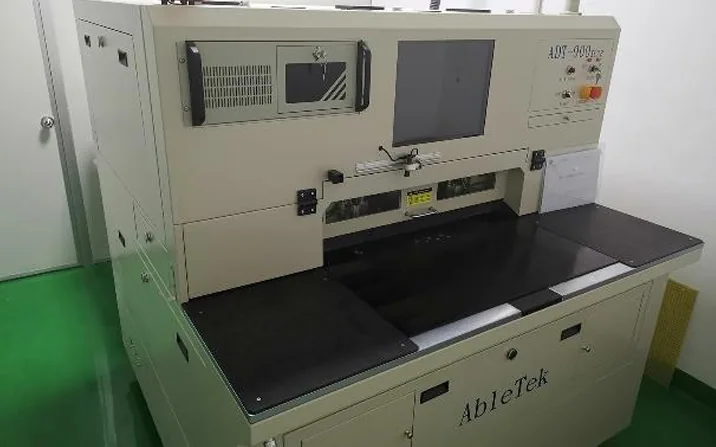
Executing the via plating squeeze involves a specific sequence that differs from standard PCB fabrication.
- Primary Drilling: Drill the through-holes or blind vias that require filling.
- De-smear & Electroless Copper: Clean the holes and deposit a thin seed layer of copper to make the barrel conductive.
- Pattern Plating (Flash): Plate the barrel to the required thickness (usually 0.5–1.0 mil) to ensure electrical connectivity before filling.
- The "Squeeze" (Via Filling):
- Action: Use a specialized screen printer or vacuum plugging machine to force high-viscosity epoxy into the vias.
- Parameter: Vacuum assistance is critical to evacuate air before the paste enters.
- Check: Verify paste protrudes from the opposite side to ensure a complete column fill.
- Baking/Curing: Thermal cure of the plugging ink. This must be done slowly to avoid solvent entrapment.
- Planarization (Scrubbing): Mechanically abrade the surface to remove excess paste (overburden) and level it with the copper surface.
- Cap Plating (POFV): Apply a second round of copper plating over the filled and planarized via. This seals the plug and creates the "pad" for via in pad manufacturing.
- Final Etching: Define the outer layer circuitry.
- Surface Finish: Apply ENIG, OSP, or Immersion Silver over the flat, plated pads.
via plating squeeze troubleshooting (failure modes and fixes)
Even with precise specs, the via plating squeeze process can fail if process controls drift.
1. Dimples (Depressions in the pad)
- Symptom: The copper cap dips into the hole, creating a concave surface.
- Cause: Paste shrinkage during curing or insufficient "squeeze" pressure during filling.
- Fix: Use low-shrinkage ink; optimize planarization to leave slightly more material before curing.
- Prevention: Specify max dimple depth (e.g., 0.5 mil) in fabrication notes.
2. Voids in the Plug (Air bubbles)
- Symptom: Seen in X-ray or cross-section; air pockets inside the epoxy column.
- Cause: High aspect ratio preventing flow; lack of vacuum during the fill process.
- Risk: The air expands during reflow, cracking the barrel or popping the cap (outgassing).
- Fix: Reduce aspect ratio or switch to vacuum-assisted plugging.
3. Cap Separation (Blistering)
- Symptom: The plated copper cap peels off the epoxy plug.
- Cause: Poor planarization (smooth surface) or lack of chemical roughening before cap plating.
- Fix: Ensure proper "de-smear" or chemical texturing of the cured epoxy plug before plating.
4. Solder Wicking (Solder Theft)
- Symptom: Solder drains into the via during assembly, leaving the component leg dry.
- Cause: Incomplete cap plating (pinholes) or skipping the fill process entirely.
- Fix: Verify cap plating thickness and integrity using AOI data analytics and backlight testing.
5. Barrel Cracks
- Symptom: Intermittent electrical open circuits after thermal cycling.
- Cause: Mismatch in CTE (Coefficient of Thermal Expansion) between the plug material and the copper/laminate.
- Fix: Use "CTE-matched" plugging inks (typically non-conductive) rather than conductive silver pastes, which are rigid and brittle.
How to choose via plating squeeze (Conductive vs. Non-Conductive Fill)
Choosing the right material for the squeeze process is a common "how to choose" dilemma for engineers.
Non-Conductive Fill (Standard Choice)
- Pros: Matches CTE of FR4 (approx 30-50 ppm/°C); highly reliable; cheaper.
- Cons: Does not conduct heat or electricity itself (the copper barrel does that).
- Verdict: Use for 95% of signal and power vias. The copper plating on the barrel wall provides sufficient conductivity.
Conductive Fill (Silver/Copper Paste)
- Pros: Slightly lower thermal resistance (marginal benefit).
- Cons: High CTE mismatch (risk of cracking); expensive; lower reliability in thermal cycling.
- Verdict: Rarely recommended. For high heat, use thermal via arrays with non-conductive fill or embedded copper coins.
via plating squeeze FAQ (cost, lead time, Design for Manufacturability (DFM) files, stackup, impedance, Dk/Df)
Q: Does via plating squeeze affect impedance? A: Minimally. The dielectric constant of the plugging epoxy is usually similar to FR4 (Dk ~3.5–4.0). However, the removal of the air cylinder (Dk=1.0) inside the via slightly increases capacitance, which should be modeled in high-speed PCB simulations.
Q: Can I put a test point on a filled via? A: Yes. Since the via is capped and plated flat, it acts exactly like a surface mount pad. This is ideal for high-density ICT fixture access.
Q: What is the minimum ring required for VIPPO? A: You typically need a minimum annular ring of 3–4 mils (0.075mm – 0.1mm) to ensure the cap plating has a solid copper base to anchor onto.
Q: How much does this process add to lead time? A: Expect an additional 1–2 days. The sequence of "Drill -> Plate -> Fill -> Cure -> Planarize -> Cap Plate" is time-intensive compared to standard "Drill -> Plate -> Etch".
Q: Is "resin squeeze out" the same thing? A: No. Resin squeeze out usually refers to prepreg resin flowing out of the board edge during lamination. Via plating squeeze refers to the intentional filling of the hole.
Resources for via plating squeeze (related pages and tools)
- PCB Fabrication Process: See where via filling fits into the overall flow.
- DFM Guidelines: Download design rules for pad sizes and via constraints.
- HDI PCB Capabilities: Advanced specs for microvias and VIPPO.
via plating squeeze glossary (key terms)
| Term | Definition |
|---|---|
| VIPPO | Via-in-Pad Plated Over. The standard industry term for filled and capped vias. |
| Aspect Ratio | The ratio of PCB thickness to via diameter. Critical for determining fillability. |
| Dimple | The slight depression left on the via surface after capping. Must be minimized for BGA reliability. |
| Planarization | The mechanical grinding process to level the cured resin plug with the copper surface. |
| Outgassing | The release of trapped gas from a via during soldering, causing voids in the solder joint. |
| LPI Plugging | Liquid Photoimageable mask plugging. A cheaper alternative to resin filling, but not suitable for plating over. |
| CTE | Coefficient of Thermal Expansion. A measure of how much the material expands with heat. |
| Solder Theft | When solder wicks down an unfilled via, leaving insufficient solder for the component joint. |
| Overburden | The excess copper or resin that protrudes above the surface before planarization. |
| Tenting | Covering a via with solder mask without filling it. Not suitable for Via-in-Pad. |
Request a quote for via plating squeeze (Design for Manufacturability (DFM) review + pricing)
Ready to implement Via-in-Pad technology? APTPCB (APTPCB PCB Factory) specializes in high-reliability VIPPO manufacturing with strict control over dimple depth and plating integrity.
For an accurate DFM review and quote, please provide:
- Gerber Files: RS-274X format preferred.
- Fab Drawing: Specify "Via-in-Pad" or "IPC-4761 Type VII" clearly.
- Stackup: Include layer thickness and material requirements.
- Volume: Prototype vs. Mass Production quantities.
Conclusion (next steps)
The via plating squeeze process is the backbone of modern high-density PCB design, enabling components to be placed directly over interconnects without sacrificing assembly yield. By controlling the fill material, aspect ratio, and planarization steps, engineers can eliminate solder theft and ensure perfectly flat pads for fine-pitch BGAs. At APTPCB, we enforce strict cross-section verification and AOI checks to ensure every filled via meets Class 3 reliability standards.