
:::writing{variant="document" id="48317"}
title: 'Visitor Location Register Hardware: PCB Sourcing Guide for MSC/VLR Platforms' description: "How to specify, source, and validate PCBs for Visitor Location Register hardware, from host architecture and signal-loss budgets to backdrilling, reliability evidence, and RFQ requirements." category: technology date: "2025-05-23" featured: true image: "" readingTime: 10 tags: ["Visitor Location Register", "Home Location Register", "Equipment Identity Register"]
A Visitor Location Register (VLR) is a network function, not a PCB architecture. 3GPP defines the VLR as the location register used by an MSC for circuit-switched services, including subscriber and location information needed for call handling. The PCB requirements therefore come from the physical platform hosting the MSC/VLR function—for example, a telecom chassis, server blade, backplane, control board, or commercial server—not from the VLR database itself.
That distinction should drive sourcing. Do not specify low-loss laminate, 20 layers, backdrilling, or IPC Class 3 simply because the equipment hosts a VLR. First identify the platform interfaces, channel lengths, data rates, connector system, power density, mechanical environment, service life, and applicable customer acceptance requirements. Then convert those requirements into a manufacturable stackup and validation plan.
This guide is for hardware engineers, NPI/quality teams, and procurement specialists sourcing PCB hardware for MSC/VLR infrastructure, including platforms that may also interact with a Home Location Register (HLR), Equipment Identity Register (EIR), or LTE-era SGs interfaces.
Does a Visitor Location Register need specialized PCB hardware?
Not always. The first sourcing decision is whether the VLR runs on proprietary telecom hardware or on a virtualized commercial computing platform.
A legacy or purpose-built MSC/VLR chassis may use large multilayer backplanes, processor cards, network interfaces, press-fit connectors, redundant power distribution, and long high-speed channels. Those features can justify low-loss materials, controlled impedance, backdrilling, tighter registration controls, and additional reliability evidence.
A virtualized VLR running on standard carrier or data-center servers is different. In that case, the VLR application does not independently determine the PCB construction. The server platform, NICs, storage, switching fabric, thermal design, and applicable product specifications do.
The practical rule is simple: specify the PCB against the electrical and mechanical channel, not against the name of the telecom application.
For broader platform context, see Communication Equipment PCB and Server & Data Center PCB.
Which PCB architecture fits the host platform?
Use the hardware architecture to define the fabrication problem before choosing materials.
| Host-platform condition | Likely PCB concern | What engineering should define | Evidence to request |
|---|---|---|---|
| Modular chassis with plug-in cards | Long connector-to-connector channels | Connector system, channel length, impedance, insertion-loss budget | Stackup, TDR results, registration and backdrill verification |
| Dense processor or network card | High routing and power density | Layer allocation, BGA escape, PDN requirements, thermal strategy | Microsections, electrical test, impedance coupons |
| Thick telecom backplane | High-aspect-ratio PTHs and press-fit fields | Finished thickness, hole geometry, connector tolerances | Hole-wall evaluation, registration data, dimensional report |
| High-speed serial links | Via discontinuities and dielectric loss | Protocol, Nyquist frequency, channel-loss budget, via-stub limit | TDR/VNA data where contractually required |
| Virtualized VLR on COTS servers | Application does not dictate board technology | Server/platform qualification requirements | OEM/platform compliance evidence |
| High-availability field installation | Long-term environmental reliability | Temperature, humidity, cycling and service requirements | Project-specific qualification records |
A Backplane PCB Manufacturing process may be appropriate for a chassis-based MSC/VLR platform, but it should not be assumed for every implementation.
How should you select laminate and stackup for VLR host hardware?
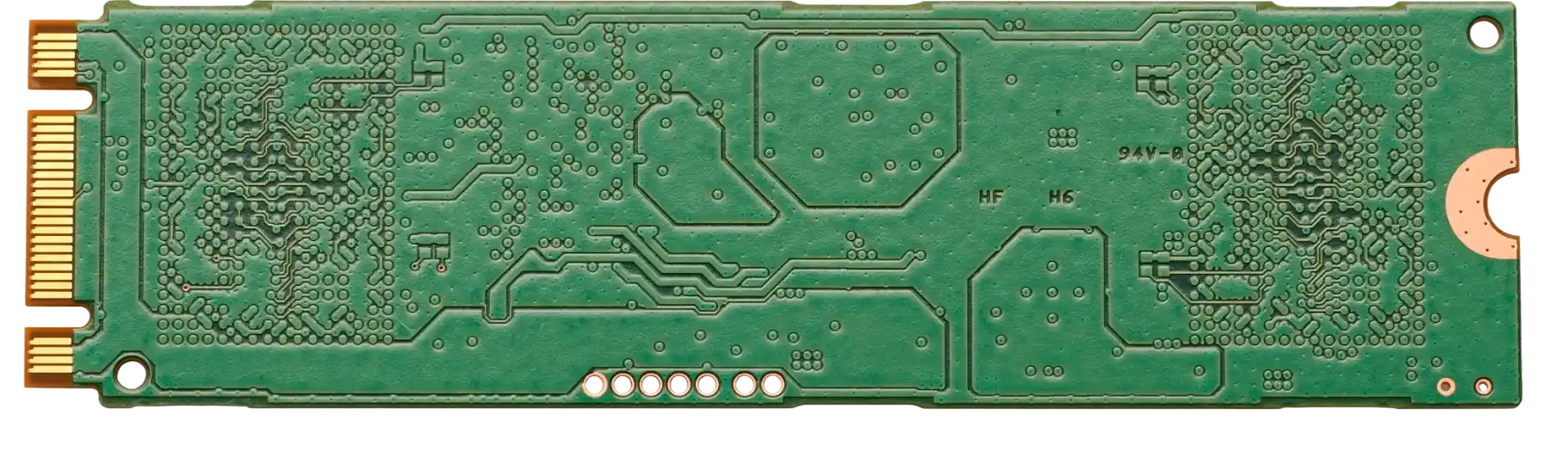
Start with the channel budget. High-Tg FR-4 may be sufficient for some control, power, and moderate-speed digital circuitry. Lower-loss materials become valuable when trace length, connector loss, signaling rate, or margin makes dielectric and conductor loss significant.
Materials such as Panasonic Megtron-family laminates and appropriate Rogers products are options for high-speed designs, but material selection should be based on the laminate's measured or specified electrical properties at relevant frequencies, processing requirements, availability, and approved-substitution policy. The Megtron PCB Materials page provides additional material context.
Do not use a universal rule such as "VLR boards require Df below a fixed number." Instead, provide the fabricator with the electrical requirement the finished channel must satisfy.
Stackup development should define reference planes, dielectric thicknesses, copper thickness, finished board thickness, impedance structures, and material family. High-layer-count boards also require attention to copper balance, sequential lamination if used, drill span, registration, and manufacturable aspect ratios.
For controlled-impedance structures, establish target impedance and allowed tolerance from the interface or system requirement. Common values such as 85 Ω or 100 Ω differential may appear in high-speed platforms, but the interface specification—not the VLR function—sets the target. The Impedance Calculator can assist with initial geometry estimates before the production stackup is finalized.
When is backdrilling worth the additional process complexity?
Backdrilling removes an unused portion of a plated-through-hole barrel after the electrical connection ends. The remaining via stub behaves as a transmission-line discontinuity, so its importance increases as edge rates rise and the allowable channel margin falls.
Use backdrilling when signal-integrity analysis shows that the remaining stub materially affects return loss, insertion loss, or eye margin. Define the relevant drill pair, connected layer, maximum residual stub, keep-out conditions, and tolerance in the fabrication data.
Do not request backdrilling solely because a board is a telecom backplane. Unnecessary controlled-depth drilling adds process steps, inspection requirements, and cost without improving a channel that already meets its budget.
Design teams working with serial interfaces can use the broader principles in High Speed PCB Design.
What manufacturing failures matter most on thick, high-speed telecom boards?
The most useful way to manage risk is to connect each potential failure to a prevention control and acceptance record.
| Risk | Manufacturing or design driver | Prevention/control | Evidence at release |
|---|---|---|---|
| Impedance excursion | Etch variation, dielectric thickness or material-property variation | Fabricator-reviewed stackup and impedance compensation | TDR coupon results where specified |
| Excess channel loss | Material loss, copper roughness, excessive via stubs or long routing | Loss-budget-based material and via selection | VNA/channel measurement if required by the drawing |
| PTH fatigue or barrel cracking | Thick construction, high aspect ratio, thermal expansion and plating quality | Manufacturable drill geometry and controlled plating process | Microsection and applicable thermal/reliability test |
| Layer misregistration | Large board, many layers, lamination movement | Registration compensation and controlled lamination | Registration/microsection evidence |
| CAF-related insulation failure | Geometry, resin/glass system, voltage, moisture and contamination | Material/process selection plus adequate spacing and cleanliness | Qualification evidence required by the project |
| Bow and twist | Unbalanced stackup or copper distribution | Symmetrical construction and copper balancing | Finished dimensional inspection |
| Delamination | Moisture, material/process mismatch or thermal stress | Qualified lamination and handling process | Visual/microsection or project qualification evidence |
| Press-fit connector problems | Finished-hole size or plating outside connector window | Coordinate PCB and connector requirements before release | Hole-size/plating inspection records |
This table is more useful than specifying arbitrary universal limits. The required value for plating, residual stub, impedance tolerance, thermal cycling, or dimensional control should be placed on the drawing or purchase specification when it is a contractual requirement.
What should PCB validation prove before the hardware is released?

Fabrication acceptance and system qualification are different activities.
The PCB manufacturer is responsible for proving that delivered boards conform to the fabrication drawing, purchase specification, agreed workmanship/performance class, and applicable PCB standards. IPC-6012E establishes qualification and performance requirements for rigid printed boards, while the contract should identify the revision and any additional requirements that apply to the project.
A practical PCB release package may include continuity/isolation testing, dimensional inspection, microsection results, controlled-impedance coupon data, material traceability, and additional process records where specified.
High-speed channel validation can require TDR or VNA measurements, but those tests must be tied to defined targets. "Pass VNA" is not an acceptance criterion. Engineering should state the frequency range, fixture/de-embedding approach where relevant, channel/coupon geometry, and limits to be evaluated.
Environmental tests such as thermal cycling, humidity testing, or CAF assessment should likewise follow the product qualification plan rather than being attached automatically to every VLR-related PCB.
Finally, PCB acceptance does not qualify the complete MSC/VLR product. System availability, database performance, protocol behavior, EMC, thermal operation, redundancy, software resilience, and network interoperability remain product or network responsibilities.
What should procurement send in a VLR hardware PCB RFQ?
A strong RFQ lets suppliers identify feasibility problems before quotation instead of discovering them after material purchase or tooling.
Submit the complete fabrication dataset—Gerber or ODB++ as applicable—plus NC drill data, fabrication drawing, finished dimensions and thickness, stackup or stackup constraints, material requirements, copper requirements, controlled-impedance table, surface finish, applicable IPC performance class, quantity, and panel or assembly constraints.
For complex backplanes, also include connector drawings or finished-hole requirements, press-fit fields, controlled-depth/backdrill files, maximum residual-stub requirements, mechanical tolerances, approved material substitutions, and any required test coupons or reports.
The supplier should return enough information to confirm that the quoted construction is the one engineering intends to buy: proposed stackup, laminate designation, impedance geometry, identified deviations, special-process assumptions, and the inspection or test records included with shipment.
Material substitution deserves explicit control. A laminate described only as "equivalent" can alter Dk/Df, copper treatment, thickness availability, processing behavior, and channel performance. If substitutions require approval, state that on the purchase documentation rather than relying on an informal expectation.
PCB supplier release checklist for MSC/VLR platforms
Before production release, verify these five gates:
- Architecture gate: The PCB requirements correspond to the actual server, blade, backplane, or control-board architecture rather than generic assumptions about VLR traffic.
- Signal-integrity gate: Controlled impedances, channel-loss requirements, reference structures, connector interfaces, and backdrill requirements are documented.
- Manufacturing gate: The proposed stackup, hole structures, board thickness, registration needs, material availability, and special processes have passed DFM review.
- Quality gate: Acceptance class, electrical test, coupons, microsections, material traceability, dimensional evidence, and any project-specific reliability tests are contractually defined.
- Change-control gate: Material substitutions, stackup changes, process changes affecting defined characteristics, and deviations require the agreed approval path before shipment.
APTPCB can provide PCB DFM review for manufacturability, stackup, and fabrication-related risks; circuit architecture and final system qualification remain the customer's engineering responsibility.
What usually drives the PCB quotation?
The largest cost and schedule effects usually come from the construction rather than the words "Visitor Location Register." Relevant drivers include board size, layer count, material family, finished thickness, drill count and aspect ratio, sequential lamination, blind/buried structures, controlled-depth drilling, via filling, tight mechanical tolerances, controlled impedance, test requirements, panel utilization, and production quantity.
A cost reduction is sound only when the revised board still meets the electrical and reliability requirements. For example, replacing a low-loss laminate with a lower-cost material can be reasonable when channel analysis preserves adequate margin. Removing backdrilling can be reasonable when via stubs are short enough not to violate the channel requirement. Neither decision should be made from a generic data-rate threshold alone.
FAQ
Is the VLR still relevant when operators use LTE or newer networks?
Yes in networks that retain circuit-switched services or interworking functions. 3GPP specifications continue to define VLR-related architecture and, for example, the MME–VLR SGs interface used for certain LTE and circuit-switched interworking scenarios. The exact hardware implementation depends on the operator architecture.
Are HLR, VLR, and EIR functions required to run on the same PCB?
No. They are network functions with defined relationships, not requirements for physical co-location. An implementation may distribute, consolidate, or virtualize functions according to the equipment and network architecture.
Does a telecom PCB automatically require IPC Class 3?
No. The required IPC performance class should be selected by the customer or product specification according to the application's performance and acceptance needs. A supplier should not silently upgrade or downgrade that contractual requirement based only on the word "telecom."
Should ENIG or hard gold be specified for every board?
No. Surface finish should match assembly, connector, storage, and reliability requirements. Connector fingers or other contact systems may have different finish requirements from component-mounting pads, so the fabrication drawing should distinguish them.
What should be frozen before moving from prototype to production?
Freeze the approved stackup, material or approved material set, impedance structures, via/backdrill definition, finished-hole requirements, test plan, controlled drawing notes, and change-control process. Production should not depend on assumptions that were never recorded in the fabrication package.
Request a quote for Visitor Location Register hardware PCBs
Before requesting pricing, confirm whether the board is a backplane, processor/server board, network interface, power/control board, or another part of the MSC/VLR platform. That architecture determines which fabrication controls matter.
Request a quote from APTPCB with the complete PCB dataset, fabrication drawing, stackup requirements, quantity, material specification, impedance table, connector and finished-hole requirements, plus any backdrilling, via filling, inspection, traceability, or qualification requirements.
The goal of the DFM review should be straightforward: verify that the proposed fabrication process can produce the PCB characteristics your system design actually requires, identify exceptions before production, and define measurable evidence for final acceptance. :::