
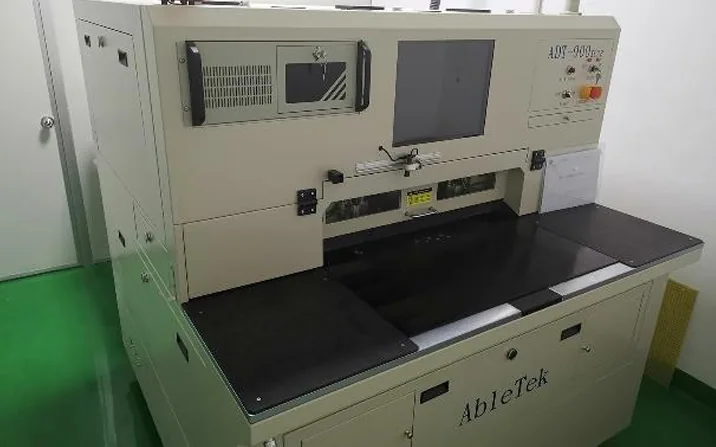
Achieving reliable void control for VIPPO BGA (Via-in-Pad Plated Over) structures is one of the most critical challenges in modern HDI PCB manufacturing. As ball grid array (BGA) pitches shrink below 0.5mm, traditional dog-bone fan-outs become impossible, necessitating vias placed directly within the solder pads. If these vias are not correctly filled, planarized, and capped, trapped gasses can expand during reflow, creating voids that compromise joint integrity. APTPCB (APTPCB PCB Factory) specializes in high-reliability interconnects where strict void criteria are mandatory. This guide details the specifications, process controls, and troubleshooting methods required to minimize voids and ensure robust assembly.
Quick Answer (30 seconds)
For engineers requiring immediate parameters for void control for VIPPO BGA, adhere to these core baselines:
- Dimple Depth: Must be less than 1 mil (25µm) to prevent air entrapment during paste printing; ideally <0.5 mil for 0.4mm pitch.
- Fill Material: Use non-conductive epoxy (e.g., PHP-900) with a CTE matched to the laminate (Tg > 150°C) to prevent Z-axis expansion cracks.
- Plating Thickness: Cap plating (wrap plating) must be at least 12-15µm (Class 2) or 20-25µm (Class 3) to prevent cap separation during reflow outgassing.
- Baking: Pre-bake boards at 120°C for 2-4 hours before assembly to eliminate moisture that contributes to explosive voiding.
- X-Ray Criteria: Total void area in BGA solder joints must be <25% (IPC-A-610 Class 2) or <15-20% (Class 3/Automotive).
- Reflow Profile: Implement a soak zone (150-180°C for 60-90s) to allow volatile solvents in flux to escape before liquidus.
When void control for All vias in the most critical challenges in modern HDI PCB manufacturing. As ball grid array (BGA) pads must be conductive/non-conductive filled and plated over (VIPPO) BGA applies (and when it doesn’t)
Understanding when to enforce strict void control for VIPPO BGA protocols prevents unnecessary cost while ensuring reliability where it matters.
Applies (Strict Control Required):
- Fine Pitch BGAs (< 0.5mm): There is insufficient room for dog-bone routing; vias must be in pads.
- High-Frequency RF Designs: Voids alter impedance and return paths; critical for overmolding for RF front-end modules where trapped air causes molding defects.
- High-Current Power Rails: Voids reduce the effective cross-sectional area, increasing resistance and thermal hotspots.
- Class 3 Reliability: Aerospace, automotive, and medical devices where latent failure is unacceptable.
- Stacked Microvias: Designs utilizing ELIC (Every Layer Interconnect) or SLP SMT for micro pitch BGA architectures.
Doesn’t Apply (Standard Processes Sufficient):
- Standard Pitch BGAs (> 0.8mm): Traditional dog-bone fan-out with tented vias is cheaper and lower risk.
- Non-Critical Signal Traces: Low-speed digital lines where minor impedance discontinuities are tolerable.
- Prototype/Consumer Grade (Class 1): Where cost is the primary driver and minor voiding (<30%) does not impact functionality.
- Through-Hole Components: VIPPO is specific to surface mount technology (SMT) pads.
- Unfilled Vias (Tented): If the via is not in the pad, standard solder mask tenting is sufficient.
Rules & specifications

The following table outlines the critical parameters for void control for VIPPO BGA. These values are derived from IPC standards and APTPCB internal DFM guidelines for high-yield manufacturing.
| Rule | Recommended Value/Range | Why it matters | How to verify | If ignored |
|---|---|---|---|---|
| Via Dimple Depth | < 25µm (1 mil); Target < 15µm | Deep dimples trap air under solder paste, leading to large voids during reflow. | Laser profilometry or Cross-section analysis. | Solder voids > 25%; open joints due to insufficient solder volume. |
| Cap Plating Thickness | Class 2: > 12µm Class 3: > 25µm |
Provides mechanical strength to contain expansion of the via fill material. | Cross-section (microsection) measurement. | Cap separation (lifting) or cracking; outgassing into solder joint. |
| Via Fill Material CTE | < 40 ppm/°C (below Tg) | Mismatched expansion between copper and fill causes stress on the cap plating. | Material datasheet (TMA analysis). | "Popcorning" of the via cap; intermittent open circuits. |
| Drill Diameter | 0.15mm - 0.25mm | Smaller holes are harder to plate/fill; larger holes risk sagging fill material. | Drill file check; Cross-section. | Incomplete filling (trapped air inside via); excessive dimpling. |
| Aspect Ratio | < 8:1 (for through-hole VIPPO) | High aspect ratios prevent plating chemistry from reaching the center. | CAM engineering review. | Thin plating in barrel center; barrel cracks; voids. |
| Wrap Plating | > 12µm (continuous from hole knee) | Ensures electrical continuity between the via barrel and the surface pad. | Cross-section at the knee of the hole. | Corner cracks; electrical open circuits under thermal cycling. |
| Solder Mask Clearance | 1:1 or +50µm (NSMD) | Defines the solderable area; affects paste release and gas escape. | Gerber analysis; AOI. | Solder bridging; restricted outgassing paths. |
| Pre-Reflow Bake | 125°C for 4 hours | Removes absorbed moisture from the PCB and fill material. | Oven logs; Weight loss test. | Delamination; explosive outgassing (blowholes). |
| Stencil Aperture | 100% coverage (or slightly reduced) | Controls solder volume; too much paste can seal gasses in. | SPI (Solder Paste Inspection). | Solder balling; bridging; voiding. |
| Reflow Peak Temp | 235°C - 245°C (SAC305) | Ensures full wetting without overheating the resin fill. | Thermal profiling (profiler). | Cold solder joints (voids don't escape); resin degradation. |
| Void Criteria (X-Ray) | < 25% Area (IPC Class 2) < 15% Area (IPC Class 3) |
Defines pass/fail for reliability. | 2D or 3D X-Ray (AXI). | Field failures; rejection by end-customer. |
| Surface Finish | ENIG or ENEPIG | Flat surface ensures uniform paste deposition over the capped via. | XRF thickness measurement. | Uneven paste printing; poor wetting; black pad defects. |
Implementation steps

Implementing robust void control for VIPPO BGA requires a synchronized effort between the PCB fabricator and the assembly house. Follow this sequence to ensure compliance.
Design for Manufacturing (DFM) Review
- Action: Verify via sizes and pad locations in Gerber files.
- Key Parameter: Ensure vias in pads are identified for plugging (IPC-4761 Type VII).
- Acceptance Check: CAM software confirms VIPPO locations match BGA pads.
Drilling and De-smear
- Action: Drill vias and remove resin smear to ensure copper adhesion.
- Key Parameter: Etch rate 0.5-1.0µm to create topography for plating.
- Acceptance Check: Backlight test or SEM inspection for clean hole walls.
Initial Copper Plating (Flash)
- Action: Deposit initial copper to make the barrel conductive.
- Key Parameter: 5-8µm thickness to support the filling process.
- Acceptance Check: Continuity test; cross-section to verify coverage.
Via Filling (Plugging)
- Action: Force non-conductive epoxy ink into the vias using vacuum assistance.
- Key Parameter: 100% fill; no air bubbles trapped inside the plug.
- Acceptance Check: X-ray inspection of the bare board to detect internal voids in the plug.
Planarization and Curing
- Action: Thermally cure the ink and mechanically grind excess from the surface.
- Key Parameter: Surface roughness < 2µm; dimple depth < 10µm.
- Acceptance Check: Visual inspection; no protruding ink or deep depressions.
Cap Plating (Over-plating)
- Action: Plate copper over the filled via to create a solid pad.
- Key Parameter: Minimum 12µm copper thickness over the plug.
- Acceptance Check: Cross-section to verify cap thickness and bond strength.
Surface Finish Application
- Action: Apply ENIG, Immersion Silver, or OSP.
- Key Parameter: Uniform thickness (e.g., Au 0.05-0.1µm for ENIG).
- Acceptance Check: XRF measurement; visual check for skip plating.
Solder Paste Printing (Assembly)
- Action: Print solder paste using a stencil designed for VIPPO.
- Key Parameter: Stencil thickness 4-5 mil; aperture reduction 10-15% if needed.
- Acceptance Check: SPI (Solder Paste Inspection) for volume and height.
Reflow Soldering
- Action: Reflow assembly with a profile optimized for void reduction.
- Key Parameter: Soak zone 60-90s; Time Above Liquidus (TAL) 45-60s.
- Acceptance Check: AXI (Automated X-ray Inspection) for void percentage.
Failure modes & troubleshooting
Even with strict specs, issues can arise. Use this logic flow to diagnose failures related to void control for VIPPO BGA.
1. Symptom: "Champagne Voids" (Tiny voids along the pad interface)
- Causes: Surface finish contamination; thin gold plating (ENIG); phosphorus enrichment.
- Checks: SEM/EDX analysis of the void interface; check gold thickness.
- Fix: Adjust ENIG bath parameters; switch to ENEPIG if necessary.
- Prevention: Strict bath life monitoring; validate surface finish supplier.
2. Symptom: Large Macro Voids (>25% area)
- Causes: Deep dimples in VIPPO; outgassing from via fill material; incorrect reflow profile (too fast).
- Checks: Measure dimple depth on bare board; check pre-bake logs; analyze reflow profile soak time.
- Fix: Increase soak time to allow flux volatiles to escape; reject bare boards with dimples > 1 mil.
- Prevention: Tighten planarization specs; implement vacuum plugging.
3. Symptom: Cap Separation (Copper cap lifts from via fill)
- Causes: CTE mismatch between epoxy and copper; insufficient cap plating thickness; moisture expansion.
- Checks: Cross-section analysis; TMA for Tg and CTE of fill material.
- Fix: Use lower CTE plugging ink; increase cap plating thickness to >20µm.
- Prevention: Bake boards before reflow; qualify ink-to-copper adhesion.
4. Symptom: Solder Beading / Solder Balls
- Causes: Excessive paste volume; rapid pre-heat causing flux explosion (spattering).
- Checks: SPI data; stencil aperture design; reflow ramp rate.
- Fix: Reduce stencil aperture (home plate or window pane design); slow down ramp rate (<2°C/s).
- Prevention: Optimize stencil design for VIPPO pads.
5. Symptom: Blowholes (Crater-like holes in solder)
- Causes: Trapped moisture in the PCB laminate or via fill; incomplete via filling (air pockets).
- Checks: X-ray bare boards for fill voids; weight gain test for moisture.
- Fix: Extended bake cycle (120°C, 4-6 hours); review plugging process parameters.
- Prevention: Store PCBs in vacuum-sealed bags with desiccant (MSL control).
6. Symptom: Head-in-Pillow (HiP)
- Causes: Warpage of the BGA or PCB; poor wetting due to oxidized pads.
- Checks: Shadow Moiré warpage measurement; wetting balance test.
- Fix: Use high-Tg materials; switch to N2 (Nitrogen) reflow environment.
- Prevention: Balance copper distribution on PCB layers to minimize warp.
Design decisions
Successful void control for VIPPO BGA begins at the layout stage. Engineers must weigh trade-offs between density, cost, and reliability.
VIPPO vs. Dog-Bone Fan-out While VIPPO enables tighter pitches, it increases PCB cost by 15-25% due to extra plating and planarization steps. Use VIPPO only when the BGA pitch forces it (typically < 0.65mm). For larger pitches, dog-bone routing is more forgiving regarding voids.
Material Selection for SLP SMT For SLP SMT for micro pitch BGA applications, standard FR4 may not suffice. High-speed materials (like Megtron 6 or Rogers) often have different Z-axis expansion rates. The via fill material must be compatible with the laminate's CTE to prevent the "piston effect" where the fill pushes the cap off during reflow.
Overmolding Considerations In RF modules requiring overmolding for RF front-end, surface planarity is non-negotiable. Even minor dimples can trap air during the injection molding process, leading to "blow-by" or voids in the mold compound itself. For these designs, specify a "zero dimple" or "protrusion only" allowance (+5µm / -0µm) to ensure the mold compound flows smoothly over the pads.
Pad Definition: SMD vs. NSMD For VIPPO, Solder Mask Defined (SMD) pads are sometimes preferred to contain the solder paste directly over the cap, reducing the risk of paste flowing down the side of the pad if mask registration is poor. However, Non-Solder Mask Defined (NSMD) pads generally offer better fatigue life. Consult APTPCB's DFM guidelines to choose the right strategy for your specific BGA package.
FAQ
Q: What is the maximum acceptable void percentage for Class 3 VIPPO BGAs? A: IPC-A-610 Class 3 requires total void area to be less than 25% of the X-ray image area, though many automotive and aerospace OEMs impose stricter internal limits of 15% or 20%.
- Standard: IPC-7095 provides detailed void criteria.
- APTPCB Target: We aim for <10% voiding through process optimization.
Q: Can I use conductive epoxy for via filling to improve thermal performance? A: Yes, but it is risky and expensive. Conductive inks (silver/copper) have different CTEs and can cause stress cracks.
- Alternative: Use non-conductive ink with thermal vias arrays.
- Performance: The thermal gain of conductive ink is often marginal compared to solid copper plating.
Q: How does surface finish affect void formation? A: Surface flatness and wettability are key.
- ENIG: Excellent flatness, good for fine pitch, but risk of black pad.
- HASL: Too uneven for fine pitch VIPPO; causes paste volume variation.
- OSP: Good flatness but short shelf life; multiple reflows can degrade wettability.
Q: Why do I see voids specifically in the center of the BGA? A: This is often due to component warpage or insufficient heat penetration.
- Warpage: The center lifts during reflow (HiP) or compresses (bridging).
- Heat: Center balls are the last to reflow; if the profile is too short, flux remains trapped.
Q: Does X-ray inspection detect voids inside the via plug itself? A: Yes, high-resolution X-ray can see voids in the epoxy fill.
- Impact: Small voids in the fill are usually cosmetic unless they are near the surface cap, where they can cause cap collapse.
- Spec: IPC-6012 allows some internal voids in the fill provided they don't bridge conductors.
Q: What is the cost impact of specifying VIPPO? A: Expect a 15-30% increase in bare board cost.
- Drivers: Extra drill run, separate plating cycle, vacuum plugging, planarization.
- Lead Time: Adds 1-2 days to standard production time.
Q: How does "overmolding for RF front-end" relate to VIPPO voids? A: Voids in the solder joint can expand during the high-pressure overmolding process, causing the joint to fail or the mold compound to bubble.
- Requirement: Zero-void or near-zero void criteria are often required for SiP (System in Package) modules.
Q: Can I use VIPPO on just one side of the PCB? A: Yes, but the manufacturing process usually processes the whole panel.
- Efficiency: It is often better to treat all vias of a certain size as VIPPO to simplify the process, rather than selectively plugging only some.
Q: What is the difference between "Plugged" and "Filled & Capped"? A: "Plugged" usually refers to solder mask plugging (Type VI), which is not suitable for soldering over.
- VIPPO: Requires Type VII (Filled and Capped) with resin and copper plating.
Q: How do I specify void control requirements in my fabrication notes? A: Be explicit.
- Example Note: "All vias in BGA pads must be conductive/non-conductive filled and plated over (VIPPO) per IPC-4761 Type VII. Dimple depth < 0.025mm. Cap plating > 0.012mm."
Related pages & tools
- PCB Manufacturing Capabilities – Overview of our HDI and VIPPO capabilities.
- Isola PCB Materials – High-reliability laminates suitable for Class 3 VIPPO designs.
- Get a Quote – Submit your Gerber files for a DFM review and pricing.
Glossary (key terms)
| Term | Definition | Relevance to VIPPO |
|---|---|---|
| VIPPO | Via-in-Pad Plated Over. A via placed in a pad, filled with resin, and plated with copper. | The core technology enabling fine-pitch BGA routing. |
| Aspect Ratio | The ratio of PCB thickness to the drilled hole diameter. | High aspect ratios (>10:1) make plating and filling difficult, increasing void risk. |
| CTE | Coefficient of Thermal Expansion. How much a material expands with heat. | Mismatch between copper (17ppm) and epoxy fill causes stress/cracks. |
| Dimple | The depression left on the via surface after planarization and plating. | Deep dimples trap air during paste printing, causing solder voids. |
| Outgassing | The release of trapped gas or moisture from the PCB during reflow. | The primary cause of "blowholes" and macro voids in solder joints. |
| Planarization | Mechanical grinding to level the surface after via filling. | Critical for ensuring a flat surface for component placement. |
| IPC-4761 | Design Guide for Protection of Printed Board Via Structures. | Defines the types of via plugging (Type VII is VIPPO). |
| Soak Zone | The part of the reflow profile where temp stabilizes (150-200°C). | Allows flux volatiles to evaporate slowly, reducing void formation. |
| SLP | Substrate-like PCB. Extremely high-density PCB technology. | Uses micro-vias and VIPPO extensively for smartphone logic boards. |
| Tg | Glass Transition Temperature. The temp where resin turns soft. | Fill material and laminate Tg should be matched to prevent Z-axis failure. |
| X-Ray (AXI) | Automated X-ray Inspection. | The only non-destructive way to measure void percentage in BGA joints. |
| Overmolding | Encapsulating a PCBA with plastic/resin. | Requires robust solder joints (low voids) to withstand molding pressure. |
Conclusion
Effective void control for VIPPO BGA is not achieved by a single process step but by a holistic approach combining precise PCB fabrication specs and optimized assembly profiles. By controlling dimple depth (<1 mil), ensuring adequate cap plating (>12µm), and managing reflow outgassing, engineers can deploy fine-pitch components with confidence.
APTPCB delivers high-precision VIPPO solutions tailored for SLP SMT for micro pitch BGA and critical RF applications. Whether you are prototyping a new module or scaling for automotive production, our engineering team ensures your via structures meet IPC Class 3 standards.
Ready to validate your design? Upload your files for a comprehensive DFM review.