
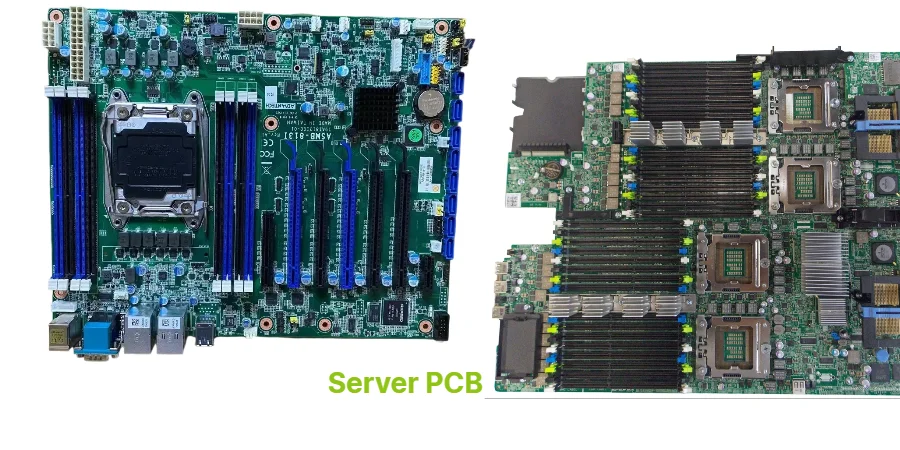
A PCB vulnerability assessment is an authorized security review of an electronic device's hardware, firmware, physical interfaces, trust boundaries, provisioning process, and update path. Its purpose is to identify exploitable weaknesses and define evidence-based remediation—not to replace DFM, reliability testing, regulatory certification, or a full system penetration test.
Key takeaways
- Assess the complete device, not the bare PCB alone. Security behavior emerges from hardware, firmware, software, enclosure, communications, and operations.
- Start with assets, attacker access, trust boundaries, and abuse cases before selecting tests.
- Debug ports, boot straps, external memory, update paths, credentials, key storage, and manufacturing provisioning deserve explicit review.
- A disabled connector is not the same as a disabled interface, and encrypted traffic is not proof of secure key handling.
- Rank findings by realistic access, exploitability, impact, affected population, detection, and recovery—not a generic severity label alone.
- Treat remediation and retest evidence as part of release; a vulnerability scan without closure is only an inventory of risk.
What is included in a PCB vulnerability assessment?
The scope should follow the product's attack surface. For an embedded or connected device, that usually includes:
- processing devices, secure elements, memories, programmable logic, and boot configuration
- debug, programming, test, service, and recovery interfaces
- wired, wireless, removable-media, sensor, actuator, and maintenance interfaces
- installed firmware, bootloaders, update packages, configuration, and recovery images
- credentials, cryptographic keys, certificates, identifiers, and sensitive user or operational data
- manufacturing programming, key injection, serialization, test, rework, scrap, and repair flows
- the enclosure and physical-access assumptions that protect or expose the board
- companion applications, cloud services, gateways, and operational controls when they affect device security
PCB fabrication quality can influence reliability and tamper resistance, but cybersecurity cannot be inferred from laminate, IPC class, X-ray inspection, or electrical test. Conversely, a secure boot feature does not prove that debug access, provisioning keys, recovery behavior, or update authorization are secure.
Define assets, attackers, and trust boundaries first
Testing without a threat model produces impressive activity but weak coverage. Begin by naming what must be protected and who may obtain access.
| Question | Examples to document | Why it changes the assessment |
|---|---|---|
| What are the assets? | Firmware integrity, signing keys, device identity, credentials, personal data, safety functions, calibration, intellectual property | Determines impact and required evidence |
| Who is the attacker? | Remote user, local network user, service technician, owner, supply-chain insider, person with temporary or persistent physical access | Determines realistic access and equipment assumptions |
| Where are the trust boundaries? | MCU-to-external-flash bus, application-to-bootloader handoff, factory-to-device provisioning, device-to-cloud link, service interface | Identifies where authentication, integrity, confidentiality, and authorization must be checked |
| What states matter? | Manufacturing, first boot, normal operation, update, recovery, service, decommissioning | Security controls often change by lifecycle state |
| What is the consequence? | Data disclosure, unauthorized code, unsafe actuation, persistent compromise, fleet-wide exposure, denial of service, unrecoverable device | Drives severity and remediation priority |
The assessment scope should state whether destructive techniques, invasive package work, fault injection, radio testing, cloud testing, or third-party services are authorized. Testing must be performed on owned or explicitly authorized systems in a controlled environment.
Hardware attack-surface review matrix
The board review should connect each exposed feature to a security objective and a verification method.
| Surface | Security question | Defensive verification evidence |
|---|---|---|
| Debug and test interfaces | Can JTAG, SWD, UART, boundary-scan, or vendor test modes expose control, memory, or secrets outside authorized service? | Schematic and PCB review, production-state configuration, access-control result, lifecycle-state test, documented recovery path |
| Boot configuration and recovery | Can boot straps, recovery pins, removable media, or alternate boot sources bypass the intended trust chain? | Boot-state matrix, authorized-image checks, recovery policy, physical-access assumptions |
| External memory | Are executable code, configuration, credentials, or sensitive data protected against unauthorized reading or replacement? | Data classification, integrity/authenticity controls, key-separation design, power-loss and recovery tests |
| Device identity and keys | Are secrets unique where required, protected at rest and during provisioning, revocable, and excluded from logs or ordinary test access? | Provisioning architecture, access records, uniqueness check, key/certificate lifecycle and revocation plan |
| Internal buses and exposed test points | Could accessible buses reveal secrets or allow unauthorized state changes? | Board-access review, interface inventory, required authentication or cryptographic protection, enclosure assumption |
| Sensors and actuators | Can untrusted inputs, spoofed sensors, or unauthorized commands create unsafe or privileged behavior? | Input validation, fault-state review, authorization tests, safe-state evidence |
| Tamper response | Does the product require tamper evidence, tamper detection, or response—and does the design meet that stated objective? | Requirement trace, enclosure/board review, response and recovery test |
| Supply and reset control | Can abnormal power, reset, clock, or maintenance behavior place the device in an insecure state? | Brownout/reset-state testing, fail-secure review, authenticated recovery evidence |
Removing a header may reduce convenience but does not prove that the underlying interface is inaccessible. Likewise, covering test points with coating or moving traces to inner layers should not be presented as a substitute for authentication, lifecycle controls, protected key storage, or verified firmware integrity.
Firmware, secure boot, and update assessment
Firmware assessment should cover the installed image and every authorized path that can replace, recover, or configure it.
Boot and runtime integrity
- Define the root of trust and which component verifies each stage.
- Verify that only authorized firmware is accepted in normal, update, service, and recovery states.
- Check what happens when verification fails, power is interrupted, or metadata is corrupted.
- Confirm debug and service behavior cannot silently bypass the boot policy.
- Protect security-critical configuration and define how unauthorized changes are detected.
Update and recovery
- Authenticate update sources and verify package integrity and authenticity before installation.
- Define anti-rollback behavior when older vulnerable versions must be rejected.
- Make update failure recoverable without accepting arbitrary or unsigned images.
- Preserve device identity, security state, and required user data through the approved recovery process.
- Record the installed version and provide a way to determine security state for support and incident response.
NIST SP 800-193 frames firmware resilience around protecting against unauthorized change, detecting change, and recovering securely. Those three outcomes are more useful than a single “secure boot enabled” checkbox.
APTPCB's IC programming page describes the production interface; the product owner must supply the approved image, verification rules, credential boundaries, and release authority.
Manufacturing and provisioning security
Security can be weakened after design release if the manufacturing process exposes firmware, credentials, signing material, identifiers, or debug access.
| Manufacturing stage | Control questions | Useful evidence |
|---|---|---|
| Data intake | Who can access binaries, configuration, keys, certificates, and customer files? | Role definition, transfer method, access and retention policy |
| Programming | Is the approved image identified, integrity-checked, and tied to the correct hardware revision? | File checksum or approved identifier, traveler record, programmer configuration, result log |
| Key or certificate provisioning | Are secrets generated, transferred, injected, and deleted according to the product's security architecture? | Provisioning flow, access separation, uniqueness result, audit record, exception handling |
| Test | Can fixtures, scripts, logs, golden units, or service commands expose secrets or leave privileged states enabled? | Reviewed test package, redacted logs, fixture access controls, post-test state verification |
| Serialization | Are device identity, labels, MAC addresses, certificates, and database records correctly linked? | Unit genealogy and duplicate/conflict checks |
| Rework and repair | Can replaced devices be securely reprovisioned, and are old identities revoked or quarantined? | Controlled rework instruction, authorization, before/after record |
| Scrap and excess material | How are programmed devices, failed boards, labels, and sensitive storage destroyed or returned? | Disposition record and customer-approved method |
| Release | Does every shipped unit have the approved firmware, configuration, security state, and test result? | Unit or lot release record with exception status |
Do not send production signing keys simply because a contract manufacturer needs to load firmware. The security architecture should minimize exposed authority, separate roles, and make every necessary privilege explicit. Use PCBA support services and testing and quality control to define the manufacturing handoff, then confirm the exact controls in the quote and agreement.
Vulnerability-assessment workflow
1. Plan the assessment
Define the target hardware and software revisions, test units, product states, accounts, interfaces, supporting services, prohibited techniques, data-handling rules, reporting format, and remediation timeline. Freeze the tested configuration so findings remain reproducible.
2. Review architecture and design data
Inspect block diagrams, data flows, schematics, PCB files, BOM, processor and memory architecture, boot chain, update design, debug strategy, key lifecycle, manufacturing flow, and security requirements. This review often identifies missing controls before lab testing starts.
3. Build an attack-surface inventory
List physical, internal, wired, wireless, application, cloud, update, recovery, and manufacturing interfaces. Record which are active in each lifecycle state and what authentication, authorization, integrity, confidentiality, and logging controls apply.
4. Perform authorized technical testing
Use a risk-based combination of configuration review, interface testing, firmware analysis, update and recovery testing, credential checks, communication testing, physical-access testing, and verification of expected failure states. Preserve enough evidence to reproduce the finding without publishing sensitive exploit details.
5. Triage and remediate
For each finding, record the affected asset, prerequisites, access level, impact, affected versions, evidence, recommended control, owner, target date, and compensating controls. Fix the root cause in architecture, hardware, firmware, provisioning, or operations rather than merely hiding the observed interface.
6. Retest and release
Retest the repaired path and adjacent states, then update threat models, requirements, manufacturing instructions, service procedures, and regression tests. Release should show which findings are closed, accepted, mitigated, or deferred by authorized owners.
How should hardware vulnerabilities be prioritized?
CVSS can help communicate software-style findings, but hardware and embedded-device decisions also depend on physical access, fleet scale, repairability, safety effect, and manufacturing exposure.
| Factor | Questions for triage |
|---|---|
| Access | Is exploitation remote, local-network, nearby radio, temporary physical, persistent physical, or supply-chain? |
| Preconditions | Does it require credentials, privileged state, enclosure opening, specialized equipment, or a specific product state? |
| Impact | Can it disclose secrets, install unauthorized code, alter safety-relevant behavior, persist through reset/update, or disable recovery? |
| Scale | Is the weakness unique to one unit, one batch, one key population, one firmware version, or the whole fleet? |
| Detectability | Would the owner, device, service, or manufacturing system detect exploitation or configuration drift? |
| Recovery | Can the device be securely updated, reset, rekeyed, repaired, or recalled? Does recovery preserve trust? |
| Evidence strength | Is the result a confirmed exploit path, a design weakness, an unverified configuration assumption, or a theoretical concern? |
A physically difficult attack can still be critical when one extracted secret compromises an entire product family. A remotely reachable issue may rank lower if it affects no sensitive asset and is reliably contained. Severity must follow the actual product model.
Common assessment failures
| Weak practice | Why it fails | Better approach |
|---|---|---|
| Treating DFM as security assessment | Manufacturability does not test authorization, firmware integrity, credentials, or update behavior | Run DFM and cybersecurity reviews as separate, coordinated gates |
| Scanning only network services | Physical interfaces, firmware, memory, recovery, and provisioning remain untested | Use a device model covering hardware, firmware, communications, applications, and operations |
| Assuming a secure element solves security | Integration, provisioning, access policy, update design, and key lifecycle may still fail | Verify the complete trust chain and operational lifecycle |
| Disabling debug only in documentation | Production configuration or alternate lifecycle states may still expose access | Test the real production state and recovery/service paths |
| Using shared credentials or keys | One disclosure can affect many devices and complicate revocation | Use product-appropriate uniqueness, rotation, revocation, and audit controls |
| Reporting findings without retest | The team cannot prove the fix works or avoided regression | Require closure evidence and targeted regression tests |
| Publishing sensitive exploit detail broadly | The report itself becomes a risk | Restrict technical evidence to authorized recipients and create a separate executive summary |
PCB vulnerability-assessment RFQ checklist
Product and threat context
- Device purpose, users, deployment environment, safety impact, connectivity, and expected physical access
- Assets, trust boundaries, attacker model, product states, fleet scale, and recovery expectations
- Applicable customer, regulatory, industry, privacy, and cybersecurity requirements with revisions
Technical package
- Block diagram, data-flow diagram, schematics, PCB data, BOM, processor/memory architecture, and interface inventory
- Firmware and bootloader versions, update/recovery design, debug/service design, configuration, and third-party components
- Enclosure, connectors, test points, programming paths, secure elements, external memories, and key-storage design
Manufacturing and lifecycle
- Programming and provisioning workflow, approved images, identifiers, certificates, keys, serialization, logs, and access boundaries
- First boot, normal use, service, repair, rework, factory reset, ownership transfer, decommissioning, and scrap behavior
- Component sourcing, change control, vulnerability intake, software-support period, update policy, and incident-response ownership
Assessment and deliverables
- Authorized test methods, prohibited techniques, test units, accounts, lab constraints, data handling, and disclosure rules
- Finding format, severity method, reproduction evidence, remediation guidance, retest scope, and executive summary
- Required standards mapping, traceability matrix, open-risk acceptance, and release evidence
Use APTPCB's security equipment PCB page for manufacturing context and component sourcing for approved-material and traceability questions. A manufacturing supplier can support controlled build and programming, but an accredited or specialized security laboratory may still be required for the product's assessment or certification scope.
Standards and responsibility boundary
- NISTIR 8259A — IoT Device Cybersecurity Capability Core Baseline
- NIST SP 800-115 — Technical Guide to Information Security Testing and Assessment
- NIST SP 800-193 — Platform Firmware Resiliency Guidelines
- ETSI EN 303 645 V3.1.3 — Cyber Security for Consumer Internet of Things: Baseline Requirements
- IEC 62443-4-1 — Secure product development lifecycle requirements
- IEC 62443-4-2 — Technical security requirements for IACS components
- ISO/SAE 21434 — Road vehicles cybersecurity engineering
- OWASP IoT Security Testing Guide — IoT testing methodology and test-case catalog
Apply only the standards, versions, profiles, and regulations required for the target product and market. The PCB/PCBA supplier is responsible for manufacturing to the approved data and contracted controls. The product owner retains responsibility for threat modeling, security architecture, software, key authority, vulnerability management, regulatory conformity, system validation, and field response.
FAQ
Is a PCB vulnerability assessment the same as a DFM review?
No. DFM checks whether the board can be manufactured using the proposed construction and process. A vulnerability assessment evaluates whether hardware, firmware, interfaces, credentials, updates, provisioning, and operating states create exploitable security weaknesses.
Can a bare PCB be penetration tested?
A bare PCB can be inspected for design features and fabrication anomalies, but meaningful penetration testing normally requires the assembled device, production firmware, enclosure, interfaces, credentials, and supporting services. The security boundary is larger than the board artwork.
Which interfaces should be checked on an embedded device?
Inventory all physical, internal, wired, wireless, debug, programming, test, service, recovery, removable-media, sensor, and actuator interfaces. Check which interfaces are active in manufacturing, normal, service, update, recovery, and decommissioned states.
Does secure boot make a device secure?
No. Secure boot can protect the startup trust chain, but security also depends on key protection, update authorization, anti-rollback policy, recovery, debug control, runtime software, credentials, communications, provisioning, and incident response.
Should debug ports be removed from production PCBs?
That is a product-specific decision. Removing a connector may reduce exposure but does not disable the underlying interface. Production lifecycle configuration, authentication, authorized service, recovery, and post-programming verification must be designed and tested together.
How often should a hardware vulnerability assessment be repeated?
Repeat or update it when hardware, firmware, bootloaders, components, suppliers, provisioning, cloud services, interfaces, threat assumptions, regulations, or manufacturing sites change—and when new vulnerabilities affect included components or software.
What evidence should a security-assessment report contain?
It should identify the tested configuration, scope, assumptions, methods, affected assets and versions, prerequisites, impact, reproducible evidence, severity rationale, remediation, owner, status, and retest result. Sensitive technical details should have controlled distribution.
Request a secure manufacturing review
Send the released hardware package, programming and provisioning scope, approved firmware identifiers, traceability requirements, security-sensitive handling rules, quantities, and required evidence. APTPCB can review manufacturing and PCBA handoff gaps; product cybersecurity testing remains subject to the agreed scope and responsible security authority.