
Wearable technology has evolved from bulky wrist-worn devices to ultra-thin, skin-mounted patches. These devices require a specialized approach to manufacturing and quality assurance. Wearable patch PCB validation is the critical process of verifying that a flexible circuit can withstand the mechanical rigors of the human body while maintaining electrical performance and biocompatibility.
Unlike standard rigid boards, patch PCBs must endure twisting, stretching, and exposure to sweat. At APTPCB (APTPCB PCB Factory), we see firsthand that successful patch deployment depends less on the initial schematic and more on rigorous validation of the physical stackup and assembly process. This guide covers the entire lifecycle, ensuring your product survives the transition from prototype to mass production.
Key Takeaways
- Definition: Validation extends beyond electrical continuity to include mechanical endurance (bending) and environmental resilience (moisture/sweat).
- Critical Metric: The "Neutral Axis" placement is the single most important factor in preventing trace fractures during dynamic flexing.
- Material Choice: Polyimide (PI) is standard, but low-cost PET or stretchable substrates may be required depending on the lifecycle.
- Assembly Risk: Solder joints are the weakest points; underfill or flexible encapsulation is often necessary for durability.
- Testing: Static bend testing is insufficient; dynamic cycle testing is required for any patch intended for active users.
- Validation Strategy: Early engagement with DFM (Design for Manufacturing) prevents costly re-spins due to impossible bend radii.
What Wearable patch PCB validation really means (scope & boundaries)
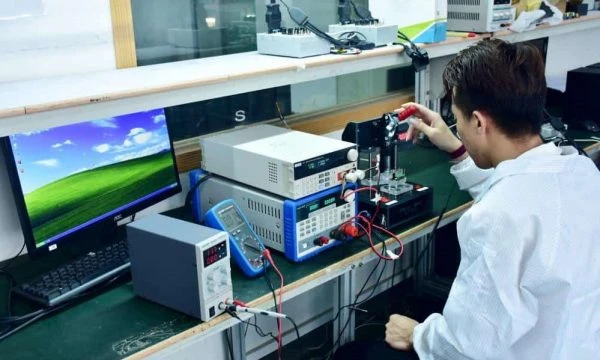
Understanding the core definition is the first step before analyzing specific metrics. Wearable patch PCB validation is a multi-dimensional quality assurance process tailored for circuits that adhere directly to the skin.
Standard PCB validation focuses on thermal cycling and electrical connectivity. Patch validation adds three distinct layers:
- Dynamic Mechanical Integrity: The board must function while the user moves. This involves validating the circuit's ability to flex thousands of times without micro-fractures in the copper traces.
- Biocompatibility and Environmental Seal: The validation process must confirm that the materials (including solders and adhesives) do not react with skin and that body salts (sweat) do not penetrate the circuit layers.
- Assembly Reliability: Components on a flexible patch are prone to "popping" off when the substrate bends. Validation includes shear testing of components on a flexible base.
This scope applies to medical ECG patches, continuous glucose monitors (CGMs), smart bandages, and fitness performance stickers. It bridges the gap between Flex PCB manufacturing and final product assembly.
Metrics that matter (how to evaluate quality)
Once the scope is defined, you must quantify success using specific data points. The following metrics are essential for a robust Wearable patch PCB validation plan.
| Metric | Why it matters | Typical range or influencing factors | How to measure |
|---|---|---|---|
| Minimum Bend Radius | Determines how tight the patch can curve against the body without cracking traces. | 6x to 10x the flex layer thickness (dynamic applications). | Mandrel bend test (IPC-TM-650). |
| Peel Strength | Ensures the copper does not delaminate from the polyimide base during movement. | > 0.8 N/mm (standard); higher for dynamic use. | 90-degree peel test. |
| Impedance Stability | Critical for biosensors; bending changes the distance to the reference plane, altering impedance. | ±10% variation allowed during flex. | TDR (Time Domain Reflectometry) while flexing. |
| Moisture Absorption | Sweat absorption changes dielectric constant and can cause delamination (popcorning). | < 1% (Polyimide); < 0.1% (LCP). | Weight gain analysis after humidity exposure. |
| Cycle Life (Endurance) | Predicts how long the patch lasts before trace fatigue failure. | 1,000 to 100,000+ cycles depending on use case. | MIT Folding Endurance Tester. |
| Surface Insulation Resistance (SIR) | Verifies that sweat/humidity won't cause electrochemical migration (shorts). | > 100 MΩ after exposure. | Temperature-Humidity-Bias (THB) testing. |
Selection guidance by scenario (trade-offs)
Metrics provide the data, but the application scenario dictates which trade-offs are acceptable. Different wearable patches require different validation priorities.
1. Disposable Medical Monitor (e.g., 24-hour ECG)
- Priority: Cost and Biocompatibility.
- Trade-off: Lower cycle life is acceptable.
- Validation Focus: Chemical safety of adhesives and basic static flexibility.
- Material: Often 1-layer or 2-layer Flex with lower-grade PI or PET.
2. High-End Athlete Performance Patch
- Priority: Dynamic Durability and Sweat Resistance.
- Trade-off: Higher manufacturing cost.
- Validation Focus: Rigorous dynamic bend testing (100k+ cycles) and salt-mist immersion.
- Material: High-performance Polyimide with rolled annealed (RA) copper.
3. Smart Bandage (Wound Care)
- Priority: Breathability and Conformability.
- Trade-off: Component density (must be low).
- Validation Focus: Moisture transmission rates and thermal management (to avoid heating the wound).
- Material: Mesh-structure flex or specialized porous substrates.
4. Implantable-Grade Subcutaneous Patch
- Priority: Zero Failure Rate and Hermeticity.
- Trade-off: Extremely high validation cost.
- Validation Focus: Long-term soak testing and ISO 10993 biocompatibility.
- Material: Liquid Crystal Polymer (LCP) or biocompatible encapsulated Flex.
5. Haptic Feedback Patch
- Priority: Current Carrying Capacity.
- Trade-off: Thicker copper reduces flexibility.
- Validation Focus: Thermal rise under load while bent.
- Material: Thicker copper (2oz+) requiring wider bend radii.
6. Neonatal Monitoring Patch
- Priority: Ultra-low stiffness (comfort) and Safety.
- Trade-off: Fragility during assembly.
- Validation Focus: Stiffness testing (Young's modulus) to ensure it doesn't damage delicate skin.
- Material: Thinnest available PI (12.5µm) with adhesiveless base.
From design to manufacturing (implementation checkpoints)

After selecting the right scenario, the design must move into production without compromising the validation goals. This phase is where Wearable patch PCB design meets reality.
Use these checkpoints to guide the transition from CAD to physical boards.
1. Neutral Axis Management
- Recommendation: Place critical conductors in the center of the stackup.
- Risk: Traces on the outer layers stretch or compress the most, leading to cracks.
- Acceptance: Review stackup diagram to confirm symmetry.
2. Tear Drops and Fillets
- Recommendation: Add teardrops to all pad interfaces and curve all traces.
- Risk: Mechanical stress concentrates at sharp corners and pad junctions, causing lifts.
- Acceptance: Visual inspection of Gerber files for 90-degree angles (reject if found).
3. Coverlay Openings
- Recommendation: Use "anchor spurs" or tie-downs for pads in the coverlay.
- Risk: Pads peeling off the substrate during soldering or flexing.
- Acceptance: Check overlay design against IPC-2223 recommendations.
4. Stiffener Placement
- Recommendation: End stiffeners 0.5mm to 1mm away from solder pads, but overlap the coverlay.
- Risk: Stress points created at the stiffener edge can snap traces (the "stress riser" effect).
- Acceptance: Verify stiffener overlap in the mechanical drawing.
5. Surface Finish Selection
- Recommendation: Use ENIG (Electroless Nickel Immersion Gold) or ENEPIG.
- Risk: HASL is too brittle and uneven for fine-pitch flex assembly; OSP may crack upon flexing.
- Acceptance: Specify ENIG in fabrication notes.
6. Solder Paste and Underfill
- Recommendation: Use flexible epoxy or underfill for BGA/CSP components.
- Risk: Rigid solder joints fracture when the patch conforms to the body.
- Acceptance: Shear test validation on assembled prototypes.
7. Grain Direction
- Recommendation: Align conductors parallel to the grain direction of the rolled annealed copper.
- Risk: Traces running perpendicular to the grain crack significantly faster.
- Acceptance: Specify grain direction on the fabrication drawing.
8. Panelization for Assembly
- Recommendation: Use a rigid carrier or frame for the flexible patch during SMT.
- Risk: Misalignment of components due to board warping in the reflow oven.
- Acceptance: Review PCBA testing and quality protocols with the assembly house.
Common mistakes (and the correct approach)
Even with a solid checklist, specific errors frequently derail Wearable patch PCB validation. Avoiding these pitfalls saves time and budget.
I-Beam Construction:
- Mistake: Routing traces on the top layer directly over traces on the bottom layer.
- Result: This increases stiffness and creates a shear point, leading to rapid failure.
- Correction: Stagger traces on adjacent layers to maintain flexibility.
Ignoring the "Button" Effect:
- Mistake: Placing a rigid battery or sensor right in the middle of the flex zone without strain relief.
- Result: The flex kinks immediately at the edge of the rigid component.
- Correction: Use a gradual stiffener transition or move rigid parts to the ends of the patch.
Over-specifying Copper Weight:
- Mistake: Using 1oz or 2oz copper "just to be safe."
- Result: Thicker copper work-hardens faster and cracks sooner.
- Correction: Use the thinnest copper possible (1/3oz or 1/2oz) that meets electrical requirements.
Neglecting Sweat Testing:
- Mistake: Validating only in dry lab conditions.
- Result: Field failures due to dendritic growth from body salts.
- Correction: Perform salt mist and artificial perspiration tests early.
Wrong Adhesive Selection:
- Mistake: Using standard acrylic adhesive for high-temp sterilization patches.
- Result: Delamination during the sterilization process (autoclave).
- Correction: Specify epoxy-based or high-temp acrylics for medical sterilization grades.
Assuming Standard Tolerances:
- Mistake: Applying rigid PCB tolerances to flex materials.
- Result: Yield loss because flex materials shrink and stretch during processing.
- Correction: Consult DFM guidelines for relaxed tolerances on flexible materials.
FAQ
Q: What is the difference between static and dynamic flex validation? A: Static flex validation is for "bend-to-install" applications where the patch is bent once. Dynamic validation is for "bend-to-use" applications (like a knee patch) where the circuit flexes continuously. Dynamic requires significantly thinner copper and rolled annealed (RA) foil.
Q: Can I use standard FR4 for a wearable patch? A: Generally, no. FR4 is rigid. However, Rigid-Flex technology combines FR4 (for component density) with Polyimide (for flexibility). For pure skin patches, Polyimide or Polyester (PET) is preferred.
Q: How do I validate the waterproof rating of a patch PCB? A: Validation involves IP-rated testing (e.g., IP67). This tests the enclosure or conformal coating, not just the PCB. For the PCB itself, SIR (Surface Insulation Resistance) testing under humidity is the standard.
Q: Why is "Rolled Annealed" copper recommended? A: Standard Electro-Deposited (ED) copper has a vertical grain structure that snaps easily when bent. Rolled Annealed (RA) copper has a horizontal grain structure that elongates, allowing it to withstand bending stress much better.
Q: Does APTPCB handle the assembly of these flexible patches? A: Yes, APTPCB provides turnkey services including the specialized fixturing required to assemble components onto flexible substrates without damage.
Q: What is the typical thickness of a wearable patch PCB? A: A 2-layer flex PCB is typically between 0.1mm and 0.2mm thick (excluding stiffeners). This thinness is crucial for conformability to the skin.
Q: How does miniaturization affect validation? A: Smaller patches often require HDI (High Density Interconnect) features. Validating laser-drilled microvias in a flexible substrate requires specialized thermal shock testing to ensure the plating doesn't crack.
Q: What is the best way to prototype a wearable patch? A: Start with a "soft tooling" run (laser cutting instead of die punching) to validate the form factor and fit before investing in expensive hard tooling dies.
Related pages & tools
- Flex PCB Manufacturing Capabilities – Detailed specs on layer counts, materials, and tolerances.
- Medical PCB Solutions – Specific standards and technologies for healthcare wearables.
- PCBA Testing & Quality – How we verify assembly reliability through AOI, X-Ray, and functional testing.
- DFM Guidelines – Essential design rules to ensure your patch is manufacturable.
Glossary (key terms)
| Term | Definition |
|---|---|
| Polyimide (PI) | The most common base material for flexible PCBs, known for high heat resistance and durability. |
| Coverlay | The flexible equivalent of solder mask; a layer of polyimide laminated over traces for insulation. |
| Neutral Axis | The theoretical plane within a stackup where there is zero stress (neither compression nor tension) during bending. |
| Rolled Annealed (RA) Copper | Copper foil treated to have a horizontal grain structure, maximizing flexibility and fatigue resistance. |
| Stiffener | A rigid piece of material (FR4 or PI) added to specific areas of a flex PCB to support components or connectors. |
| Dynamic Flex | An application where the PCB is subjected to continuous bending during its operation (e.g., a joint motion sensor). |
| Static Flex | An application where the PCB is bent only once during installation or assembly. |
| Bikini Coverlay | A coverlay design that only covers the flexible sections, leaving rigid sections exposed (often used in Rigid-Flex). |
| ZIF Connector | Zero Insertion Force connector; a common method for connecting flexible tails to main boards. |
| Anisotropic Conductive Film (ACF) | An adhesive system used to bond driver ICs or flex tails, conducting electricity only vertically. |
| Biocompatibility | The property of being compatible with living tissue; essential for skin-contact patches (ISO 10993). |
| IPC-6013 | The industry standard specification for Qualification and Performance of Flexible Printed Boards. |
Conclusion (next steps)
Wearable patch PCB validation is the bridge between a clever concept and a reliable medical or consumer product. It requires a shift in mindset from "electrical connectivity" to "electro-mechanical endurance." By focusing on the neutral axis, selecting the right copper grain, and rigorously testing for dynamic fatigue and environmental exposure, you can eliminate field failures.
When you are ready to move from prototype to production, APTPCB is ready to assist. To ensure a smooth DFM review and accurate quote, please provide:
- Gerber Files: Including specific layers for stiffeners and coverlay.
- Stackup Diagram: Clearly indicating material types (PI, Adhesive, Copper type).
- Validation Requirements: Specify if you need impedance control or specific bend cycle testing.
- Assembly Specs: Details on component types for appropriate solder paste and stencil selection.
Reliable wearables start with validated foundations. Contact us today to discuss your patch design.