
Key Takeaways
- Definition: A Wind Shear PCB is a specialized circuit board designed for avionics, drones, and meteorological equipment used to detect or withstand sudden changes in wind velocity and direction.
- Critical Metrics: Signal integrity (low Dk/Df) is paramount for the radar/LIDAR sensors involved, alongside high vibration resistance.
- Material Selection: Standard FR4 is often insufficient; high-frequency laminates (Rogers/Taconic) or hybrid stackups are required for accurate data processing.
- Misconception: These boards are not just about mechanical strength; they are primarily about maintaining Adaptive Signal PCB integrity under physical stress.
- Validation: Thermal cycling and vibration testing (HALT/HASS) are non-negotiable for certification.
- Manufacturing: Precision impedance control and strict tolerance on via plating are essential to prevent open circuits during operation.
- APTPCB Role: We provide specialized DFM reviews to ensure your design meets aerospace and industrial reliability standards.
What Wind Shear PCB really means (scope & boundaries)
In the context of electronics manufacturing, a Wind Shear PCB refers to the printed circuit boards used in systems that detect, analyze, or survive wind shear events. These are most commonly found in airborne weather radar, flight control computers, LIDAR systems for UAVs, and wind turbine control units.
Unlike consumer electronics, these boards operate in environments where failure is not an option. A "Wind Shear PCB" must perform two distinct functions simultaneously:
- High-Speed Processing: It must process complex radar or sensor data instantly to alert navigation systems.
- Physical Resilience: It must withstand the G-forces and vibrations associated with turbulent environments.
At APTPCB (APTPCB PCB Factory), we categorize these boards under high-reliability manufacturing. They often require a mix of rigid and flexible substrates to absorb mechanical stress without cracking solder joints. The scope of this guide covers the journey from selecting the right laminate to the final quality checks required before these boards take flight or enter industrial service.
Metrics that matter (how to evaluate quality)
To ensure a Wind Shear PCB performs correctly, you must track specific physical and electrical metrics. General "good quality" is not a sufficient specification for aerospace or industrial safety applications.
| Metric | Why it matters | Typical range or influencing factors | How to measure |
|---|---|---|---|
| Dielectric Constant (Dk) | Determines signal speed and integrity for radar/sensor data. | 2.2 to 3.5 (Low Dk is preferred for high speed). | TDR (Time Domain Reflectometry) testing. |
| Dissipation Factor (Df) | Affects signal loss. High loss means the sensor might miss weak wind shear signals. | < 0.002 for high-frequency laminates. | Network Analyzer. |
| Tg (Glass Transition Temp) | The point where the PCB goes from rigid to soft. High Tg prevents pad lifting during operation. | > 170°C (High Tg FR4 or Polyimide). | DSC (Differential Scanning Calorimetry). |
| CTE (z-axis) | Coefficient of Thermal Expansion. High expansion breaks copper barrels in vias. | < 50 ppm/°C (lower is better). | TMA (Thermomechanical Analysis). |
| Peel Strength | Ensures copper traces do not detach under high vibration. | > 1.05 N/mm (IPC Class 3 standard). | Peel test fixture. |
| Impedance Tolerance | Mismatched impedance causes signal reflection, corrupting sensor data. | ±5% or ±10% depending on frequency. | Impedance coupons on production panels. |
Selection guidance by scenario (trade-offs)
Choosing the right architecture for a Wind Shear PCB depends heavily on the deployment environment. Below are common scenarios and the recommended trade-offs.
1. Commercial Aviation Weather Radar
- Requirement: Extreme reliability, long lifespan (20+ years), high-frequency signal processing.
- Recommendation: Use a hybrid stackup (Rogers + High Tg FR4).
- Trade-off: Higher material cost and complex lamination cycles, but ensures signal integrity for safety.
2. Consumer Drone Stabilization
- Requirement: Lightweight, compact, moderate vibration resistance.
- Recommendation: High-density Interconnect (HDI) Rigid-Flex.
- Trade-off: Higher tooling cost initially, but reduces weight and cabling points which are failure prone.
3. Industrial Wind Turbine Sensors
- Requirement: High voltage handling, lightning protection, outdoor durability.
- Recommendation: Heavy Copper PCB with conformal coating.
- Trade-off: Thicker boards and wider spacing required for high voltage, limiting miniaturization.
4. AGV Control PCB (Outdoor Logistics)
- Requirement: Shock resistance, thermal management, moderate data speed.
- Recommendation: Metal Core PCB (MCPCB) or thick FR4 with thermal vias.
- Trade-off: Heavier boards, but excellent for heat dissipation in sealed enclosures.
5. Military/Defense UAVs
- Requirement: Adaptive Signal PCB capabilities, anti-jamming, extreme temperature range.
- Recommendation: Ceramic-filled PTFE laminates.
- Trade-off: Very difficult to drill and plate; requires specialized manufacturing partners like APTPCB.
6. Research Meteorological Sondes
- Requirement: Disposable, low cost, short-term high performance.
- Recommendation: Standard FR4 with controlled impedance.
- Trade-off: Lower durability, but cost-effective for single-use dropsondes.
From design to manufacturing (implementation checkpoints)
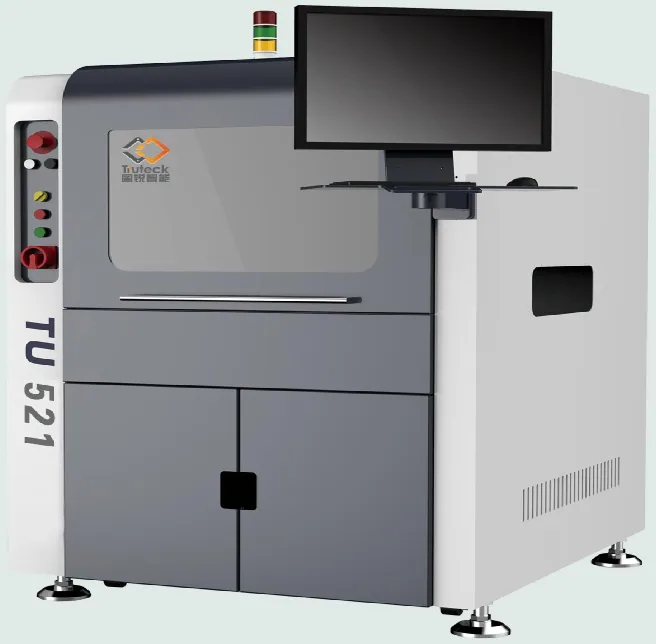
Moving from a schematic to a physical Wind Shear PCB requires a disciplined approach. This section outlines the checkpoints APTPCB uses to validate designs before mass production.
Phase 1: Material & Stackup
- Laminate Compatibility: Ensure the prepreg and core materials have compatible cure temperatures. Mixing incompatible materials leads to delamination.
- Copper Balance: Verify that copper distribution is even on all layers to prevent warping (bow and twist) during reflow.
- Impedance Modeling: Run simulations to confirm trace widths match the target impedance for the specific material batch.
Phase 2: Layout & Routing
- Critical Signal Isolation: High-frequency lines for wind shear detection must be shielded with ground vias (stitching vias) to prevent crosstalk.
- Teardrops on Vias: Add teardrops to all via-to-trace connections. This provides mechanical reinforcement against vibration.
- Component Placement: Heavy components (inductors, large capacitors) should not be placed near the center of the board where vibration amplitude is highest.
Phase 3: Fabrication Data
- Drill Chart Verification: Ensure aspect ratios (board thickness vs. hole size) are within manufacturable limits (typically 10:1 or 12:1) to ensure proper plating.
- Surface Finish Selection: Choose ENIG (Electroless Nickel Immersion Gold) or ENEPIG for flat surfaces and reliable wire bonding. Avoid HASL for fine-pitch sensors.
Phase 4: Testing Requirements
- Netlist Compare: The IPC netlist must match the Gerber files exactly.
- Coupon Design: Include test coupons on the panel rails for impedance and peel strength testing.
- Flying Probe vs. Bed of Nails: For prototypes, use flying probe. For production, a fixture tester is required for 100% continuity checks.
- Burn-in Testing: Specify if the boards need High-Assurance Testing (burn-in) to weed out infant mortality failures.
For more details on preparing your data, refer to our DFM Guidelines.
Common mistakes (and the correct approach)
Even experienced engineers can overlook details when designing for the specific stresses of wind shear environments.
1. Ignoring the Z-Axis Expansion
- Mistake: Focusing only on X/Y dimensions. Under thermal stress, the board expands in the Z-axis. If the CTE is too high, it rips the copper plating inside the vias.
- Correction: Use materials with low Z-axis CTE or increase the copper plating thickness in vias to Class 3 specifications (average 25µm).
2. Over-constraining the PCB
- Mistake: Mounting the PCB too rigidly in the enclosure. When the airframe flexes, the rigid PCB cracks.
- Correction: Use Rigid-Flex PCB technology or flexible mounting points to decouple the board from chassis stress.
3. Neglecting Conformal Coating
- Mistake: Assuming the enclosure is waterproof. Condensation occurs rapidly in aviation and outdoor AGV environments.
- Correction: Specify the correct type of conformal coating (Acrylic, Silicone, or Parylene) in the fabrication notes.
4. Poor Thermal Management for Processors
- Mistake: High-speed processors for Adaptive Signal PCB logic generate heat. If not dissipated, the localized heat weakens the laminate.
- Correction: Implement thermal vias and heatsinks early in the design phase.
5. Using Standard Tolerances for RF Traces
- Mistake: Applying standard ±20% etching tolerances to RF lines.
- Correction: Specify ±10% or tighter etching tolerances for controlled impedance lines.
6. Underestimating Connector Stress
- Mistake: Relying solely on solder to hold heavy connectors.
- Correction: Use through-hole mounting lugs or mechanical fasteners for all I/O connectors.
FAQ
Q1: Can standard FR4 be used for Wind Shear PCBs? A: Only for low-frequency control logic. For the sensor/radar portion, you typically need High Frequency PCB materials like Rogers or Isola to minimize signal loss.
Q2: What is the best surface finish for these boards? A: ENIG is the industry standard. It offers a flat surface for fine-pitch components and excellent corrosion resistance.
Q3: How do you test for vibration resistance? A: We recommend HALT (Highly Accelerated Life Testing) during the prototyping phase. In production, we rely on IPC Class 3 plating standards to ensure via reliability.
Q4: What is the difference between an AGV Control PCB and a Wind Shear PCB? A: An AGV Control PCB focuses on motor driving and ground-level obstacle detection. A Wind Shear PCB focuses on high-speed atmospheric data processing. However, both require high vibration resistance.
Q5: Does APTPCB offer impedance control reports? A: Yes, we provide TDR impedance reports with every shipment upon request.
Q6: Why are teardrops important in this design? A: Teardrops add copper at the junction of the trace and the pad. This prevents the trace from cracking away from the pad during thermal expansion or vibration.
Q7: What is the lead time for a hybrid stackup PCB? A: Hybrid boards (e.g., FR4 + Rogers) typically take 8-12 days depending on material availability and complexity.
Q8: Can you manufacture flexible boards for wind sensors? A: Yes, we specialize in flex and rigid-flex boards which are ideal for fitting into the curved aerodynamic housings of sensors.
Q9: Do I need blind or buried vias? A: If your design is high-density (HDI), yes. They help reduce signal stubs and save space, but they increase cost.
Q10: How do I specify the material in my quote? A: List the specific manufacturer (e.g., Rogers RO4350B) or the required properties (e.g., Dk 3.48, Tg 180) in your fabrication notes.
Related pages & tools
- Aerospace Defense PCB: Explore our capabilities in high-reliability avionics manufacturing.
- High Frequency PCB: Details on materials and processes for radar and sensor boards.
- Rigid-Flex PCB: Solutions for complex geometries and vibration resistance.
- DFM Guidelines: Essential reading before submitting your Gerber files.
Glossary (key terms)
| Term | Definition |
|---|---|
| Wind Shear | A difference in wind speed and/or direction over a relatively short distance in the atmosphere. |
| Adaptive Signal PCB | A circuit board designed to process signals that change dynamically based on environmental input. |
| AGV | Automated Guided Vehicle; robots used in logistics that require robust PCBs. |
| CTE | Coefficient of Thermal Expansion; how much a material expands when heated. |
| Dk (Dielectric Constant) | A measure of a material's ability to store electrical energy in an electric field. |
| Df (Dissipation Factor) | A measure of the power loss rate of an electrical mode in a dissipative system. |
| Hybrid Stackup | A PCB layup that uses different materials (e.g., FR4 and PTFE) in the same board. |
| IPC Class 3 | The highest standard for PCB manufacturing, used for high-reliability products (aerospace, medical). |
| TDR | Time Domain Reflectometry; a method used to measure impedance. |
| Via Tenting | Covering a via hole with solder mask to protect it from oxidation and shorts. |
| Thieving | Adding non-functional copper to empty areas of the PCB to ensure even plating distribution. |
| Fiducial Marker | A reference point on the PCB used by assembly machines for alignment. |
Conclusion (next steps)
Designing a Wind Shear PCB is about balancing electrical precision with mechanical robustness. Whether you are building a commercial airliner's weather radar or an AGV Control PCB for an outdoor logistics park, the fundamentals remain the same: select the right materials, control your impedance, and validate for vibration.
At APTPCB, we understand the stakes. A failure in a wind shear detection system is not just an inconvenience; it is a safety hazard.
Ready to move to production? When submitting your files for a quote, please ensure you provide:
- Gerber Files (RS-274X).
- Fabrication Drawing specifying IPC Class 3 requirements.
- Stackup details (especially if using hybrid materials).
- Impedance requirements (target ohms and specific layers).
Contact our engineering team today to start your DFM review.