
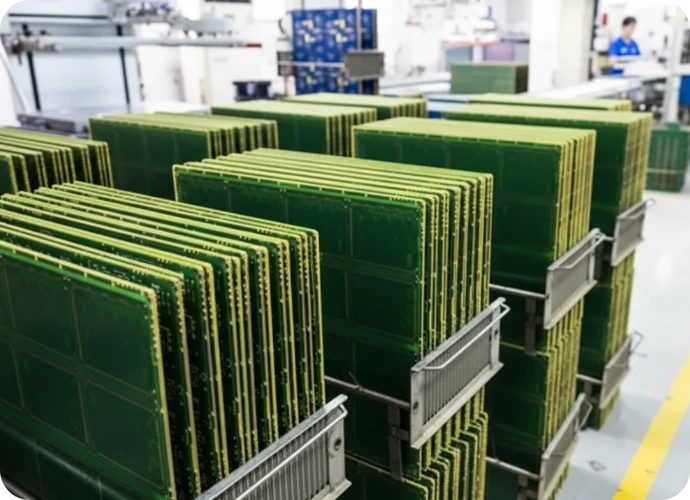
Qubit wire bonding connects a quantum chip to its interface board with fine aluminum or gold wires. Most of the bond quality is decided before the bonder starts: by the PCB's pad size and pitch, its surface finish, its substrate, and how clean it arrives. This guide covers those board-side requirements, plus the bonding parameters an engineer should put on the drawing for the bonding house.
Key Takeaways
- Definition: Wirebonding for qubit interface is the process of creating electrical interconnections between a quantum processor unit (QPU) and a printed circuit board (PCB) using microscopic wires, typically in a cryogenic environment.
- Material Criticality: Standard materials often fail in quantum applications. Magnetic materials (like Nickel) destroy qubit coherence, making material selection paramount.
- Thermal Management: The interface must facilitate thermalization at millikelvin temperatures while minimizing heat transfer from control lines.
- Signal Integrity: Wire loop geometry directly affects inductance and impedance, which impacts the fidelity of microwave control signals.
- Cleanliness: Flux residues and organic contaminants are unacceptable; plasma cleaning and flux free soldering quantum PCB techniques are essential.
- Validation: Mechanical pull tests are insufficient; cryogenic continuity and RF performance testing are required for qualification.
- Board supply vs bonding: The interface PCB and the wire bonding step are often sourced separately. Put pad, finish, and cleanliness requirements on the PCB drawing so the bare board arrives ready to bond.
What wirebonding for qubit interface really means (scope & boundaries)
Wirebonding for qubit interface is more than just connecting two points electrically. In the context of quantum computing, it serves as the critical bridge between the macroscopic world of control electronics and the microscopic quantum realm. This process involves ultrasonic welding of fine wires—typically Aluminum (Al) or Gold (Au)—to connect the pads on a PCB to the bond pads on a quantum chip.
The scope of this process is defined by extreme environmental constraints. Most solid-state qubits, such as superconducting transmon qubits, operate inside dilution refrigerators at temperatures near absolute zero (10–20 mK). At these temperatures, physical properties change. Materials shrink, resistance drops (or vanishes), and thermal conductivity alters drastically.
Therefore, wirebonding for qubit interface must solve three simultaneous problems:
- Electrical Connectivity: Carrying microwave signals (4–8 GHz) with minimal loss and reflection.
- Thermal Anchoring: Ensuring the chip is properly cooled (thermalized) to the PCB ground plane.
- Magnetic Hygiene: Eliminating magnetic impurities that cause decoherence (loss of quantum information).
Unlike standard consumer electronics, where reliability is defined by drop tests and humidity cycling, reliability here is defined by signal fidelity at cryogenic temperatures and the preservation of quantum coherence.
Metrics that matter (how to evaluate quality)
To ensure a successful wirebonding process, engineers must track specific metrics. These go beyond standard IPC specifications and focus on the unique needs of quantum hardware.
| Metric | Why it matters | Typical range or influencing factors | How to measure |
|---|---|---|---|
| Bond Shear Strength | Indicates the mechanical integrity of the intermetallic weld. Weak bonds fail during thermal cycling (cooling down to mK). | > 5.0 grams (for 25µm wire). Depends on wire diameter and pad metallization. | Destructive shear testing on sample coupons (Dage tester). |
| Wire Loop Inductance | High inductance distorts microwave pulses, causing control errors. Loop height and length determine this. | 0.5 nH to 2.0 nH. Shorter, lower loops reduce inductance. | Vector Network Analyzer (VNA) or TDR simulation. |
| Magnetic Permeability | Magnetic materials distort the magnetic field required for qubit operation, reducing coherence time (T1 and T2). | μr ≈ 1.000. Must be strictly non-magnetic. | SQUID magnetometry or material certification analysis. |
| Residual Resistance Ratio (RRR) | Measures the purity of the wire and its ability to conduct at low temperatures. Higher RRR means better thermal and electrical performance. | > 100 for high-purity Aluminum. | Ratio of resistance at 300K vs. 4.2K. |
| Surface Roughness (Ra) | Rough bond pads lead to inconsistent bond formation and poor yield. | < 0.3 µm. Smoother is generally better for wedge bonding. | Profilometer or Atomic Force Microscopy (AFM). |
| Thermal Conductivity at mK | Critical for removing heat generated by control pulses. Poor conductivity leads to "hot" qubits. | Varies by material (Al becomes superconducting; Au remains normal). | Cryogenic thermal conductance measurement. |
| Impedance Mismatch | Mismatches cause signal reflections (standing waves), leading to gate infidelity. | Target: 50 Ω ± 1-2 Ω. | Time Domain Reflectometry (TDR). |
Selection guidance by scenario (trade-offs)
Choosing the right wirebonding strategy depends heavily on the specific type of quantum processor and the experimental goals. Below are common scenarios and the recommended approaches.
Scenario 1: Superconducting Transmon Qubits
- Requirement: Zero resistance and zero magnetism.
- Recommendation: Use Aluminum (1% Silicon) Wedge Bonding.
- Trade-off: Aluminum becomes superconducting below 1.2K, preventing resistive heating. However, it requires ultrasonic wedge bonding, which is slower than ball bonding.
- Critical Detail: The PCB surface finish must be non-magnetic. Electroless Nickel Immersion Gold (ENIG) is forbidden due to Nickel. Use Silver, Soft Gold (direct on Copper), or specialized non-magnetic ENEPIG.
Scenario 2: Spin Qubits in Silicon
- Requirement: High-density interconnects (hundreds of DC lines) in a small area.
- Recommendation: Gold Ball Bonding.
- Trade-off: Ball bonding is faster and allows for tighter pitch and multi-tier loops. However, Gold does not superconduct. It acts as a normal conductor, which can introduce thermal noise. The heat load must be calculated carefully.
- Critical Detail: Requires a "thermosonic" process (heat + ultrasound). The PCB substrate must withstand the bonding stage temperature (approx. 150°C).
Scenario 3: High-Frequency Readout Resonators
- Requirement: Minimizing parasitic inductance for 6–10 GHz signals.
- Recommendation: Ribbon Bonding or Multiple Parallel Wires.
- Trade-off: Using a wide ribbon or 3-4 parallel wires reduces inductance significantly compared to a single round wire. However, ribbon bonding requires specialized tool heads and larger bond pads on the PCB.
- Critical Detail: Loop height must be kept to the absolute minimum (low-profile bonding) to maintain impedance matching.
Scenario 4: Thermal Anchoring (Heat Sinking)
- Requirement: Maximizing heat transfer from the chip to the PCB ground.
- Recommendation: Massive Gold Wire Arrays.
- Trade-off: Gold is an excellent thermal conductor at low temperatures (better than superconducting Aluminum, which blocks heat flow). Using thick Gold wires for ground connections helps cool the chip.
- Critical Detail: This creates a hybrid approach: Aluminum for signal lines (superconducting) and Gold for ground/thermal lines.
Scenario 5: Multi-Chip Modules (MCM)
- Requirement: Connecting multiple quantum chips on a single interposer.
- Recommendation: Deep Access Wedge Bonding.
- Trade-off: Requires tools with a long, vertical reach to bond inside cavities or between stacked dies. The risk of wire sway and shorting increases with wire length.
- Critical Detail: Stiffness of the wire is crucial. Aluminum is generally stiffer than Gold, making it better for longer spans to prevent sagging.
Scenario 6: Prototype PCBs with Connectors
- Requirement: Rapid testing of new qubit designs with standard coaxial connectors.
- Recommendation: Flux free soldering quantum PCB assembly followed by bonding.
- Trade-off: Standard soldering uses flux, which outgasses in a vacuum and contaminates qubit surfaces. You must use flux-free processes or rigorous cleaning before wirebonding.
- Critical Detail: Install low magnetic connector assembly components first, clean thoroughly, and then wirebond. Reversing this order risks damaging delicate wires during connector installation.
From design to manufacturing (implementation checkpoints)
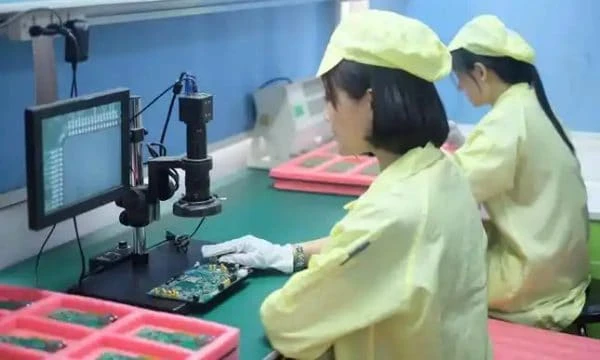
Transitioning from a simulation to a physical product requires a disciplined workflow. APTPCB recommends the following checkpoints to ensure the wirebonding for qubit interface is manufacturable.
1. Substrate Material Selection
- Recommendation: Use high-frequency laminates like Rogers or Teflon-based materials.
- Risk: Standard FR4 is too lossy (high dielectric loss tangent) at microwave frequencies and cryogenic temperatures.
- Acceptance: Verify material datasheet for \tan(δ) < 0.002 at 10 GHz.
- Resource: Review Rogers PCB materials for low-loss options. Where the interface needs a rigid, thermally conductive base with thin-film-like pads, compare alumina or aluminum nitride options in ceramic PCB capabilities.
2. Pad Metallization (Surface Finish)
- Recommendation: Specify "Soft Gold" (99.99% pure) directly over Copper, or Silver immersion.
- Risk: Hard Gold (with Cobalt) or standard ENIG (with Nickel) are magnetic. This ruins qubit coherence.
- Acceptance: X-Ray Fluorescence (XRF) analysis to confirm zero Nickel content.
3. Bond Pad Dimensions
- Recommendation: Minimum pad size 80µm x 80µm for 25µm wire.
- Risk: Undersized pads lead to "bond lift" where the wire detaches because the weld area is insufficient.
- Acceptance: Optical inspection of Gerber files against DFM rules.
4. Pitch and Spacing
- Recommendation: Maintain a pitch of at least 150µm for standard wedge bonding.
- Risk: Tighter pitch increases the risk of the bonding tool (capillary/wedge) hitting adjacent wires.
- Acceptance: 3D collision simulation in bonding software.
5. Thermal Vias Placement
- Recommendation: Place thermal vias as close to the bond pads as possible (or in-pad if filled/capped).
- Risk: Poor thermal path prevents the qubit chip from reaching base temperature (10 mK).
- Acceptance: Thermal modeling showing < 5 mK gradient.
6. Cleaning Protocol
- Recommendation: Plasma cleaning (Argon/Oxygen mix) immediately before bonding.
- Risk: Organic contaminants (finger oils, oxidation) prevent the intermetallic weld formation.
- Acceptance: Water contact angle test (surface should be hydrophilic).
7. Connector Assembly
- Recommendation: Use a low magnetic connector assembly process. SMP or SMA connectors must be non-magnetic (brass or beryllium copper, gold plated, no nickel).
- Risk: Magnetic connectors near the sample act as local field distortions.
- Acceptance: Gaussmeter check on components before assembly.
8. Wire Loop Geometry Design
- Recommendation: Define specific loop heights and shapes in the technical drawing.
- Risk: Inconsistent loops lead to variable inductance, causing phase errors in quantum gates.
- Acceptance: Automated Optical Inspection (AOI) of loop height (± 10µm).
9. Fiducial Markers
- Recommendation: Include clear fiducials near the bond area for machine vision alignment.
- Risk: The bonder cannot auto-align, requiring manual operation which is slow and less accurate.
- Acceptance: High-contrast metal features on the PCB.
10. Protective Packaging
- Recommendation: Gel-paks or specialized carriers that do not touch the bond wires.
- Risk: Standard ESD bags can crush wire loops during shipping.
- Acceptance: Drop test validation of packaging.
Common mistakes (and the correct approach)
Even experienced engineers make errors when moving from standard RF design to quantum interfaces.
The "Nickel" Oversight
- Mistake: Specifying ENIG (Electroless Nickel Immersion Gold) because it is the industry standard for wirebonding.
- Correction: Nickel is ferromagnetic. Even a thin layer destroys the magnetic homogeneity required for qubits. Always specify Non-Magnetic finishes (Soft Gold on Copper, Silver, or specialized non-magnetic ENIG).
Ignoring CTE Mismatch
- Mistake: Bonding a Silicon chip directly to a standard FR4 board without stress relief.
- Correction: Silicon and FR4 shrink at different rates when cooled to 10 mK. This stress can snap wires or crack the chip. Use matched substrates or design stress-relief loops in the wire bonds.
Flux Residue Contamination
- Mistake: Soldering connectors with standard RMA flux and assuming standard washing is enough.
- Correction: Flux residues outgas in the dilution refrigerator vacuum. Use flux free soldering quantum PCB techniques or verify cleaning with ionic contamination testing.
Undefined Loop Heights
- Mistake: Letting the operator decide the loop shape.
- Correction: Inductance is geometric. If loop height varies, qubit control frequency varies. Specify loop parameters in the DFM guidelines.
Over-bonding (Too much force/power)
- Mistake: Using high ultrasonic power to ensure a "strong" bond.
- Correction: Excessive energy causes "cratering" (cracking the silicon under the pad). Optimize parameters using a Design of Experiments (DOE) approach.
Grounding Loops
- Mistake: Insufficient ground bonds between the chip and PCB.
- Correction: "Stitch" the ground planes together with many parallel bonds to minimize ground return inductance and prevent crosstalk.
FAQ
Q: Why is Aluminum preferred over Gold for superconducting qubits? A: Aluminum becomes a superconductor at approximately 1.2 Kelvin. This means it has zero electrical resistance and generates no heat (Joule heating) when carrying signals, which is essential for maintaining the millikelvin environment.
Q: Can I use standard solder for the connectors on a quantum PCB? A: It is risky. Standard solder often contains lead or tin alloys that may become superconducting at different temperatures, creating unpredictable magnetic responses. Furthermore, flux residue is a major issue. Indium solder or flux-free processes are often preferred.
Q: What is the "Skin Effect" and does it apply here? A: Yes. At microwave frequencies (GHz), current travels only on the surface of the conductor. Surface roughness and oxidation on the wire or pad can significantly increase loss. This is why high-purity, smooth wires are used.
Q: How do I test the strength of a wirebond without destroying it? A: You cannot directly test strength non-destructively. Instead, you perform destructive Pull and Shear tests on a "witness coupon" (a sample bonded at the same time) to qualify the process parameters before bonding the actual quantum chip.
Q: What is the difference between Wedge Bonding and Ball Bonding? A: Ball bonding (usually Gold) starts with a melted ball and uses a capillary; it is faster and allows vertical loops. Wedge bonding (Aluminum or Gold) uses a wedge tool to press the wire; it can be done at room temperature and allows for lower profile loops, making it ideal for high-frequency applications.
Q: How should non-magnetic finish requirements be specified to a PCB supplier? A: State "nickel-free" or "non-magnetic" explicitly on the fabrication drawing, name the accepted finish (for example soft gold directly over copper), and ask the supplier to confirm whether the plating line and any XRF verification can meet that requirement for your board before the order is placed. Standard ENIG and ENEPIG contain nickel and should not be assumed suitable.
Q: Can a standard PCB finish be wire bonded? A: For room-temperature electronics, ENEPIG and soft gold are common wire-bondable PCB finishes. For superconducting qubits, the nickel layer in those standard finishes is the problem, so the finish choice is driven by magnetic hygiene first and bondability second.
Q: What is the typical wire diameter used? A: The most common diameter is 25µm (1 mil). For power applications or thermal anchoring, 50µm or ribbon wire may be used. For extremely dense arrays, 18µm wire is possible but harder to handle.
Q: Does the length of the wire bond matter? A: Yes, critically. A longer wire has higher inductance (L ≈ 1 nH/mm). In high-frequency circuits, this added inductance acts as a low-pass filter and changes the impedance, potentially reflecting the control signal.
Glossary (key terms)
| Term | Definition |
|---|---|
| Qubit (Quantum Bit) | The basic unit of quantum information. Unlike a classical bit (0 or 1), it can exist in a superposition of states. |
| Wirebonding | A method of making interconnections between an integrated circuit (IC) and a PCB using fine wires. |
| Superconductivity | A state where a material has zero electrical resistance and expels magnetic fields, occurring below a critical temperature (Tc). |
| Dilution Refrigerator | A cryogenic device that provides continuous cooling to temperatures as low as 2 mK, used to house quantum processors. |
| Wedge Bonding | A bonding technique using ultrasonic energy and pressure to attach wire. It creates a wedge-shaped bond and is suitable for fine pitch. |
| Ball Bonding | A bonding technique that melts the wire tip into a ball before bonding. Typically requires heat (thermosonic). |
| Impedance (Z) | The opposition to AC current flow. In RF/microwave lines, matching impedance (usually 50Ω) is vital to prevent reflections. |
| Inductance (L) | The property of a conductor to oppose changes in current. Wire bonds act as inductors at high frequencies. |
| Thermalization | The process of a component reaching thermal equilibrium with its environment (cooling the chip to the fridge temperature). |
| Decoherence | The loss of quantum information due to interaction with the environment (noise, heat, magnetism). |
| ENEPIG | Electroless Nickel Electroless Palladium Immersion Gold. A surface finish. Note: Standard ENEPIG is magnetic; specialized versions are needed for quantum. |
| Intermetallic Compound (IMC) | The alloy formed at the interface of the wire and the pad during bonding. A good IMC is required for strength. |
| Daisy Chain | A test pattern where pads are connected in series to check for electrical continuity across multiple bonds. |
| Cryogenic | Relating to the production and behavior of materials at very low temperatures. |
Conclusion (next steps)
Mastering wirebonding for qubit interface is a balancing act between electrical fidelity, thermal management, and material purity. It requires moving away from standard electronics manufacturing habits—specifically regarding magnetic materials and flux usage—and adopting a rigorous, physics-based approach to assembly.
Whether you are building a 5-qubit prototype or a large-scale quantum processor, the interface is often the bottleneck for performance. Ensuring low-inductance loops, non-magnetic finishes, and robust mechanical bonds is the only way to preserve the delicate quantum states you work so hard to create.
Ready to manufacture your quantum interface PCB? When requesting a quote from APTPCB, please provide the following to ensure a smooth DFM review:
- Gerber Files: With clear layers for bond pads.
- Stackup Details: Specifying low-loss materials (e.g., Rogers, Teflon).
- Surface Finish Spec: Explicitly state "Non-Magnetic" (e.g., Soft Gold on Copper).
- Assembly Requirements: Mention if flux free soldering quantum PCB or low magnetic connector assembly is required.
- Wirebond Diagram: Indicating loop heights and keep-out zones.