
A Xeon server PCB is a high-layer-count motherboard designed around an Intel platform definition, memory topology, PCI Express fabric, power-delivery network, management interfaces, connectors, and chassis thermal system. The fabrication challenge is not the processor name alone; it is preserving many loss-, timing-, power-, and mechanical-critical interfaces through stackup definition, layout, fabrication, assembly, and system validation.
Key takeaways
- Start from the licensed platform design guides, processor/socket requirements, memory topology, connector specifications, and channel budgets. A generic server-board rule set cannot replace them.
- PCIe 5.0 operates at 32 GT/s. PCIe 6.0 operates at 64 GT/s and adds PAM4 signaling with FLIT mode and FEC, making discontinuity, loss, and validation discipline more demanding.
- Select laminate and copper profile from modeled channel loss, skew, glass-weave, thermal, availability, and fabrication capability—not from a brand name alone.
- Backdrilling, HDI structures, and high layer count help only when the channel and escape design justify their added tolerance and inspection burden.
- Quote and qualification packages should define coupons, impedance/loss evidence, backdrill residual-stub limits, registration, press-fit interfaces, flatness, and change control.
What must be frozen before detailed routing?
The board stackup and mechanical architecture are part of the electrical design. Freeze the following inputs together:
- processor/socket and platform revision;
- DIMM count, topology, placement, and memory data rate;
- PCIe generation, lane map, connector or device endpoints, retimers, and channel budget;
- high-speed network, storage, clock, management, and debug interfaces;
- board outline, chassis, airflow, heat sinks, keep-outs, stiffeners, and connector locations;
- power-rail current, transient, sequencing, telemetry, and decoupling requirements; and
- manufacturing panel, layer-count range, via structures, backdrill access, and test strategy.
A supplier can propose a manufacturable stackup, but the platform owner must approve it against the signal- and power-integrity models.
PCIe channel design and fabrication controls
At 32 GT/s and 64 GT/s, the complete channel includes package, PCB traces, vias, connectors, add-in cards or cables, and any retimers. PCB impedance is only one part of that budget.
| Channel feature | Risk | Design or manufacturing evidence |
|---|---|---|
| Long trace length | Insertion loss and eye closure | Modeled loss using selected laminate/copper and measured coupon data |
| Layer transition | Via capacitance and unused barrel stub | 3D/model review, backdrill or HDI decision, coupon/cross-section |
| Connector launch | Local impedance discontinuity | Vendor footprint plus field-solver/model validation |
| Reference change | Return-path discontinuity and common-mode conversion | Nearby stitching structure and reference-transition review |
| Pair asymmetry | Intra-pair skew and mode conversion | Geometry, glass-weave strategy, and measured skew where required |
| Fabrication variation | Impedance and loss drift | Controlled stackup, trace geometry, dielectric/copper data, coupons |
Backdrilling removes unused plated barrel below or above the active connection. Define the drill side, target layer, finished residual stub, registration allowance, and inspection method. “Backdrill all high-speed vias” is not a complete fabrication instruction.
For related capability boundaries, see high-speed PCB, high-layer-count PCB, and backplane PCB.
DDR5 routing is topology-specific
DDR5 layout must follow the selected processor and memory implementation. Command/address/control, clocks, data strobes, data bits, alert/reset, reference voltages, and power rails do not share one universal length rule.
The design team should provide:
- approved topology and DIMM/device placement;
- impedance targets and tolerance assumptions;
- within-group and cross-group timing/skew constraints;
- package, connector, and memory models used for simulation;
- via and reference-transition rules;
- termination, ODT, and power-integrity assumptions; and
- required simulation and lab-validation outputs.
Do not tighten every routing tolerance “for safety.” Unnecessary constraints increase layer count, serpentine coupling, routing congestion, and fabrication cost. Apply the platform limits to the paths that actually need them.
Low-loss material and copper selection
Material selection should be based on frequency-dependent dielectric behavior, dissipation, copper roughness, glass weave, thermal performance, thickness availability, and the fabricator's qualified process.
| Decision | Buyer question |
|---|---|
| Laminate family | Does measured channel loss meet the budget across production variation? |
| Copper profile | Is roughness included in the model and controlled in procurement? |
| Dielectric thickness | Can the supplier hold the geometry needed for impedance and routing density? |
| Glass style | Is skew risk acceptable for the longest and most sensitive pairs? |
| Hybrid stackup | Are bonding, thermal, registration, and material-availability risks understood? |
| Alternate material | Is equivalency defined by measured properties and re-simulation, not a marketing category? |
Use material substitution only through controlled engineering review. A nominal Dk or “low-loss” label is insufficient for a server platform.
Power integrity and thermal-mechanical design
Server motherboards distribute high current across processor, memory, accelerators, storage, fans, and management circuits. The power-delivery network must meet DC drop and transient impedance targets while fitting plane splits, vias, sockets, and dense high-speed escape routing.
Model the VRM-to-load path, capacitor mounting inductance, plane spreading, socket interface, and rail interactions. Place telemetry and sense connections at the intended load reference. Verify rail ramp, sequencing, ripple, transient response, current sharing, and fault handling on hardware.
Mechanically, large sockets, DIMM banks, heatsinks, press-fit connectors, and chassis fasteners can bow the PCB. Define thickness, flatness, keep-outs, stiffeners, insertion support, torque sequence, and thermal-interface compression. Fabrication flatness alone does not predict the fully assembled board shape.
Manufacturing and NPI evidence
| Stage | Evidence to request |
|---|---|
| Incoming material | Laminate/copper identity and controlled lot data as specified |
| Inner layers and lamination | Registration, dielectric/copper construction, impedance-coupon plan |
| Drilling and plating | Via geometry, aspect ratio, copper, backdrill alignment and residual stub |
| Finished bare board | Electrical test, impedance, loss/skew coupon if specified, dimensions and flatness |
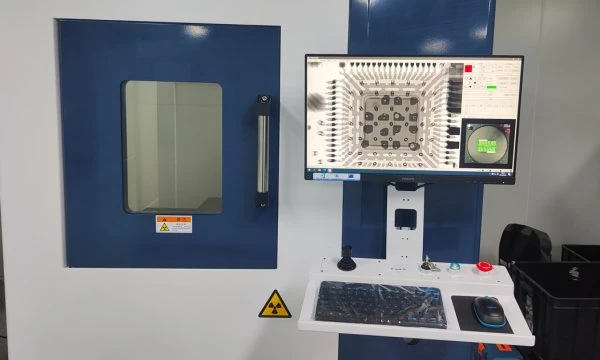
| Assembly | SPI, AOI, X-ray for hidden joints, press-fit process, socket/connector inspection |
| Bring-up | Rail sequencing, clocks, management controller, firmware, boundary scan and diagnostics |
| High-speed validation | PCIe compliance/debug evidence and memory tests under defined configurations |
| Thermal/system validation | Workload, airflow, inlet condition, sensor map, throttling and fault results |
The test plan should distinguish board-manufacturing evidence from platform compliance. A passing impedance coupon does not prove the complete PCIe channel or DDR5 subsystem.
Common causes of NPI delay
- stackup changes after routing because material availability was not checked early;
- connector launches copied without the selected layer construction;
- backdrill instructions that omit side, target, residual stub, or tolerance;
- incomplete alternate-material criteria;
- missing socket, press-fit, or heatsink support definition;
- test points blocked by DIMMs, heat sinks, or chassis hardware;
- firmware, CPLD, BMC, or configuration revisions not tied to the PCBA revision; and
- lab failures without channel, waveform, coupon, or thermal evidence needed to isolate the mechanism.
RFQ checklist for a Xeon server PCB
Provide:
- Gerber or ODB++, drill/backdrill data, IPC-356 netlist, stackup, impedance and fabrication drawings;
- board outline, 3D model, socket/connector/press-fit requirements, thickness, flatness, and mechanical support;
- material and copper requirements plus approved alternate/equivalency method;
- high-speed layer map, channel classes, via structures, backdrill definition, and coupon requirements;
- BOM, centroid, assembly drawings, thermal hardware, firmware/programming, and inspection criteria;
- electrical, boundary-scan, functional, memory, PCIe, and thermal test responsibilities; and
- prototype quantity, production forecast, traceability, reporting, and engineering-change control.
APTPCB can review whether the proposed fabrication and assembly package is internally manufacturable. Platform electrical design and compliance remain under the responsible server-development team.
Reference standards and documents
- PCI-SIG PCI Express 5.0 and PCI Express 6.0 specifications
- JEDEC DDR5 SDRAM and module standards
- Intel platform design guides, reference schematics, and processor/socket documentation for the selected platform
- Connector, retimer, clock, memory, and laminate supplier models and application notes
- IPC-2221, IPC-6012, IPC-2141, and relevant IPC-TM-650 test methods
FAQ
Does every Xeon server PCB need the same layer count?
No. Layer count depends on socket escape, DIMM topology, lane count, power planes, board size, connector placement, via strategy, and the approved stackup.
Is PCIe 6.0 just a faster version of PCIe 5.0?
It doubles the transfer rate from 32 GT/s to 64 GT/s and introduces PAM4 signaling, FLIT mode, and FEC. Those changes affect channel and validation strategy.
Does backdrilling guarantee a passing PCIe channel?
No. It can reduce via-stub resonance, but trace loss, launches, connectors, reference transitions, crosstalk, package/card paths, and equalization still matter.
Should a fabricator choose the DDR5 length-matching rules?
No. The platform design team sets topology and timing constraints from the processor/memory requirements and simulation. The fabricator reviews whether the resulting geometry is manufacturable.
Is IPC Class 3 automatically required for data-center boards?
Not automatically. The purchaser must define the applicable performance class and any additional server-specific acceptance and reliability requirements.
Qualify the channel, power, and mechanics together
A server motherboard reaches production faster when platform constraints, stackup, channel models, via construction, power delivery, mechanical support, and test evidence remain under one revision. Send that complete package for a high-speed fabrication and PCBA review.