
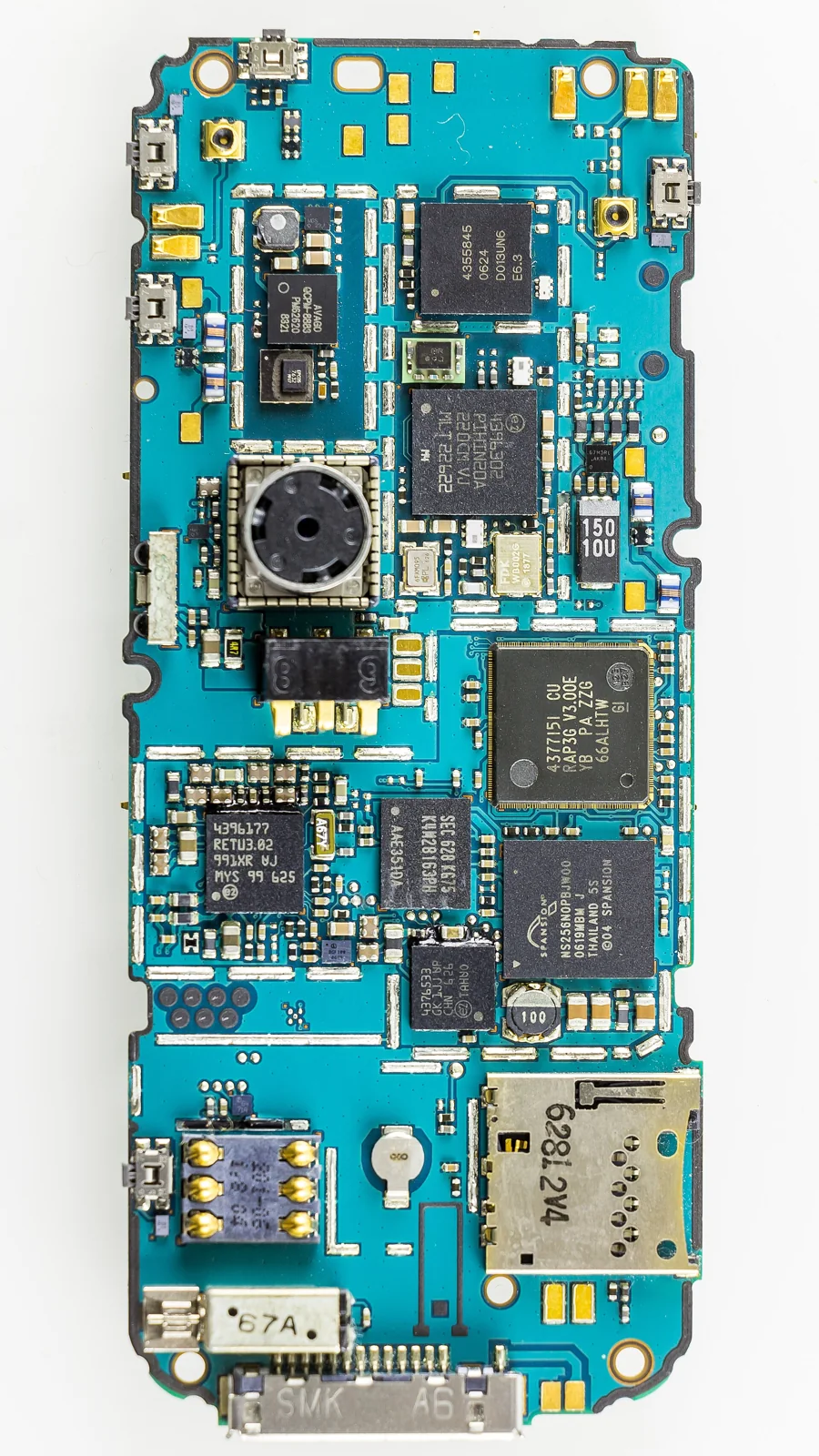
- A machine vision PCB is best reviewed as a high-speed sensor-interface board, not as a generic camera board, because the hardest constraints come from the image sensor and the data lanes it feeds.
- The first board-level question is whether the sensor-to-processor lanes keep matched differential pairs and continuous return paths from the sensor connector all the way to the FPGA or processor.
- Power and clock cleanliness sit right next to the sensor, because supply ripple and reference noise can couple into the same signal path that carries the image data.
- Connectors, mounting features, and thermal interfaces are part of the board review because they change mechanical stability, sensor alignment, and contact behavior after assembly.
- Keep the review at the board boundary. It does not claim image quality, detection accuracy, frame-rate, or interface certification.
Quick Answer A
machine vision PCBis best reviewed as a board that has to receive high-speed sensor data, route matched differential lanes with clean return paths, deliver low-noise power and clocks, and hold mechanical interfaces stable through assembly. The practical question before a build is not justDoes the schematic capture the sensor and PHY?It isDo the high-speed lanes keep their impedance, pair matching, and return path after the stackup, vias, connectors, and mounting are all committed?
Table of Contents
- What a machine vision PCB has to handle
- Where the board constraints come from
- Layout and integrity decisions that matter
- What to confirm before committing to a build
- FAQ
- Public references
- Author and review information
What a machine vision PCB has to handle
Start from the constraints the board actually carries, not from a camera label. A machine vision board sits between an image sensor and a processing or interface stage, and most of its difficulty lives in four coupled areas.
| Constraint area | What to confirm | Why it matters |
|---|---|---|
| Sensor interface | The sensor output lanes (MIPI CSI, LVDS-class, or sub-LVDS as interface identity) route as controlled-impedance differential pairs with intra-pair and lane-to-lane matching held to the sensor's timing intent | The capture link is the first place a board fails quietly; matching and impedance set whether the data lands cleanly |
| High-speed data | The path from sensor to FPGA or processor, plus any memory and output transceiver lanes, keeps continuous reference planes and clean via transitions | A board can look complete while a single broken return or stub degrades a multi-gigabit lane |
| Power and clock cleanliness | Analog and digital sensor supplies are partitioned and filtered, and the clock distribution is kept away from noisy switching nodes | Supply ripple and reference noise can couple into the captured signal path, not just the logic |
| Connector and mechanical | Connector landings, locking interfaces, sensor mounting, and thermal contact are reviewed as part of the board, not as afterthoughts | Mechanical interfaces change alignment, clamp behavior, and contact stability after assembly and cycling |
The closest board-level support page for this lane is High-Speed PCB. For application context, the nearest industry pages are Communication Equipment PCB, Robotics PCB, and Security Equipment PCB, depending on where the camera ends up.
Where the board constraints come from
Machine vision PCB work becomes difficult because the constraints are inherited, not chosen. They come from two sources: the image sensor and the host interface.
On the sensor side, CMOS image sensors stream data out over differential interfaces such as MIPI CSI, parallel LVDS, or sub-LVDS as interface families. Each carries clock and data on multiple pairs, and the sensor's datasheet defines the impedance target, the intra-pair matching, and the lane-to-lane skew the link can tolerate. Those targets are not generic; they depend on the sensor, the interface revision, and the stackup, and should be confirmed per design rather than copied from a previous board. Sensor power adds its own constraint: analog and digital rails often need separate filtering and a defined power-up sequence, because the supply that feeds the sensor sits very close to the signal it produces.
On the host side, the board has to hand the image data off over an industrial interface such as GigE Vision, Camera Link, CoaXPress, or USB3 Vision, named here at identity level rather than by throughput. Each interface brings its own PHY, connector family, isolation expectation, and routing discipline. The output stage is therefore a second high-speed problem layered on top of the sensor link, and the two often share the same board area and the same reference planes.
These two origins explain why the board is best treated as a set of coupled zones: the sensor interface, the high-speed processing and memory path, the power and clock domain, and the connector and mechanical handoff. If those zones are not kept distinct, the review tends to become reactive, adding a pour here and a guard trace there, which treats symptoms instead of the inherited constraint.
Layout and integrity decisions that matter
The mechanism family that decides this board class is signal integrity on the high-speed lanes, with the stackup and return path acting as the direct amplifier.
The decisions that carry the most weight are practical and physical:
- Define the controlled-impedance lanes against the actual stackup, so the differential target is a stackup property and not a hopeful trace width. The companion page for this is PCB Impedance Control, and the stackup itself is best fixed against PCB Stack-Up.
- Keep reference planes continuous under every high-speed pair, and treat each via transition as a place where the return path has to be carried deliberately rather than assumed.
- Hold intra-pair and lane-to-lane matching to the sensor's timing intent, recognizing that the exact tolerance depends on sensor, interface, and stackup and should be confirmed per design.
- Route the sensor link and any output transceiver lanes so they do not share noisy escapes, and reserve clean routing around fine-pitch PHYs and connectors. Where escape density forces it, HDI PCB construction keeps those escapes short.
- Partition analog and digital sensor supplies and keep clock distribution away from switching nodes, so power and clock cleanliness is built into the floorplan rather than patched later.
It is worth naming one failure chain directly, because it is the one that hides. When a high-speed sensor-interface lane (MIPI or LVDS-class) is routed with a broken return path or poor pair matching, the data eye degrades and the link can take intermittent bit errors. A basic functional check at the bench may pass anyway, because nothing is fully overloaded and the link works most of the time. The same board can then show image corruption or dropped frames in the field once thermal and EMI stress push the marginal lane past its limit. The board-level lesson is that an electrically "working" capture link is not the same as an integrity-clean one, and the difference is decided by the return path, the matching, and the stackup rather than by a single bench pass.
What to confirm before committing to a build
Use a staged board review instead of asking a prototype to discover integrity problems on the bench.
| Review question | What to look for | Why it is a build issue |
|---|---|---|
| Are the high-speed lanes defined against the real stackup? | Sensor and output differential targets are tied to the committed layer construction, not to generic widths | Impedance is a stackup property; a lane defined in isolation rarely holds after fabrication |
| Is every return path continuous? | Reference planes under high-speed pairs are unbroken, and via transitions carry their return deliberately | A single broken return can degrade a lane that otherwise looks complete in the schematic |
| Is pair matching held to sensor intent? | Intra-pair and lane-to-lane matching reflect the sensor and interface timing, confirmed per design | Skew that exceeds the link's tolerance shows up as intermittent capture errors, not a clean failure |
| Are power and clock kept clean near the sensor? | Analog and digital rails are partitioned and filtered, and clocks are routed away from switching noise | Supply and reference noise can couple into the captured signal path, not just the logic |
| Are connectors and mounting reviewed as mechanical interfaces? | Connector landings, locking features, sensor alignment, and thermal contact are checked with nearby high-speed structures | Mechanical interfaces change alignment and contact after assembly and cycling |
| Is the validation language still at board level? | The review stays on DFM, stackup intent, impedance, and test planning, not on image quality or interface certification | A board release should not be misread as a performance or compliance proof for the finished camera |
For PCBA-side validation and inspection language, the closest support page is Testing & Quality, and functional-level planning is covered by FCT Test. If the release package still needs manufacturing-note or stackup alignment, the companion resource is DFM Guidelines.
When the high-speed lanes, stackup, and mechanical interfaces are defined and you want a board-level read before a build, share the fabrication data with stackup intent, placement that makes the sensor and PHY zones readable, BOM context for the sensor and high-speed parts, and the mechanical references for connectors and mounting through the machine vision PCB review request.
FAQ
Does a machine vision PCB article prove image quality or detection accuracy?
No. A board-level guide can explain how to review sensor interfaces, high-speed lanes, and integrity decisions, but image quality, detection accuracy, and frame-rate depend on the full camera system and are not claimed by a board article.
Why is the sensor interface treated as the hardest part of the board?
Because the sensor sets inherited constraints. The impedance target, pair matching, and lane-to-lane skew come from the sensor and interface, and the capture link is the first place a board fails quietly if those are not held.
Can a board pass a basic bench check and still have a weak high-speed link?
Yes. A lane with a broken return path or poor matching can carry intermittent bit errors that a basic functional check may pass, then show image corruption or dropped frames under thermal or EMI stress in the field.
Should impedance and matching numbers be fixed from a previous board?
Not usually. The exact impedance, intra-pair matching, and skew tolerance depend on the sensor, the interface revision, and the stackup, and are best confirmed per design rather than carried over.
How are the host interfaces handled at board level?
Interfaces such as GigE Vision, Camera Link, CoaXPress, or USB3 Vision are reviewed at identity level for PHY routing, connector family, isolation, and signal integrity. The board guide does not claim throughput, latency, or interface certification.
What package makes the board review most useful?
Fabrication data with stackup intent, placement that exposes the sensor and PHY zones, BOM context for the sensor and high-speed parts, and mechanical references for connectors and mounting together let the board team comment on the real integrity problem.
Public references
High-Speed PCB Support-page context for high-speed routing, signal integrity, and EMC at board level.
PCB Impedance Control Support-page context for controlled-impedance definition against a committed stackup.
PCB Stack-Up Support-page context for stackup construction and layer-assignment planning.
HDI PCB Support-page context for high-density escapes around fine-pitch sensors, PHYs, and connectors.
Testing & Quality Support-page context for inspection, validation, and board-level test-planning language.
Author and review information
- Author: APTPCB editorial team
- Technical review: Imaging / high-speed interface PCB review team
- Review scope: Board-level sensor-interface integrity, high-speed lane and stackup intent, power and clock partitioning, mechanical-interface fit, and release-boundary consistency