
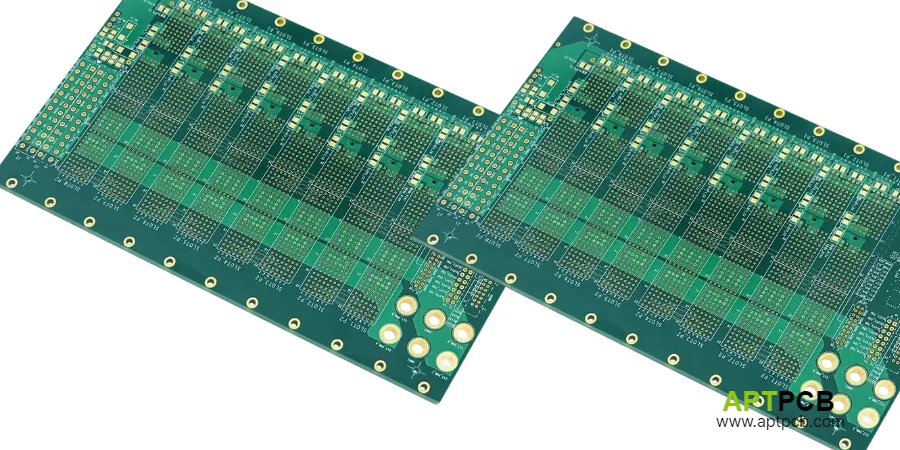
KB-3200G is a Kingboard halogen-free, high-Tg, low-loss PCB laminate developed for complex multilayer boards used in servers, telecom systems, switches, backplanes, and high-performance computing platforms.
The material occupies an important position between conventional FR-4 materials and ultra-low-loss laminates designed for the most demanding SerDes channels. With Dk 4.1 at 1 GHz, Df 0.0075 at 1 GHz, Tg 178 °C (DSC), Tg 193 °C (DMA), Td 387 °C, and Z-axis CTE 1.8%, KB-3200G provides a balance of signal integrity, thermal reliability, and manufacturing practicality.
For PCB engineers, the key selection question is not whether KB-3200G is a low-loss laminate. The decision is whether its electrical loss, thermal capability, and manufacturing characteristics match the board architecture.
Is KB-3200G the right PCB laminate for my design?
KB-3200G is commonly selected for:
- Server motherboards
- Network switches
- Telecom backplanes
- Base station equipment
- High-layer-count HPC boards
- Halogen-free high-reliability PCB applications
The material is designed for low-loss digital applications where standard FR-4 performance is insufficient but ultra-low-loss materials may add unnecessary cost.
A typical selection decision:
| Design requirement | Material direction | Reason |
|---|---|---|
| Digital designs below 10 G | Mid-loss materials such as KB-6167GMD | Cost efficiency |
| 10 G–25 G NRZ server and backplane channels | KB-3200G | Balanced loss and reliability |
| Higher-margin 25 G NRZ / tighter 56 G PAM4 channels | KB-6167GLD or similar | Lower dielectric loss |
| 112 G PAM4-class channels | Ultra-low-loss materials | Lowest insertion loss requirement |
What are the verified KB-3200G specifications?
KB-3200G is classified by Kingboard as Halogen-Free / High Tg / Low Loss. The material datasheet lists applications including server, switch, base station, backplane, telecom, and high-complexity multilayer PCB applications.
Thermal and reliability properties
| Property | Value | Test method |
|---|---|---|
| Tg (DSC) | 178 °C | IPC-TM-650 2.4.25 |
| Tg (DMA) | 193 °C | IPC-TM-650 2.4.24.4 |
| Td | 387 °C | IPC-TM-650 2.4.24.6 |
| T-260 | >60 min | IPC-TM-650 2.4.24.1 |
| T-288 | >60 min | IPC-TM-650 2.4.24.1 |
| Z-axis CTE | 1.8% | IPC-TM-650 2.4.24 |
| Flammability | V-0 | UL 94 |
| Halogen-free | Yes | IEC 61249-2-21 |
Electrical properties
| Property | Value | Test method |
|---|---|---|
| Dk @1 GHz | 4.1 | IEC 61189-2-721 |
| Dk @10 GHz | 4.0 | IEC 61189-2-721 |
| Df @1 GHz | 0.0075 | IEC 61189-2-721 |
| Df @10 GHz | 0.0085 | IEC 61189-2-721 |
| Anti-CAF | Yes | — |
How does KB-3200G compare with other high-speed PCB materials?
KB-3200G sits in the low-loss category. It improves signal performance compared with conventional FR-4 while maintaining a practical manufacturing profile.
| Material | Manufacturer | Df @1 GHz | Dk @1 GHz | Loss class | Typical application |
|---|---|---|---|---|---|
| KB-6167GMD | Kingboard | 0.008 | 4.1 | Mid-loss | Digital ≤10 G |
| KB-3200G | Kingboard | 0.0075 | 4.1 | Low-loss | Server/backplane/HPC |
| KB-6167GLD | Kingboard | 0.006 | 3.9 | Low-loss | 25 G NRZ / 56 G PAM4 |
| Megtron 4 (R-5775K) | Panasonic | ~0.005 | ~3.8 | Low-loss | Higher-speed SerDes |
| Megtron 6 (R-5775N) | Panasonic | ~0.003 | ~3.4 | Ultra-low-loss | 112 G-class designs |
KB-3200G is not intended to replace every ultra-low-loss material. Its value comes from providing a controlled loss environment for mainstream high-speed infrastructure designs.
When should engineers choose KB-3200G instead of KB-6167GLD?
KB-3200G is typically selected when the design requires:
- 10 G–25 G NRZ channel capability
- Stable dielectric properties
- Halogen-free construction
- High-volume manufacturing support
- Balanced electrical and thermal performance
KB-6167GLD becomes more suitable when channel loss budgets become tighter. It provides lower Df and higher thermal margin.
| Property | KB-6167GMD | KB-3200G | KB-6167GLD |
|---|---|---|---|
| Classification | Mid-Loss | Low-Loss | Low-Loss |
| Tg (DSC/DMA) | 178/190 °C | 178/193 °C | —/220 °C |
| Td | 387 °C | 387 °C | 409 °C |
| Z-CTE | 2.1% | 1.8% | 1.8% |
| Dk @1 GHz | 4.1 | 4.1 | 3.9 |
| Df @1 GHz | 0.008 | 0.0075 | 0.006 |
| Anti-CAF | Yes | Yes | Yes |
| Halogen-free | Yes | Yes | Yes |
How should KB-3200G be assigned in a PCB stackup?
High-speed server and switch boards usually use multiple laminate grades. Premium materials are placed only where electrical performance requires them.
| Layer type | Material | Purpose |
|---|---|---|
| Critical high-speed pairs | KB-3200G or KB-6167GLD | Signal integrity control |
| Moderate-speed layers | KB-6167GMD | Cost optimization |
| Control signals | HF-170 or KB-6167F | Standard reliability |
| Power and ground planes | KB-6167F cores | Mechanical and thermal stability |
Our stackup design service supports impedance modeling with assigned dielectric properties for each layer.
What fabrication choices affect KB-3200G performance?
Material selection is only one part of high-speed PCB performance. Fabrication decisions directly influence insertion loss, impedance consistency, and long-term reliability.
Copper foil selection
High-speed designs should specify controlled copper roughness. HVLP copper with low surface roughness reduces conductor loss at higher frequencies.
Via structure
Backdrilling can reduce via-stub resonance on high-speed channels. For 25 G NRZ designs, stub lengths below 10 mil are commonly targeted.
Our fabrication process supports controlled multilayer manufacturing and backdrilling requirements.
Signal integrity validation
Production builds should include impedance coupons and insertion-loss verification. Our quality system includes VNA-based validation for qualified KB-3200G production.
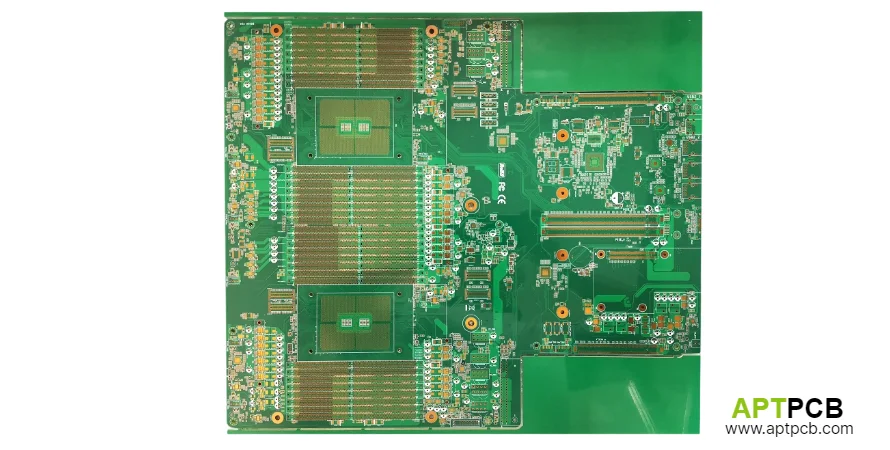
KB-3200G PCB supplier qualification checklist
Before approving a supplier, confirm:
| Qualification item | Required confirmation |
|---|---|
| Material source | Genuine KB-3200G core and prepreg availability |
| Stackup control | Correct Dk/Df values assigned per layer |
| Copper specification | Controlled foil roughness |
| Thermal process | Qualified lamination profile |
| High-speed testing | Coupon-based SI validation |
| Reliability | CAF and thermal-cycle capability |
| Production capacity | Stable laminate supply planning |
What applications are best suited for KB-3200G?
Server motherboards
Server platforms using PCIe Gen 4, DDR5, and 25 GbE-class interfaces benefit from reduced dielectric loss compared with conventional FR-4.
Network switches
Switch fabrics require controlled impedance, multilayer reliability, and predictable electrical performance.
Backplanes
Backplanes combine long transmission paths with thermal cycling requirements. KB-3200G provides low-loss performance with high-Tg reliability.
HPC systems
High-layer-count computing boards benefit from a material that balances signal integrity and manufacturability.
How do you order KB-3200G PCBs?
Provide PCB files together with:
- Layer count
- Interface requirements
- Impedance targets
- Material requirements
- Production volume
We evaluate KB-3200G suitability, recommend stackup options, and provide comprehensive DFM and signal integrity feedback.
For integrated manufacturing projects, our complete one-stop service includes material selection, PCB fabrication, testing, and assembly coordination.
For high-volume server and telecom production, KB-3200G provides a practical low-loss platform for advanced multilayer PCB manufacturing.