
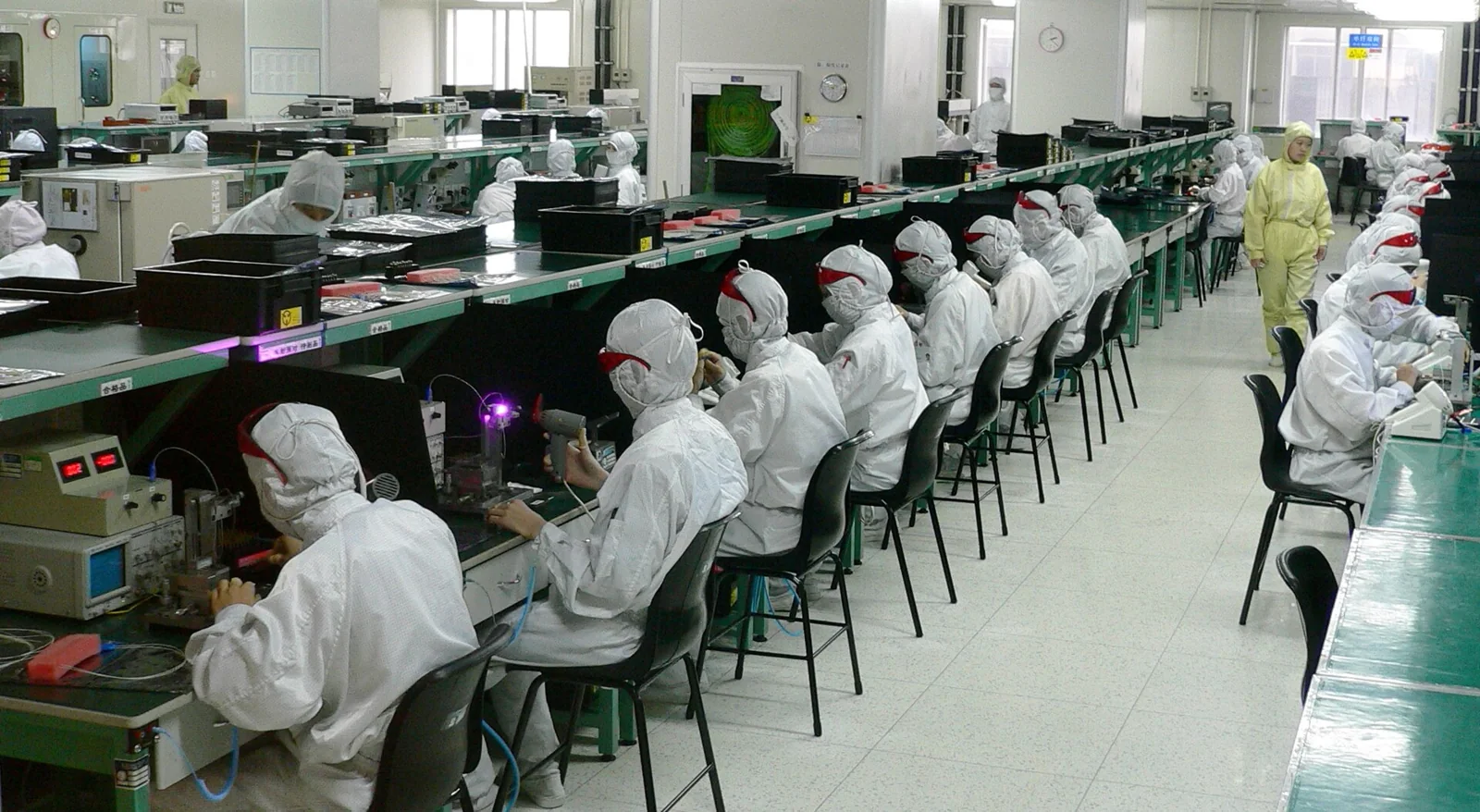
PCB industry solutions are application-specific combinations of board design, materials, fabrication, assembly, sourcing, inspection, testing, traceability, and documentation. The right solution is defined by the product's failure risks and evidence requirements—not by attaching an industry label to a standard PCB process.
Key Takeaways
- Start with the product's safety, electrical, thermal, mechanical, environmental, lifecycle, and regulatory risks.
- Select the PCB construction only after the stackup, current, signal, packaging, and reliability requirements are known.
- Treat certifications and standards as scoped requirements; a compliant process or component does not make the completed product compliant.
- Ask suppliers for objective evidence such as controlled stackups, inspection records, test coverage, material traceability, and change control.
- Quote packages should state the product environment, acceptance criteria, required records, and ownership of system-level validation.
Table of Contents
- What are PCB industry solutions?
- Which PCB risks change by industry?
- What evidence should each industry provide?
- How do PCB construction choices change?
- What drives cost and lead time?
- How should manufacturing and validation be planned?
- How do you evaluate a PCB supplier?
- PCB industry solutions RFQ checklist
- FAQ
What are PCB industry solutions?
An industry solution converts application risks into controlled PCB and PCBA requirements. It answers five questions before a buyer requests production:
- What must the board do, and what happens if it fails?
- Which interfaces, materials, components, and environments create the dominant risks?
- Which risks can be controlled during PCB fabrication and assembly?
- Which risks require enclosure-, equipment-, vehicle-, network-, or system-level validation?
- What evidence must accompany prototypes, qualification builds, and production lots?
A medical control board, industrial I/O module, 100+ Gbps communication board, traction inverter controller, and aerospace sensor may use some of the same manufacturing processes. They should not share the same release checklist because their critical functions, operating environments, lifecycle controls, and compliance boundaries differ.
Which PCB risks change by industry?
The table below is a routing tool, not a substitute for a product risk assessment. It shows which questions normally need early answers in each application family.
| Industry family | Risks to resolve first | Typical PCB/PCBA focus | Validation boundary |
|---|---|---|---|
| Medical electronics | Safety function, leakage paths, cleanliness, traceability, long lifecycle, component change | Stable materials and processes, assembly cleanliness, inspection access, controlled substitutions, device history evidence | Safety, essential performance, software, biocompatibility, usability, and regulatory conformity belong to the completed medical device |
| Industrial control | Field wiring, isolation, surge and ESD, motor noise, temperature, contamination, service access | I/O protection, creepage and clearance, grounding, connector strategy, coating where justified, maintainable test access | EMC, machinery safety, functional safety, enclosure ingress, and installation behavior require equipment-level validation |
| Communications equipment | Channel loss, impedance discontinuity, crosstalk, power integrity, thermal density, connector launches | Controlled stackup, low-loss material where required, via and backdrill strategy, copper roughness, coupons, dense assembly inspection | Link compliance, system timing, thermal performance, emissions, and network interoperability require the complete hardware platform |
| Automotive electronics | Supply transients, vibration, temperature cycling, moisture, high-volume traceability, change control | Robust interconnect, qualified materials and components, process controls, serialization, fault-oriented test coverage | Vehicle safety, EMC, cybersecurity, functional safety, and homologation remain vehicle or electronic-control-unit responsibilities |
| Aerospace and defense | Configuration control, long service life, vibration, thermal extremes, radiation or altitude where applicable, supply continuity | Controlled sources, traceability, documented workmanship, inspection, first-article evidence, change approval | Airworthiness, mission assurance, environmental qualification, and design assurance depend on the contracted program and system authority |
| Power and energy | High current, voltage spacing, isolation, switching transients, heat, fault energy, outdoor exposure | Current-path design, copper and via sizing, thermal interfaces, insulation system, protection coordination, mechanically secure power parts | Electrical safety, grid or charging compliance, enclosure protection, thermal limits, and fault containment require product-level tests |
| Robotics | Mixed motors, sensors, RF, batteries, moving cables, compact packaging, repeated motion | Power/signal partitioning, motor-noise control, flex or harness interfaces, wireless coexistence, connector retention | Safe motion, machine guarding, navigation, battery safety, and application software require robot-level validation |
What evidence should each industry provide?
The strongest supplier discussion is evidence-based. “We serve this industry” is not proof that a specific board, process, or quality system fits the program.
| Review area | Buyer should define | Supplier evidence to request |
|---|---|---|
| Board construction | Layer count, stackup, materials, copper, impedance, vias, finish, tolerances, panel constraints | Stackup approval, material identification, impedance or coupon results where required, fabrication inspection records |
| Assembly process | BOM, package types, solder process, moisture sensitivity, cleaning, coating, press-fit or selective processes | Process route, first-article results, AOI/SPI/X-ray or other inspection records as applicable, rework controls |
| Components | Approved manufacturers, lifecycle risk, alternates, storage, date/lot restrictions, counterfeit controls | Source records, incoming inspection, traceability, approved-deviation process, material review records |
| Test | Critical nets and functions, programming, calibration, test limits, coverage, failure disposition | Fixture or test-program revision, unit or lot results, coverage statement, failure and retest history |
| Reliability | Product environment, duty cycle, lifetime objective, failure consequences, qualification plan | Agreed sample build, process records, test reports, cross-sections or destructive analysis where contracted |
| Traceability | Required unit, lot, material, component, firmware, and process genealogy | Identifier format, traveler or manufacturing record, retention period, link between unit and test result |
| Change control | Notification threshold, approval authority, last-time-buy and obsolescence process | Documented change notice, deviation request, risk review, requalification trigger and implementation record |
This matrix is deliberately independent of industry marketing. A low-volume medical prototype may need less production genealogy than a released device, while an industrial safety controller may require stricter configuration evidence than a noncritical medical accessory. Contract requirements and product risk decide the evidence level.
How do PCB construction choices change?
Industry does not select the stackup by itself. The electrical, thermal, mechanical, assembly, packaging, reliability, and supply requirements do.
| Construction or process | Use it when | Do not assume |
|---|---|---|
| Standard or high-Tg FR-4 | Loss, temperature, assembly, thickness, and reliability targets fit a qualified laminate | High Tg alone defines equipment operating temperature or field life |
| HDI, microvias, via-in-pad | Density, escape routing, component pitch, or form factor requires it | More HDI levels automatically improve signal integrity or reliability |
| Low-loss RF/high-speed laminate | Channel-loss budget, frequency, launch, or antenna requirements justify controlled dielectric properties | Every fast digital design needs the most expensive RF material |
| Heavy copper or copper inlay | Calculated current and thermal paths require more conductor cross-section or local heat spreading | A single copper weight is correct for every layer or power product |
| Metal-core PCB | Heat must move through an insulated metal substrate and the circuit topology fits that structure | MCPCB solves component junction, interface, heatsink, or enclosure thermal resistance by itself |
| Flex or rigid-flex | Packaging, interconnect reduction, assembly motion, or controlled bending justifies it | Flex is a drop-in replacement for a cable without bend, strain, stackup, and assembly analysis |
| Conformal coating or potting | The environmental and service strategy requires a qualified barrier | Coating makes a PCBA waterproof or compensates for contamination and poor enclosure design |
Use high-frequency PCB manufacturing, heavy copper PCB, and rigid-flex PCB pages to define process-specific questions after the product requirements are stable.
Surface finish also follows function. Component pitch, pad flatness, storage, soldering, wire bonding, contact wear, corrosion strategy, cost, and supplier process capability all matter. ENIG, immersion silver, OSP, HASL, hard gold, and other finishes are not industry rankings; they solve different fabrication, assembly, or contact requirements.
What drives cost and lead time?
PCB industry labels do not set price. Complexity, yield, material availability, inspection, test, documentation, and qualification scope do.
| Cost or schedule driver | Why it matters | How to control it before RFQ |
|---|---|---|
| Stackup and special materials | Nonstandard constructions, low-volume laminates, sequential lamination, and tight tolerances affect sourcing and yield | Freeze electrical needs, allow approved material equivalents where technically valid, obtain stackup feedback early |
| Density and via structure | Fine features, microvias, stacked structures, via-in-pad, and backdrill add process steps and inspection | Use advanced structures only where routing or signal performance requires them |
| Copper and thermal features | Heavy copper, mixed copper weights, inlays, metal cores, and thick boards affect etching, lamination, drilling, and assembly | Size current and thermal paths by calculation and specify them by layer or region |
| Components | Allocation, minimum order quantities, lifecycle status, package risk, and approved-source limits often dominate PCBA schedule | Release an approved BOM early and define the alternate-part approval process |
| Inspection and test | X-ray, electrical test, impedance coupons, functional fixtures, environmental tests, and destructive analysis need equipment and engineering time | State which checks are unit-level, lot-level, qualification-only, or not required |
| Documentation and traceability | First-article reports, genealogy, retention, certificates, and customer portals add controlled work | Provide the exact deliverable list and templates with the RFQ |
| Coating, potting, programming, and box build | Special handling, cure, masking, fixtures, software, and final assembly add dependencies | Release drawings, firmware, keep-outs, test limits, and acceptance criteria together |
The cheapest quote is not necessarily the lowest program cost. Compare what is included: material sources, test coverage, tooling, NRE, documentation, freight, scrap assumptions, approved substitutions, and change notification.
How should manufacturing and validation be planned?
Use one evidence ladder from prototype through production. Repeating disconnected prototype builds without a stable configuration creates activity, not qualification.
1. Requirements and risk baseline
Freeze the board's function, interfaces, environment, safety relevance, expected life, regulatory markets, critical characteristics, and system boundaries. Identify what the PCB supplier can verify and what remains with the product owner.
2. DFM, stackup, sourcing, and test review
Review fabrication data, stackup, impedance, current and thermal paths, panelization, assembly access, component availability, programming, test points, special processes, and acceptance criteria before purchase order release.
3. Engineering prototype
Use the first build to confirm manufacturability, assembly process, programming, basic function, debug access, and the highest-risk electrical or mechanical assumptions. Record deviations so the next revision is reproducible.
4. Qualification build
Build production-representative units with released materials, components, firmware, fixtures, coating or potting, enclosure interfaces, cables, and loads. Run the product's defined electrical, thermal, mechanical, environmental, EMC, safety, and lifecycle tests at the correct system level.
5. Production release and change control
Lock the approved data, process route, test revision, traceability, failure disposition, deviation authority, retention, and change-notification rules. Monitor yield and recurring defects without confusing manufacturing acceptance with product qualification.
APTPCB's testing and quality control page can be used to align available inspection and test methods with the required evidence. The RFQ should state the exact coverage and records rather than relying on a generic “100% tested” phrase.
How do you evaluate a PCB supplier?
Evaluate the supplier against the board's actual process and evidence needs. An industry logo page is only a starting point.
- Process fit: Can the supplier build the released stackup, feature sizes, materials, copper, finish, assembly packages, and special processes with margin?
- Evidence fit: Can it provide the inspections, test data, traceability, first-article records, certificates, and retention required by contract?
- Quality-system fit: Does the certified scope, site, process, and expiration status match the work being quoted?
- Sourcing fit: Are approved channels, alternates, obsolescence, counterfeit controls, storage, and moisture-sensitive handling defined?
- Change-control fit: Which material, process, source, site, tooling, software, and test changes require notice or approval?
- Lifecycle fit: Can prototypes transfer into repeat production without losing configuration, tooling, test, and unit history?
- Communication fit: Are engineering questions, deviations, nonconformances, corrective actions, and release decisions documented with named owners?
Ask for evidence that applies to the quoted site and process. Do not infer automotive, medical, aerospace, or safety capability from an unrelated certificate or from experience with a different product class.
PCB industry solutions RFQ checklist
Product and compliance context
- Product purpose, industry, target markets, safety or mission consequence, expected life, service model, annual volume, and production location requirements
- Applicable standards, customer specifications, quality clauses, regulatory responsibilities, and required certificate scope with revisions
- Environmental, electrical, mechanical, thermal, EMC, ingress, chemical, vibration, shock, altitude, and duty-cycle profiles
PCB fabrication package
- Gerber or ODB++ data, drill files, IPC-356 netlist, fabrication drawing, stackup, materials, copper, finish, controlled impedance, tolerances, via requirements, panel constraints, and critical characteristics
- Coupon, electrical test, cross-section, impedance, dimensional, material, and report requirements
Assembly and sourcing package
- BOM with manufacturer part numbers and approved alternatives, centroid data, assembly drawings, paste data, polarity, moisture sensitivity, cleaning, coating or potting, press-fit, selective soldering, and rework rules
- Approved suppliers, traceability, date/lot restrictions, lifecycle requirements, customer-supplied material, excess-material disposition, and substitution authority
Programming, test, and records
- Firmware and checksum, programming method, serialization, keys or certificates, access controls, fixture data, test sequence, limits, calibration, golden-unit control, and failure disposition
- Required AOI, SPI, X-ray, ICT, flying-probe, functional, boundary-scan, burn-in, environmental, or qualification tests with unit/lot/sample scope
- First-article package, certificates, inspection and test reports, genealogy, retention period, deviation process, and change-notification rules
Commercial inputs
- Prototype, qualification, ramp, and production quantities; target delivery windows; shipping terms; packaging; spare units; tooling ownership; NRE breakdown; and quote validity
- Explicit assumptions, exclusions, approved alternates, test coverage, documentation, and requalification triggers
Standards and responsibility boundary
Standards must be selected by product type, market, contract, and risk. References that may need evaluation include:
- IPC-2221 — Generic Standard on Printed Board Design
- IPC-6012 — Qualification and Performance Specification for Rigid Printed Boards
- IPC-A-610 — Acceptability of Electronic Assemblies
- J-STD-001 — Requirements for Soldered Electrical and Electronic Assemblies
- ISO 13485 and IEC 60601-1 — medical-device quality systems and medical electrical equipment safety
- IEC 61000-4 series and IEC 61508 series — EMC immunity test methods and functional safety
- IATF 16949 and ISO 26262 — automotive quality management and road-vehicle functional safety
- AS9100 and RTCA DO-254 — aerospace quality management and airborne electronic hardware design assurance
Confirm current editions, applicability, contractual flow-down, certification scope, test levels, and acceptance criteria with the responsible quality and compliance teams. The PCB/PCBA supplier is responsible for building to the approved data and contracted controls. The product owner retains responsibility for architecture, safety, software, regulatory strategy, system validation, and final product conformity.
PCB industry solutions FAQ
What is a PCB industry solution?
It is a manufacturing and evidence plan tailored to an application's electrical, thermal, mechanical, environmental, lifecycle, quality, and compliance risks. It includes more than the bare-board technology.
Can one PCB supplier serve several industries?
Yes, when its process capability, quality-system scope, evidence, sourcing controls, and change management fit each program. Experience in one market does not automatically prove suitability for another.
Does an IPC Class 3 board satisfy medical or aerospace requirements?
No. IPC performance or acceptance class is one contractual choice. Medical and aerospace products may require additional design assurance, quality systems, traceability, environmental qualification, safety evidence, and regulatory controls.
Does ISO 13485 certification make a PCB medically compliant?
No. ISO 13485 addresses a medical-device quality management system. Certification scope should be verified, and the completed device still requires its own design controls, risk management, verification, validation, and regulatory assessment.
Which PCB technology is best for industrial products?
There is no universal best construction. Standard multilayer FR-4, HDI, heavy copper, metal core, flex, rigid-flex, and high-frequency materials solve different density, current, thermal, packaging, and signal problems.
Why do industry PCB quotes vary so much?
Quotes differ because suppliers may assume different materials, yields, test coverage, component sources, documentation, tooling, traceability, special processes, and qualification work. Compare scope and exclusions, not price alone.
What should be sent before requesting a quote?
Send the controlled PCB and assembly data, BOM, quantities, product environment, stackup and material requirements, compliance clauses, sourcing rules, programming and test package, acceptance criteria, traceability, and required records.
Request an industry-specific PCB/PCBA review
Send the released fabrication and assembly package, application risks, quantities, quality clauses, sourcing constraints, test coverage, traceability, and required deliverables. APTPCB can review manufacturability, stackup, assembly, sourcing, inspection, and quotation gaps against the submitted requirements.